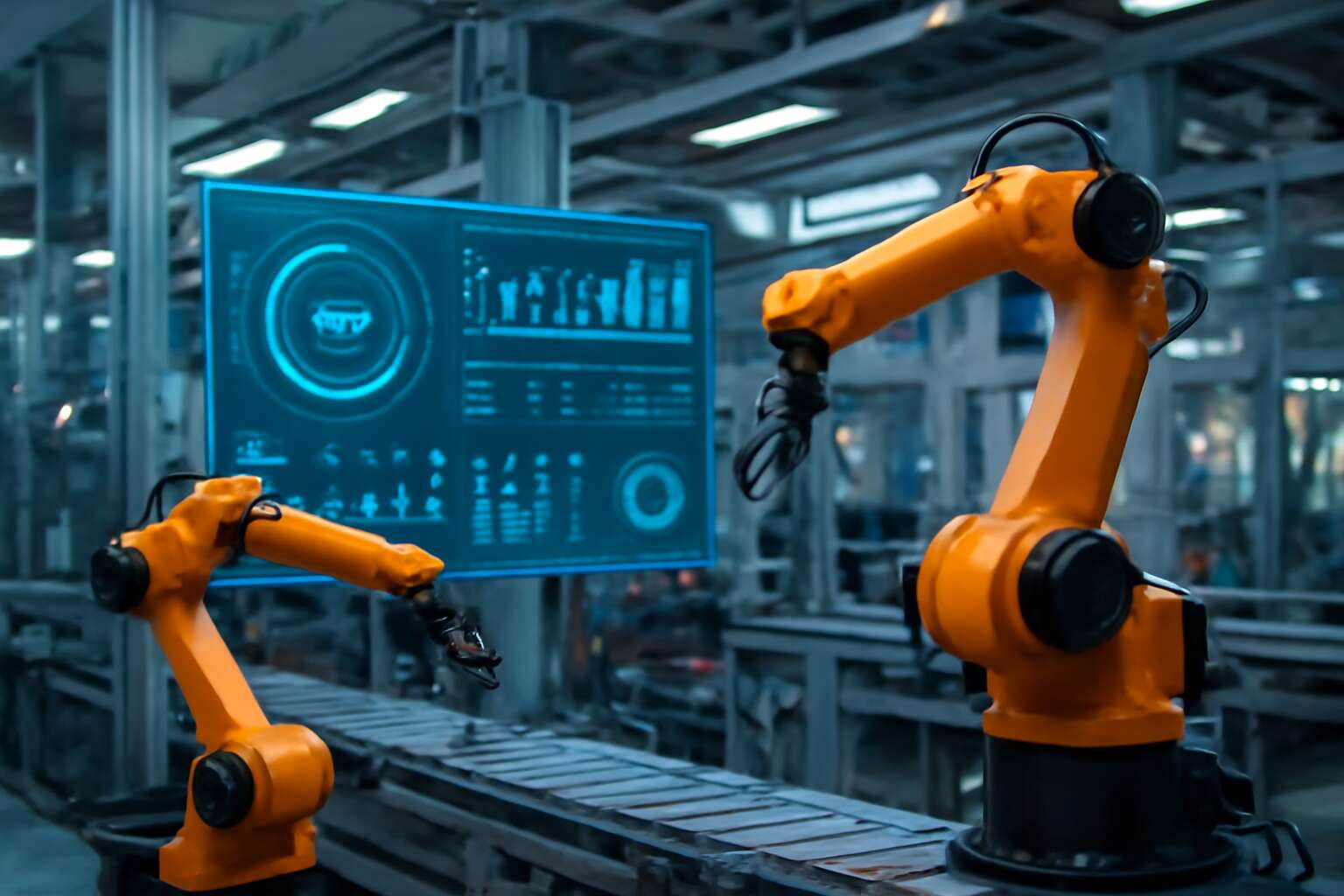
European Industry 4.0 landscape
Adoption trends across Europe
Europe is waking to a digital dawn; more than 60% of manufacturers are accelerating upgrades, and data now speaks louder than delays. industry 4.0 europe reshapes the factory floor into a living, listening engine.
Across Europe, adoption trends vary by region. We see Nordic tech maturity meeting Central Europe’s scale, while Southern Europe accelerates through pilot projects in automotive, machinery and chemicals. SMEs push intelligent systems, balancing legacy plants with cloud-native platforms.
- Smart sensors and IIoT connect shop floors
- Digital twins fuel predictive maintenance and planning
- Cross-border data standards enable seamless supply chains
For readers in South Africa, the European pattern offers a mirror—steady governance, evolving skills, and a culture of data-driven decision making that could travel across continents.
Industrial IoT maturity in European sectors
Across Europe, the factory floor is waking to real-time insight—every machine hum becomes a data point, and every decision is backed by analytics. The pace of production is brisker, and downtime is measured against minutes rather than hours.
Industrial IoT maturity travels regionally. Nordic cloud-native ecosystems meet Central Europe’s scale, while Southern Europe pilots automotive, machinery and chemicals. In this evolving mix, industry 4.0 europe reveals how SMEs weave intelligent systems into legacy lines, turning aging assets into learning equipment.
The enablers underpinning this momentum include:
- Interoperable data models across value chains
- Edge-to-cloud orchestration for real-time operations
- Governance and skill-building to sustain responsible AI
For readers in South Africa, the European pattern offers a mirror—calm, steady governance and a culture of data-driven decision making that could travel across continents.
Policy and funding landscape in Europe
Policy is the wind in the sails of industry 4.0 europe—billions flow from Brussels to factories eager to digitize, standardize, and reskill. Governments prize interoperable data, secure AI governance, and clear roadmaps as much as raw horsepower on the shop floor. It feels like watching a machine become wiser, one datapoint at a time!
Key channels fueling this landscape include:
- Horizon Europe research and innovation framework
- Digital Europe Programme for digital infrastructure and skills
- InvestEU guarantees for manufacturing capex
- European Chips Act and semiconductor resilience initiatives
- National recovery and resilience facility investments
National and regional bodies tailor these streams to SMEs and cross-border pilots, turning policy into practical upgrades—from digital twins to secure data governance, a pattern readers in South Africa can watch for lessons about calm governance and data-driven decision making. This is the broader European era of smart manufacturing in action, showing how measured funding unlocks factory learning.
Sustainability and green manufacturing in Europe
Factories in industry 4.0 europe weave sustainability into the fabric of production, where smart sensors talk to daylight and steel listens to its own energy footprint. A striking stat from EU bodies hints that green-capex now guides a meaningful share of modernization. The result is tangible: digital twins that forecast energy peaks, and automation that trims waste with almost magical precision!
Across borders, circular design, supply chain transparency, and green procurement become core capabilities, not afterthoughts. For readers in South Africa, these European pilots offer a quiet compass: blend energy resilience with data governance to keep facilities lean, safe, and ready for the next cycle.
- Integrated energy dashboards translating kilowatts into actionable shifts
- Lifecycle analytics boosting product reuse and material circularity
Technologies powering Industry 4.0 in Europe
Industrial IoT and edge computing adoption in Europe
Across Europe, real-time data is turning the factory floor into a decision engine. Productivity gains around 15% are reported where connected devices are deployed, proving that industry 4.0 europe is a practical upgrade, not a buzzword!
Technologies powering this shift hinge on a few pillars:
- Industrial IoT platforms that connect assets and operators
- Edge computing to process data near the source
- Digital twins that simulate operations for optimization
- AI and machine learning for predictive maintenance
- Cybersecurity and privacy controls built into every layer
These elements move data from the cloud to the shop floor, enabling faster decisions, higher quality, and more flexible production. industry 4.0 europe anchors this momentum.
Edge computing adoption in Europe is expanding across automotive, machinery, and energy sectors, with vendors offering secure local processing and cross-border data management. For South African manufacturers eyeing Europe, the same mix—connectivity, edge processing, and thoughtful governance—translates into resilience and speed.
Artificial intelligence and analytics in European manufacturing
Europe’s factories are waking up to AI-powered analytics that turn streams of data into decisive action. Real-time insights cut downtime, tighten quality, and align production with demand in minutes rather than shifts. This is industry 4.0 europe in motion—where cognitive models and edge intelligence translate raw sensor chatter into guided, confident decisions.
AI and analytics weave together data from machines, operators, and supply networks, delivering predictive maintenance and adaptive scheduling.
- Predictive maintenance and fault detection that preempts costly stops
- Defect forecasting and process optimization for tighter quality gates
- Adaptive scheduling that matches throughput to shifting demand
For South African manufacturers exporting to Europe, these advanced analytics create a bridge between local operations and European markets, enabling faster response to disruptions and more transparent governance of cross-border data. The energy is palpable!
Digital twins and simulation capabilities in Europe’s factories
Factories whisper in code and steel. In industry 4.0 europe, digital twins turn a factory floor into a living mirror—observing, learning, predicting. Real-world uptime climbs as simulations expose bottlenecks before the first shift, and data flows from the line to the virtual plant with a quiet, inexorable precision. The mood is nocturnal yet hopeful: a plant that dreams in models, waking to better decisions.
Digital twins and simulation capabilities let European factories and South African exporters test energy use, capacity, and disruption scenarios without touching real assets. From our vantage, the mirror speaks: the hum of data guiding hands and hearts alike.
- Real-time synchronization of physical lines with the digital twin
- What-if scenario testing for demand dips or supply shocks
- Virtual commissioning that shortens go-live and softens risk
Cloud strategy and data governance for European enterprises
Cloud-first platforms are quietly rewriting European manufacturing. In this ecosystem, a solid cloud strategy goes beyond storage—it becomes governance, resilience, and speed. Europe’s enterprises weave data fabrics that respect sovereignty and GDPR while enabling cross-border collaboration, rapid prototyping, and scaled analytics. When data flows securely from shop floor to boardroom, industry 4.0 europe reveals its true potential—for South African manufacturers eyeing European standards.
Aligned tech levers turn strategy into action, weaving governance into every transmission:
- Cloud-native data platforms and data fabric that unify silos
- Edge-to-cloud orchestration delivering real-time insights
- Zero-trust security and compliant identity management
- Open standards that boost interoperability across vendors
Regional case studies and pilots across Europe
Germany’s Industrie 4.0 initiatives
industry 4.0 europe isn’t a rumor—it’s a living lab. In Germany, about 70% of Industrie 4.0 pilots progress to production within two years, turning hype into steady throughput and fewer late-night coffee-fueled troubleshooting sessions.
Regional case studies and pilots across Europe show practical wins in action. Model regions in Baden-Württemberg, Bavaria, and North Rhine-Westphalia blend digital twins with common data standards, scaling from automotive to textiles.
- Baden-Württemberg: automated supplier networks and predictive maintenance pilots.
- Rhine-Ruhr: digital twin-enabled logistics and smart warehousing pilots.
- Bavaria: cross-company data sharing for modular tooling and smart machining.
South Africa readers can spot a playbook: modular pilots, cross-sector learning, and governance baked into the rollout—an industry 4.0 europe blueprint for resilience.
Northern Europe smart factory pilots
Across Northern Europe, smart factory pilots are turning the promise of industry 4.0 europe into real throughput—a playbook South African manufacturers will recognize. In Denmark, Sweden, and Finland, projects blend energy efficiency with digital twins and common data standards, moving from hype to steady production.
- Denmark: wind-turbine component suppliers pilot predictive maintenance and remotely monitored lines using open data standards.
- Sweden: automotive and machinery groups test digital twins to cut changeovers and boost yield on shared production assets.
- Finland: cross-company data sharing enables modular tooling and smart machining across regional campuses.
These pilots illustrate a regional playbook: modular tooling, cross-sector learning, and governance baked into rollout, turning regional wins into momentum.
Southern Europe manufacturing modernization programs
Southern Europe is turning glossy plans into real throughput, with double-digit gains lighting up shop floors from Madrid to Milan.
In Spain, automotive suppliers pilot predictive maintenance and remotely monitored lines using open data standards. Italy’s fashion and machinery groups test digital twins to cut changeovers and boost yield. Portugal’s electronics and contract manufacturers push modular tooling across regional campuses.
- Spain: automotive suppliers pilot predictive maintenance and remotely monitored lines with open data standards
- Italy: fashion and machinery groups test digital twins to shrink changeovers and lift yield
- Portugal: electronics and contract manufacturers scale modular tooling across campuses
These regional pilots are a microcosm of industry 4.0 europe, proving that governance, cross-campus cooperation, and modular tooling can translate into tangible throughput.
Eastern Europe supply chain digitalization
Across Eastern Europe, regional pilots are turning supply chain data into actionable throughput—several programs report double-digit gains and smoother flows across corridors from Kyiv to Krakow to Bucharest. It’s a compelling glimpse into industry 4.0 europe unfolding on the shop floor and in the logistics hub, with real impact for manufacturers and shippers alike.
In Poland and neighbouring markets, pilots link warehouse automation with cross-system data, granting live visibility from dock to delivery. Romania emphasizes end-to-end tracking of parts through supplier networks, while Hungary tests predictive maintenance for transit fleets and cold-chain readiness. These efforts echo the broader move toward digitalized, resilient supply chains across the region.
- Poland: automated warehouses integrated with ERP and transport systems
- Romania: end-to-end supplier network visibility
- Hungary: predictive maintenance for transit fleets and cold chains
For South African readers, the pattern is familiar: modular tooling, cross-campus collaboration, and governance that keeps data sane while enabling rapid change—industry 4.0 europe in motion.
Cross-border European collaboration projects
Across Europe, cross-border pilots are turning corridors into living laboratories for digital maturity. Early metrics point to a 12% reduction in cycle times when freight flows share a common data pulse—a striking illustration of industry 4.0 europe in motion that resonates with South Africa’s appetite for resilient supply chains.
From the Danube corridor to the Baltic routes, coalitions are testing end-to-end data governance, shared telemetry, and live visibility across borders.
- Danube corridor pilots: ERP, WMS, and transport telemetry stitched for hub-to-hub visibility
- Baltic-rail corridor: shared digital twins for predictive signaling and capacity planning
- Iberian cross-border data sharing: faster modal transitions and freight handoffs
For South Africa, these developments echo a modular toolkit—data governance that remains sane while enabling rapid change and scalable collaboration. It is a blueprint for regional modernization and deeper cross-border trust in automated logistics.
Implementation strategies and business case for European firms
Assessing readiness and roadmapping for digital transformation in Europe
In Europe, a formal digital roadmap can turn uncertainty into momentum—that’s the heartbeat of industry 4.0 europe. A factory director once said, “Metrics decide destiny,” and that idea anchors every investment. Readiness is a mirror: what data lives where, who can use it, and how quickly processes can adapt. For South Africa readers, the lesson travels well: discipline in roadmaps translates into real value across borders!
In Europe, the business case hinges on resilience, productivity, and sustainable advantage. Core questions include data readiness, governance maturity, and the capacity to map value streams to outcomes.
- Readiness and governance: data maturity, integration potential, leadership alignment
- Roadmapping and value: prioritization of use cases, phased validation, ROI framing
- People and security: workforce capability, change management, cybersecurity posture
Funding incentives and subsidies for European manufacturers
Across industry 4.0 europe, senior leaders learn that a disciplined roadmap turns uncertainty into momentum. A robust business case blends resilience, productivity, and a sustainable edge, anchored by data governance, value-stream mapping, and credible ROI expectations. Metrics become destiny, and every investment feels purposeful. The lesson travels well to South Africa, and I’ve seen the same translate into real value across borders!
Funding incentives and subsidies for European manufacturers are a critical accelerant, turning pilots into lasting capability. These levers populate policy landscapes across Europe:
- EU and national grants for digitalization and automation upgrades
- Tax credits and depreciation schemes for smart equipment
- Regional incentives that support cross-border collaboration and skills training
With the right mix, implementation strategies become a narrative of progress rather than a perilous leap.
Workforce upskilling and change management in Europe
Factories don’t run on steel alone—they’re powered by people who can retool, relearn, and keep pace with momentum. In industry 4.0 europe, the fastest path to value is a workforce ready to experiment and adapt. One study found that firms prioritizing upskilling see double-digit productivity gains within a year, turning uncertainty into momentum. For South Africa, that same logic translates into a more resilient supply chain and a more humane workplace where digital investments lift everyday work.
Implementation strategies must be anchored in a compelling business case. Leadership alignment, deliberate change management, and fresh data literacy all matter, as does cross-border collaboration that pulls in diverse talent. The following elements help shape fit-for-purpose programs:
- Clear ROI narrative tied to real outcomes
- Structured upskilling and reskilling roadmaps
- Governance for data, ethics, and workforce inclusion
On rural and urban factory floors alike, the human heartbeat stays constant. A thoughtful workforce upskilling approach binds productivity to purpose, ensuring the journey into the digital era feels like progress rather than a perilous leap.
Measuring ROI and KPIs in the European context
Data is the new compass for European factories. “Data clarifies demand; data accelerates delivery.” Those words capture why ROI must translate into real shop-floor gains!
Implementation strategies hinge on a robust business case. Leaders align around outcomes, not gadgets, and tie ROI to uptime, throughput, and quality. In industry 4.0 europe, harmonized KPIs across sites turn cross-border data into shared insight—and speed value delivery. Momentum is built on real results!
Key measures to steward value include:
- ROI narrative anchored in tangible outcomes: uptime, throughput, defect reduction
- Roadmaps for upskilling and reskilling across European and local teams
- Ethical data governance and workforce inclusion to sustain trust
Risk management and cybersecurity for European operations
In the humming quiet of steel and code, resilience is the rare alloy that makes a plant endure. In industry 4.0 europe, risk management becomes a covenant between shop floor and strategy, turning every data whisper into a shield for uptime and throughput. For South Africa’s engineering teams watching European benchmarks, ROI here grows from tangible outcomes, not gadgets.
European operations demand a cybersecurity posture that is both local and cross-border: clear ownership, continuous monitoring, and robust incident playbooks. The business case ties performance to uptime, defect reduction, and predictable delivery, while governance protects data integrity and lawful flows across borders.
Key facets to steward value:
- Governance and accountability across European sites
- Threat detection, response maturity and cyber resilience
- Data integrity, privacy, and cross-border compliance
When the ledger closes, it reveals value forged in vigilance as much as velocity.




0 Comments