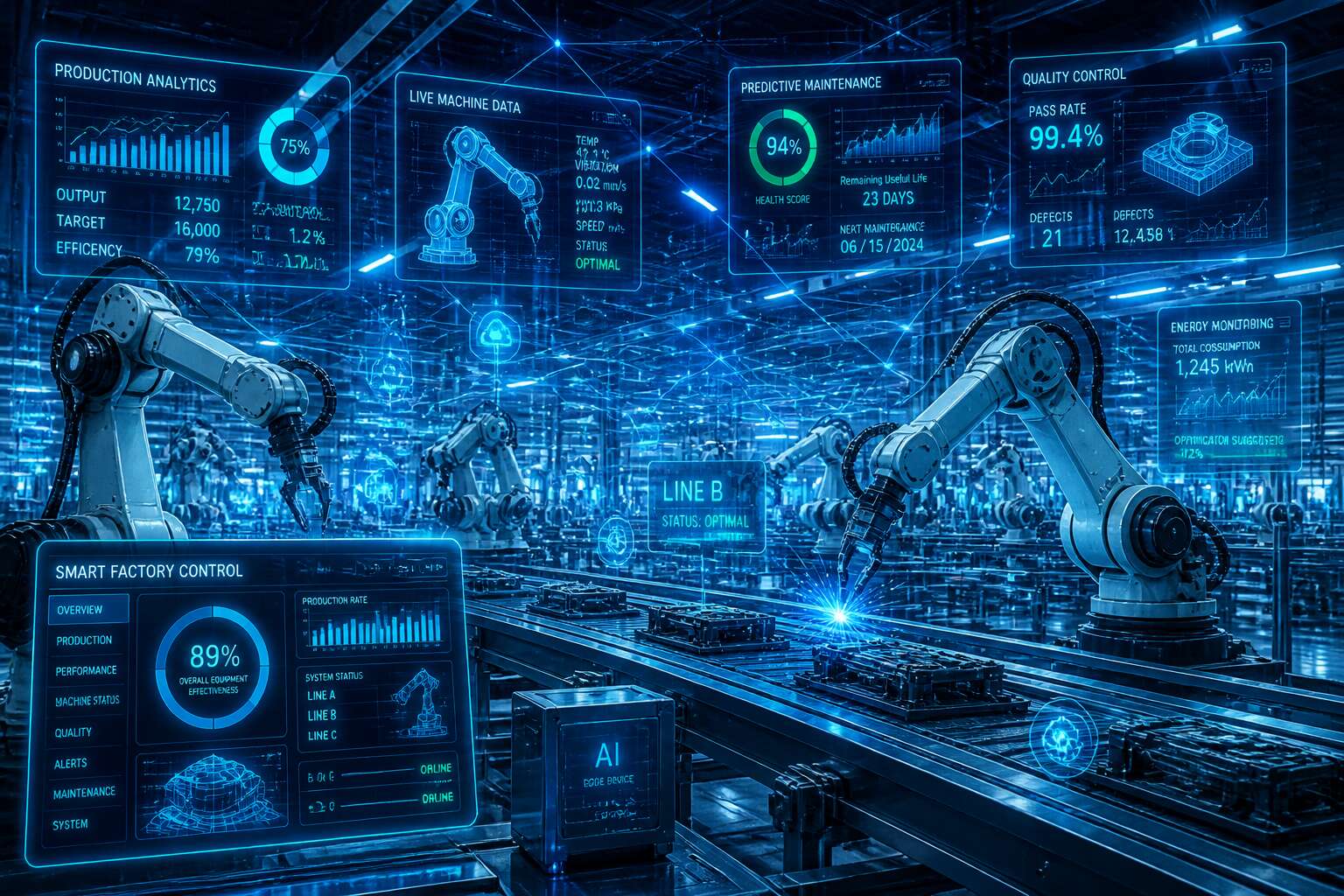
Understanding the Fourth Industrial Revolution
The fourth industrial revolution is less about the screaming headlines and more about the quiet, systemic integration of machinery with logic. It represents a fundamental shift in how physical assets communicate and make decisions. For South African manufacturers, this is not a future concept; it is the current operating environment. The stakes are high, and the margin for hesitation is thin.
This era is defined by the convergence of operational technology with information technology. Sensors collect data from the factory floor, sending it to cloud platforms for analysis. Algorithms then interpret that data to predict failures or optimise production schedules. This process, the industry 4.0 digital transformation, allows companies to move from reactive maintenance to predictive action. It changes the role of the human operator entirely.
Consider the basic building blocks of this new operational reality:
– Interconnected sensors that monitor equipment health in real time.
– Data analytics platforms that flag inefficiencies before they become costly.
– Human interfaces that present complex data as simple, actionable cues.
The true measure of this change is not in the technology itself, but in how it alters decision-making. A plant manager in Johannesburg can now view the exact energy consumption of a single conveyor belt in Durban. This level of visibility was impossible a decade ago. The conversation shifts from volume output to intelligent resource allocation. This is the core value of digital transformation in an industrial context. It is a precise, data-driven approach that rewards those who adapt quickly and punishes those who wait.
Core Technologies Driving Smart Factories
South African manufacturers are stepping into an era of industry 4.0 digital transformation, where machines talk to each other and humans supervise the conversation. The core technologies behind smart factories are reshaping how production lines operate. Sensors collect granular data, while edge computing processes it milliseconds away from the action.
Consider these foundational elements:
- Industrial Internet of Things (IIoT) devices monitoring every vibration
- Digital twins creating virtual replicas for simulation
- Machine learning algorithms predicting failures before they happen
This transformation is not a single leap. It is a steady layering of capabilities. For local plants in Gauteng or Cape Town, that means less downtime and better quality control. Workers shift from repetitive tasks to strategic oversight, which changes the skill set required on the floor. The technology is powerful, though it only delivers value when people trust the data and act on it.
South African manufacturers are stepping into an era of industry 4.0 digital transformation, where machines talk to each other and humans supervise the conversation. The core technologies behind smart factories are reshaping how production lines operate. Sensors collect granular data, while edge computing processes it milliseconds away from the action.
Consider these foundational elements:
- Industrial Internet of Things (IIoT) devices monitoring every vibration
- Digital twins creating virtual replicas for simulation
- Machine learning algorithms predicting failures before they happen
This transformation is not a single leap. It is a steady layering of capabilities. For local plants in Gauteng or Cape Town, that means less downtime and better quality control. Workers shift from repetitive tasks to strategic oversight, which changes the skill set required on the floor. The technology is powerful, though it only delivers value when people trust the data and act on it.
Strategic Benefits of Embracing Connected Operations
In the quiet hum of a modern factory, there is a second skeleton at work. It is not made of steel, but of data points, signal pulses, and predictive logic. This is the core of industry 4.0 digital transformation, a shift that moves beyond automation into a realm where machines anticipate rather than react. For South African businesses facing energy volatility and logistical friction, this is not a luxury. It is a survival mechanism, offering a way to see around corners in an environment where certainty is often in short supply.
The strategic benefits of connected operations are tangible. Consider how a unified digital thread changes the decision-making process. When production lines, supply chains, and energy grids speak the same language, you gain the ability to reroute resources in real time. That agility translates into cost savings, but more importantly, it grants resilience. A plant that can shift its output based on live grid demands, for example, is a plant that weathers load shedding without losing its competitive edge.
Here is what a connected strategy truly unlocks for the C-suite:
1. Real-time agility: You shift from reviewing last month’s reports to managing today’s conditions, enabling rapid responses to market or utility changes.
2. Predictive maintenance: You stop waiting for breakdowns; algorithms identify wear patterns so you repair during scheduled windows, not emergency stoppages.
3. End-to-end visibility: You trace a product from raw material to delivery, eliminating the blind spots that often hide inefficiencies or quality risks.
But the deeper value lies in the interplay between these elements. It is one thing to have sensors, another to have insight that compels action. I have seen operations where the technology is pristine yet the benefits remain elusive, simply because the human workflow hasn’t adapted. The true triumph of industry 4.0 digital transformation is when your workforce starts trusting the machine’s recommendations over their gut instinct. That is a cultural victory, not just a technical one.
This evolution does not require a complete overhaul of your legacy systems. Instead, it asks you to layer intelligence onto what already exists, creating a nervous system for your physical assets. For a country with unique infrastructural constraints, this layered approach offers a pragmatic path forward. It starts with a single sensor on a critical pump, and expands to a full operational picture. From that point, the strategic options multiply; you can negotiate better energy tariffs, reduce waste, or enter new markets with verified production standards. The data becomes your passport. The network becomes your advantage. And in the shadow of global competition, that connectedness may be the only edge you truly need.
Overcoming Barriers to Successful Digitalization
Only one in three South African manufacturers has moved past pilot projects in their industry 4.0 digital transformation. I have stood on factory floors where paper checklists still rule and tribal knowledge carries the shifts. The tools exist. The courage to deploy them falters, however, when legacy equipment refuses to integrate cleanly with new software.
Barriers are rarely technological. They live in siloed departments, in retraining anxiety, and in the memory of failed overhauls.
- Legacy machines that communicate in proprietary dialects
- Software installed without a human champion
- Reporting cycles stretched so long that friction stays invisible
Each barrier feels personal because it is. The companies that prevail treat the work as a daily discipline rather than a single triumphant launch!
Practical Roadmap for Digital Transformation
Load shedding taught many plant managers a hard lesson: their operations are only as strong as their data flows. The industry 4.0 digital transformation journey in South Africa rarely starts with robots or AI. It starts with something far less glamorous. An honest look at what actually happens on the factory floor.
The practical roadmap is deceptively simple. Choose one production line and document every step. Track cycle times, reject rates and machine downtime for two weeks. That baseline becomes your compass.
At that point, a typical roadmap might include:
- Identify the single most costly bottleneck on that line.
- Install basic sensors to capture real-time data from that bottleneck.
- Review the data weekly with the operators who run the machines.
- Adjust one variable at a time and measure the impact.

0 Comments