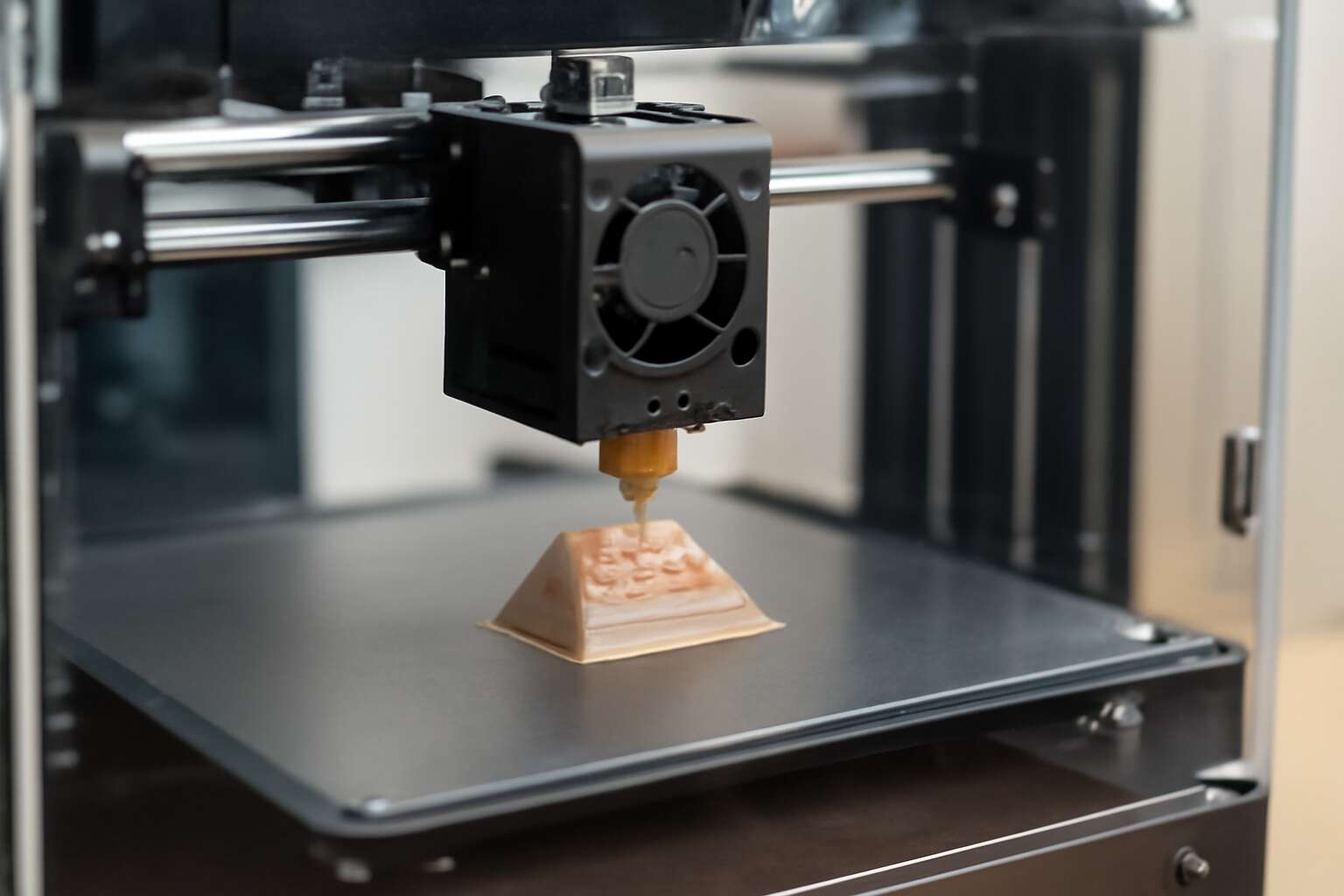
Foundations of additive manufacturing and 3D printing
What additive manufacturing is and how it differs from traditional manufacturing
Across global factories, prototypes can leap from sketch to part in days, not weeks! The foundations of additive manufacturing and 3D printing rest on turning digital ideas into tangible form, with speed and precision guiding every move. A bold promise, a quiet revolution, unfolding at the heart of modern production.
Unlike subtractive routes that chisel away until shape appears, the additive manufacturing 3d printer stacks material in disciplined layers, building complexity brick by brick. This shifts the playing field from fixed tooling to flexible design, enabling rapid iteration and true customization. Materials—from polymers to metals—are brought to life with less waste and lower capital risk.
- Layer-by-layer construction enables intricate geometries
- Eliminates expensive tooling and setup
- Expands material choices for performance parts
South Africa’s industries stand at the brink of this transformation—mining parts, medical devices, automotive components—taken from concept to form with newfound resilience. The journey is less about a single machine and more about a mindset: design with intention, adapt with demand, manufacture closer to where value is created.
Overview of common 3D printing technologies
Layer by layer, a digital idea becomes tangible—faster and with more nuance than ever. The foundations of additive manufacturing and 3D printing hinge on turning precise CAD data into material form, guided by speed and repeatability. In South Africa, this is more than tech chatter; it’s a reframing of how products are designed, prototyped, and kept close to the people who use them. The additive manufacturing 3d printer sits at the center of this shift, quietly rewriting the pace of production.
Here are some common technologies shaping the field today:
- FDM/FFF: layered thermoplastic extrusion
- SLA: resin curing for fine detail
- SLS: powder-bed fusion with nylon
From mining components to medical devices and automotive parts, these tools empower local design teams to prototype, validate, and iterate near where value is created. Embracing a design-with-demand mindset, production scales shrink, inventories simplify, and regional supply chains strengthen—one layer at a time.
Material categories used in additive manufacturing
Foundations of additive manufacturing and 3D printing rest on turning precise CAD data into tangible form. In South Africa, that speed reshapes how rural shops serve local markets. As one Karoo engineer put it, “Every layer brings a design closer to life,” a sentiment that echoes on workshop floors and kitchen tables alike.
Material choices anchor the promise. They fall into a few families that shape strength, finish, and heat tolerance.
- Thermoplastics (PLA, PETG, ABS)
- Photopolymers (SLA resins)
- Metals (stainless steel, aluminum, titanium)
- Composites and ceramics (carbon-filled polymers, ceramic-infused materials)
With the right material map, teams near mines and clinics can prototype with fewer detours and keep parts near those who rely on them. The additive manufacturing 3d printer sits at the heart of this shift, shaping a resilient local economy.
Key process parameters and quality indicators
From concept to usable part in days! This is the promise of the additive manufacturing 3d printer. In 2023 prototyping cycles shortened by up to 60%, a surge felt in South Africa’s rural workshops.
Foundations hinge on translating precise CAD data into incremental layers with controlled energy input and stable build conditions. The journey is steered by key process parameters that determine what remains after the print—and what fails to materialize.
- Layer thickness and hatch spacing
- Energy input and energy density
- Scan strategy and build orientation
- Bed temperature and environmental conditions
Quality indicators track dimensional accuracy, surface finish, porosity, and repeatability. Real-time monitoring and post-build inspections pair with stable processes to safeguard consistency across parts and batches.
With disciplined parameter control, teams near mines and clinics rely on the additive manufacturing 3d printer to prototype near demand, shaping a more resilient local economy—where design meets endurance and craft becomes tangible.
Benefits, challenges, and business implications of adoption
South Africa stands at a hinge where imagination meets precision. The additive manufacturing 3d printer promises to compress weeks of prototyping into days, translating CAD dreams into tangible parts with quiet reliability. Foundations rest on disciplined data translation and controlled energy input, delivering parts that are as durable as they are delightful!
- Rapid iteration with local fabrication
- Customization at scale without tooling
- Conservation of materials and waste reduction
- Resilient supply chains near communities
Yet adoption comes with its own weather—the upfront investment, the need for skilled maintenance, and the cadence of quality control across batches. In South Africa, savvy teams weigh speed against reliability, balancing parts’ traceability with energy considerations and supplier ecosystems. When embraced thoughtfully, the marriage of design intent and digital manufacture reshapes procurement habits, supports rural enterprises, and invites a broader, more equitable industrial story. I have witnessed communities transform as these machines turn ideas into livelihoods.
Materials and technology landscape
Polymers and thermoplastics for additive manufacturing
In South Africa, the uptake of additive manufacturing 3d printer technology is accelerating, with double-digit growth last year and a shift from prototyping to production-ready parts. Polymers and thermoplastics form the backbone of this landscape, ranging from easy-to-print options to high-performance candidates that endure heat, chemicals, and wear. The challenge is balancing printability with real-world durability, so components perform as designed in daily operations.
Common polymers favored today include:
- PLA – easy to print, good for fixtures and prototypes
- ABS – stronger, higher heat resistance
- PETG – chemical resistance and clarity
- Nylon PA12 – strong, wear-resistant
- PC – high-temperature, impact-resistant
In South Africa’s manufacturing and energy landscape, material choice shapes cost and resilience, aligning with local standards and supply networks. A quiet moral thread runs through this work: materials should endure while minimizing waste, especially where resources are scarce. As markets evolve, recyclable and bio-based thermoplastics gain momentum.
Metal additive manufacturing processes and alloys
Across South Africa, metal additive manufacturing is moving from pilot projects to reliable production. An additive manufacturing 3d printer is becoming part of daily operations, handling high-value parts that demand tight tolerances and complex geometry. The technology draws on established metal processes while pushing new alloys and design freedoms into service, even under hot, harsh industrial environments.
- Laser Powder Bed Fusion (LPBF)
- Directed Energy Deposition (DED)
- Electron Beam Melting (EBM)
- Binder Jetting for metals
Material choices mirror this shift: stainless steels like 316L for corrosion resistance, nickel alloys such as Inconel 625 for heat and fatigue, titanium alloys like Ti-6Al-4V for strength-to-weight, and aluminum alloys such as AlSi10Mg for brisk production parts.
Ceramics and composite materials in printing
Ceramics and advanced composites are quietly expanding the capabilities of the additive manufacturing 3d printer in South Africa. Ceramics bring high-temperature stability, wear resistance, and biocompatibility, while composites deliver strength without weight. The landscape is shifting from prototyping to production-grade parts that survive harsh industrial environments with precision!
Material choices are broadening beyond plastics and metals. In practice, this technology can switch between ceramic and composite print modes, enabling parts that perform in high heat, abrasion, or dynamic loading.
- Ceramics: alumina (Al2O3), zirconia (ZrO2), silicon carbide (SiC) for high-temperature and wear resistance
- Composites: carbon fiber reinforced polymers and ceramic-filled polymers for tuned stiffness and thermal management
South Africa’s manufacturing base is poised to leverage these materials for tooling, medical devices, and industrial components, turning complex geometries into durable, scalable parts.
Post-processing and finishing workflows for performance and aesthetics
Post-processing is the quiet craft that makes a print sing. For South Africa’s manufacturing floor, the additive manufacturing 3d printer parts demand more than accuracy; they require surface integrity and a consistent finish to survive harsh environments and long service life.
Typical finishing workflows include:
- Deflashing, support removal, and delicate washing
- Grit/sand smoothing to erase visible layer lines
- Sealants, waxes, or coatings for wear or corrosion resistance
- Heat treatments or chemical finishes where appropriate
- Final inspection and metrology to confirm tolerances
The result is a harmonious blend of performance and aesthetics suitable for tooling, medical devices, and industrial components, well positioned to help South Africa compete on the factory floor.
Industrial applications and impact
Aerospace and defense use cases
Across aerospace and defense, keeping aircraft parts affordable and available matters as much as keeping them flight-ready. A modern facility can cut lead times dramatically with an additive manufacturing 3d printer, turning complex designs into durable, lighter components rather than expensive tooling alone. In South Africa, this shift supports remote maintenance hubs and local supply chains.
Core use cases include:
- On-demand spare parts for aircraft and helicopters
- Custom tooling and fixtures for maintenance crews
- Lightweight structural brackets with intricate geometries
- Complex cooling channels and thermal management components
For SA’s defense and industrial ecosystem, the implications go beyond cost—it’s about readiness, resilience, and the shift toward domestic capability that can weather global supply shocks.
Automotive and manufacturing sector applications
In the dim glow of SA workshops, the additive manufacturing 3d printer whispers a new rule: cut the wait, not the quality. In automotive and general manufacturing, parts leap from idea to part in days, outpacing traditional tooling and its costly delays. It is a quiet revolution—lighter, intricate, and ready to march from design to production without the usual drag of inventory and bike-shed fixes.
- On-demand spare parts for maintenance and production lines
- Custom tooling and jigs tailored to unique workflows
- Lightweight structural brackets with complex geometries
- Integrated cooling channels and thermal management components
For SA’s automotive and manufacturing ecosystem, the impact goes beyond price. It fuels readiness, resilience, and domestic capability—the quiet promise that a local workshop can stand against supply shocks with a repaired, reimagined fleet of machines.
Healthcare and dental innovations
South Africa’s clinics and factories are waking to a quiet revolution: the additive manufacturing 3d printer turns design into durable parts in days, not months. Industrially, this means spares when they’re needed, bespoke tooling, and lightweight components that trim downtime and cash-flow drag. In healthcare and dentistry, patient-specific devices and customized aids arrive with astonishing speed, reshaping care pathways and practice efficiency.
- Patient-specific surgical guides
- Custom dental implants and prosthetics
- Sterilisable, low-volume device housings
- Lightweight, intricate fixtures for clinics and labs
From urban hospitals to remote clinics, this capability strengthens domestic capability, reduces vulnerability to supply shocks, and quietly elevates patient outcomes across the spectrum of care.
Consumer products, education, and rapid prototyping
Speed is the new currency in manufacturing. In South Africa, shops that embrace rapid prototyping trim cycles from weeks to days. It’s not just faster; it’s a calmer, more reliable supply chain that keeps lines running when demand spikes.
The additive manufacturing 3d printer transforms plant floors by delivering spares on demand, bespoke tooling, and lightweight components that cut downtime and energy use. From automotive plants to mining workshops, teams design, print, and validate parts in days rather than months.
In consumer products, education, and rapid prototyping, the same capability unlocks value across markets.
- Consumer housings, grips, and customized accessories on demand
- Educational models and teaching aids that bring concepts to life
- Early prototypes for market testing and product validation
Across campuses and industry hubs, students and engineers practice design thinking with real parts—accelerating skill development and local manufacturing capability.
Choosing and evaluating a commercial 3D printer for manufacturing
Key specifications to compare when selecting a printer
Choosing a commercial 3D printer for manufacturing is less about chasing the fastest machine and more about balance—capability, reliability, and the realities of South Africa’s supply chains. An additive manufacturing 3d printer that can adapt across polymer and metal workflows, while offering predictable uptime, becomes a strategic asset rather than a gadget. The aim is to map your needs to specs and avoid glossy claims.
- Build volume and resolution: ensure envelope matches part sizes and feature detail.
- Material ecosystem and process stability: compatible polymers, metals, and post-processing requirements.
- Reliability, service, and total cost of ownership: uptime guarantees, spare parts availability, and long-term operating costs.
When this lens—build volume, material reach, uptime, and service—meets production reality, the additive manufacturing 3d printer becomes more than a purchase; it reshapes how teams imagine design-to-manufacture workflows in local markets and beyond.
Software, workflow integration, and data management
How a shop floor relates to an additive manufacturing 3d printer isn’t measured by speed alone. In South Africa, uptime and data flow decide outcomes far more than peak print rates, and the real value shows up when software, workflow, and data management fuse with the machine’s ecosystem. A system like this turns prototypes into repeatable parts.
Software, workflow integration, and data governance drive ongoing value. Look for a digital spine that bridges CAD, slicing, tracking, and post-processing.
- Open data formats and APIs for CAD-to-ERP connections.
- Versioned print files and process parameters for traceability.
- Security and data governance aligned with local requirements.
A strong digital thread translates design intent into reliable production, smoothing post-processing and reducing surprises on the shop floor.
Cost of ownership, maintenance, and ROI considerations
Uptime is the new currency in South Africa’s manufacturing shops. A plant manager once said, “Uptime beats raw speed every day.” The cost of ownership for a commercial 3D printer isn’t just the sticker price; it’s uptime, energy, maintenance, and consumables stacked over years. A reliable additive manufacturing 3d printer keeps production lines breathing.
- Total cost of ownership over 3–5 years, including downtime impact
- Local service, spare parts, and training availability in SA
- Material costs, waste, and energy use
- Data security, software support, and integration with existing systems
ROI hinges on stable performance, predictable maintenance, and a clear path from prototype to production, not just lower purchase price. A thoughtful choice yields smoother audits, less unplanned downtime, and a more resilient manufacturing footprint with an additive manufacturing 3d printer.
Vendor support, community resources, and training opportunities
Uptime is the heartbeat of South Africa’s factories, where a stalled line costs more than a missed deadline. In the field, choosing an additive manufacturing 3d printer means weighing price against a broader promise: reliable vendor support, local service, and a robust parts pipeline. Seek vendors that spell out service levels, provide regional field engineers, and guarantee spare parts availability without months of delay. The right partner makes downtime a tale of the past and keeps production humming in small towns and big metros alike.
- Vendor support that includes clear service levels, response times, and on-site visits when needed
- Active community resources, regional user groups, and accessible knowledge bases
- Training opportunities covering operation, maintenance, and safety for operators and technicians
Interconnected support and community backing turn a good purchase into a dependable partner for growth—allowing rural and urban teams to dream bigger without fear of the next break.

0 Comments