Foundations and Core Concepts of Additive Manufacturing
What is additive manufacturing and how it works
In a landscape where ideas can become physical parts overnight, additive manufacturing rewrites the rules of making. The additive manufacturing background reveals how digital blueprints become layered realities, building objects from the ground up rather than carving away material. It invites designers to rethink geometry, strength-to-weight, and material truth, all while guiding ambition with practical limits—here in South Africa, the implications ripple across automotive, mining, and healthcare supply chains. That’s the excitement!
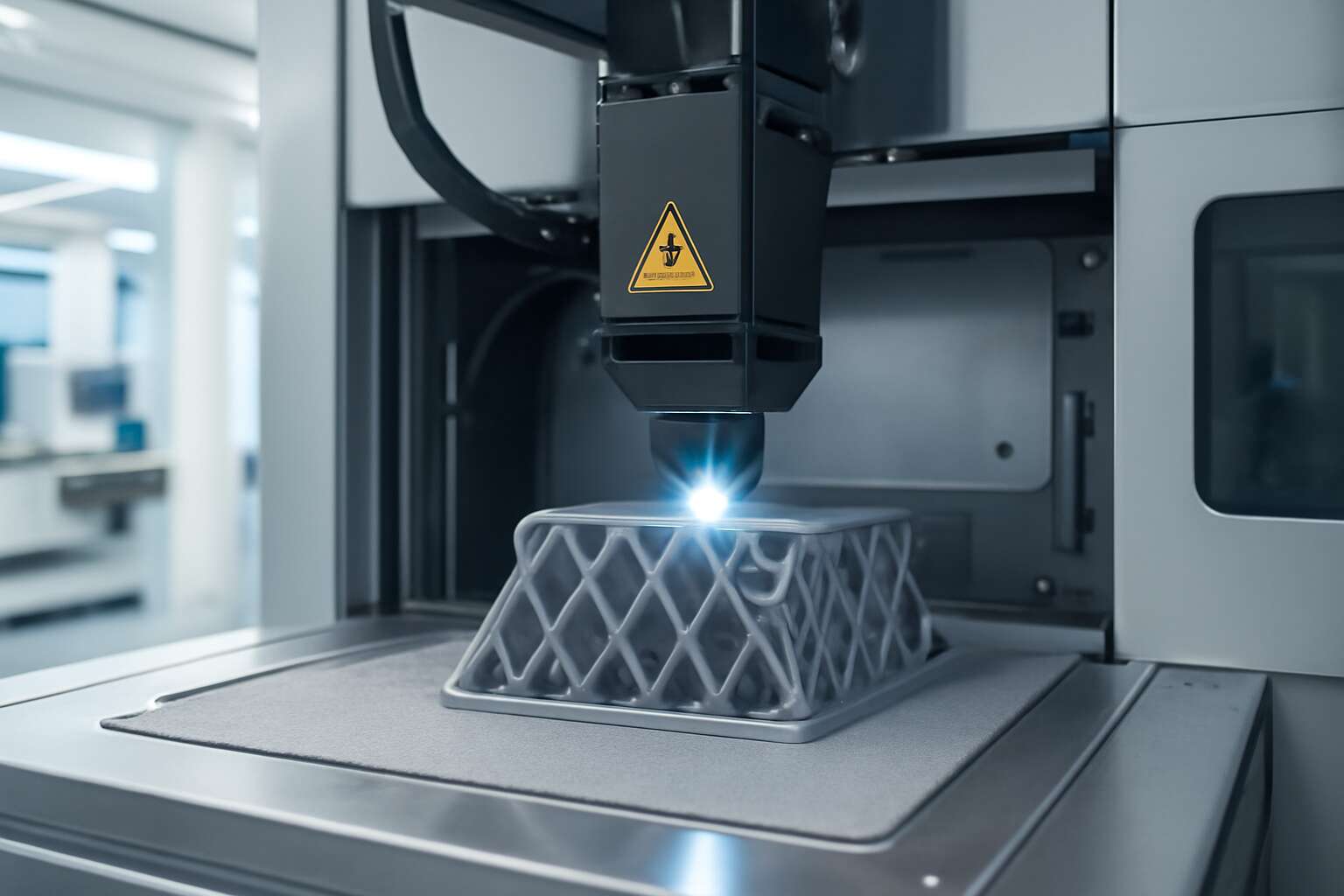
Foundations and core concepts flow from a few practical truths. Materials and processes must align with intended performance; design for additive manufacturing reshapes features; precise layering governs integrity. To illustrate, consider this snapshot of essentials:
- Materials compatibility across AM methods
- Process choices such as FDM, SLS, SLA, and DMLS
- Design for additive manufacturing (DfAM) principles
- Post-processing, finishing, and quality control
Key processes and technologies in AM
Foundations in additive manufacturing rest on a simple, stubborn truth! The right material in the right environment yields durable forms. The additive manufacturing background invites designers to rethink geometry and layering, encouraging resilience without waste. In South Africa, these shifts ripple through automotive, mining, and healthcare supply chains with a quieter, more agile footprint.
Key processes and technologies map to mission and scale.
- FDM — fused deposition modeling for polymers and rapid prototyping
- SLS — selective laser sintering for tougher polymers and end-use parts
- SLA — stereolithography for high-detail, smooth finishes
- DMLS — direct metal laser sintering for metal components
Design for additive manufacturing (DfAM) principles reshape features for layer-by-layer builds, while post-processing and quality control ensure repeatability and surface integrity across batches. This broader landscape weaves capability with constraint, turning ambition into reliably produced parts.
Materials used in additive manufacturing
The additive manufacturing background rests on a simple truth: the right material in the right environment yields durable forms. Materials define strength, heat resistance, and surface finish more than the printer itself. In South Africa, this translates to polymers for rapid prototyping, metal powders for tooling, and ceramics that endure mining conditions!
- Polymers and photopolymers
- Metals and alloys
- Ceramics and composites
Understanding feedstock quality, particle size, viscosity, and post-processing opens the path to repeatable results. These foundations let designers push boundaries while keeping parts consistent across batches.
Benefits, limitations, and performance considerations
The additive manufacturing background is changing how products come to life—industries report up to 90% faster prototyping cycles. Faster, smarter design loops mean quicker validation, tighter tolerances, and the ability to test form and function in one pass.
Foundations deliver big gains but come with limits. The promise includes design freedom and customization, plus material efficiency that cuts waste. Yet, upfront tooling costs for some processes, surface finish, and anisotropic strength can restrain scale.
- Design freedom enables complex geometries and lighter parts
- Material efficiency reduces scrap and energy use
- Process control drives repeatable results across batches
Performance rests on feedstock quality, particle size, viscosity, and post-processing. In South Africa, these foundations matter as much as the printer itself. Proper calibration and standardized post-build workflows keep parts consistent across runs.
Quality standards and testing in additive manufacturing
The additive manufacturing background has matured into a discipline where quality standards decide part success as much as printer capability. In South Africa, processes are measured by traceability, and prototypes can reach validation faster—up to 90% quicker when testing and calibration run in parallel.
Foundations for quality rest on three core concepts, which deserve straightforward attention:
- Process validation and traceability
- Calibration and metrology for repeatable results
- Standardized post-processing and inspection
These standards help maintain consistency across runs and suppliers, anchoring the potential of additive manufacturing in a practical, scalable way in SA.
Historical Context and Milestones in Additive Manufacturing
Origins and early development of AM
Across the decades, the additive manufacturing background has unfolded as a manifesto of design without tooling, a revolt against waste. Prototyping once required weeks; today, a single blueprint can wake a part from resin or powder in hours! Early ingenuity mapped the path from idea to tangible object, layer by layer.
- 1984: Stereolithography patented by Charles Hull, inaugurating layer-by-layer fabrication.
- 1988–1990: Fused Deposition Modeling (FDM) emerges, turning thermoplastics into rapid prototypes.
- 1989–1992: Selective Laser Sintering (SLS) demonstrates powder-bed fusion for durable parts.
- Mid-1990s: Rapid prototyping expands toward production-ready tooling and digital workflows.
That lineage now informs industries across South Africa, where imagination meets process and every build invites a deeper conversation about design, durability, and the future of manufacturing.
Pioneering technologies and notable milestones
The additive manufacturing background signals a shift from tooling-heavy production to on-demand design. Prototyping once dragged on for weeks; today, a single blueprint can wake a part from resin or powder in hours. The early pioneers mapped a path from imagination to tangible object, layer by layer.
- 1984: Stereolithography patented by Charles Hull, inaugurating layer-by-layer fabrication.
- 1988–1990: Fused Deposition Modeling (FDM) emerges, turning thermoplastics into rapid prototypes.
- 1989–1992: Selective Laser Sintering (SLS) demonstrates powder-bed fusion for durable parts.
- Mid-1990s: Rapid prototyping expands toward production-ready tooling and digital workflows.
In South Africa, this lineage informs local design dialogues—durability, waste reduction, and digital workflows shape decisions across automotive, healthcare, and mining sectors. Firms test post-processing, supplier ecosystems, and production planning, proving that the pioneers’ questions about speed, cost, and resilience still shape business today.
Industry adoption timelines and market milestones
South Africa stands at a crossroads where imagination threads itself into factory floors. A striking shift of the 2010s saw parts leap from CAD to real-world form in days, not weeks—a quiet revolution that reshaped how products are imagined. One analyst calls it a ‘quiet revolution’ reshaping factories. Globally, adoption timelines moved from prototype curiosity to serial production as standards and supply chains matured.
The additive manufacturing background now serves as a compass for players balancing speed, cost, and resilience. From lightweight tooling to digital twins, the story threads through automotive, healthcare, and mining— industries pivotal to South Africa’s economy and regional design conversations.
Adoption milestones often follow a shared arc across sectors:
- From prototyping to production-aware manufacturing
- Consolidation of post-processing and finishing networks
- Full integration with digital workflows and ERP systems
Regulatory, safety, and standardization developments
“A quiet revolution haunts the plant floor as regulators tally every layer of a promise sketched in CAD.” The additive manufacturing background now threads through policy, safety, and standardization, turning bold prototypes into auditable products. In this evolving tapestry, the rules aim not to restrain imagination but to cradle it, ensuring parts that exist today endure tomorrow on complex supply chains.
Milestones crystallize when trust is forged with criteria, tests, and traceability. Global bodies outline process qualification, material property baselines, and post-processing expectations. Regulators increasingly distinguish healthcare, aerospace, and critical mining components, guiding risk assessment and field validation.
- Foundational standards for process qualification and material properties
- Regulatory guidance for medical, aerospace, and safety-critical parts
- Post-processing, quality assurance, and digital thread requirements
South Africa stands to gain by aligning with these threads, weaving local practice into an international fabric and encouraging responsible innovation on the factory floor while safeguarding people and communities.
Current trends and the future of AM
The additive manufacturing background unfolds like a nocturne of layers, where science meets storytelling. A growing majority of global manufacturers now experiment with AM, weaving prototypes into auditable parts and hinting at production-grade reality. In South Africa, this tapestry brightens our factory floors with digital threads and cautious optimism.
Milestones arrive as trust is earned—through process qualification, material properties, and post-processing clarity. Consider these touchstones:
- 1984 — first commercial 3D-printed part (SLA) opened a corridor to rapid prototyping.
- 2009–2010 — metal AM matured with new alloys and binder jetting.
- 2016 onward — digital thread and on-demand manufacturing gains visibility across industries.
Current trends lean toward democratized access, scalable production, and smarter design tools. The future of AM promises more reliable material data, closed-loop quality, and regional manufacturing ecosystems—exactly the kind of renaissance that South Africa can anchor with responsible innovation on the factory floor!
Applications Across Industries Using Additive Manufacturing
Aerospace and automotive applications and case studies
Across the sky and along the highway, invention now moves in weeks rather than months. Double-digit reductions in lead times are common in aerospace and automotive programs, a testament to the additive manufacturing background that rewrites how we design, test, and iterate complex parts!
In aerospace, AM enables fuel-nozzle geometries and cooling channels once deemed too intricate to manufacture. In automotive, lattice-structured supports and lightweight brackets reduce weight without sacrificing strength — a recipe for efficiency and performance. Case studies reveal how a single consolidated part can replace a bundle of components, accelerating on-site testing and in-service reliability.
- Aerospace components such as fuel nozzles, cooling channels, and turbine components
- Automotive parts like lightweight brackets, heat exchangers, and tooling
- Case study takeaway: part consolidation trims weight and simplifies assembly
For South Africa, this wave translates into local manufacturing resilience, skilled jobs, and export-ready capabilities as service providers scale AM capabilities to meet regional needs.
Healthcare and dental applications and personalized devices
The additive manufacturing background is reshaping healthcare, where patient-specific devices reach bedside in days rather than weeks. A recent industry survey highlights development cycles shortened by up to 40%, proving AM’s capacity to tailor care with astonishing precision and speed.
- Implantable devices matched to individual anatomy
- Dental crowns, aligners, and surgical guides produced on demand
- Custom prosthetics and bone scaffolds that speed recovery
In South Africa, clinics and dental practices are piloting on-demand AM to streamline implants and guides, boosting local capabilities and expanding access to personalized care across communities.
Prototyping and consumer electronics manufacturing
Across product development, the additive manufacturing background is rewriting timelines. Ideas move from sketch to test in days, not weeks. A recent survey notes development cycles shortened by up to 40%, proving AM’s capacity to propel innovation with speed and precision!
Consumer electronics manufacturing now leans into on-demand prototyping. Enclosures, bezels, lightweight housings, and custom test rigs can be produced quickly for fit, feel, and function. The result is faster design validation and a closer link between hardware and software.
- Enclosures and housings for wearables
- Custom connectors and cable management fixtures
- Integrated mounting and ergonomic controls
- Test jigs and fixtures for rapid testing
Other sectors—from automotive prototyping to aerospace hardware—are following suit, using AM to validate assemblies, fixtures, and mission-critical components without costly tooling. In South Africa, local manufacturers marry prototyping speed with regional supply chains to deliver more responsive consumer tech and industrial equipment.
Energy, defense, and industrial uses of AM
Lead times for new parts in energy, defense, and industrial sectors are collapsing. In some programs, development cycles are up to 40% shorter, a testament to the additive manufacturing background reshaping how ideas become parts. Designs move from sketch to test in days, not weeks, with AM guiding fast iteration.
Across sectors, AM accelerates the creation of mission-critical components and on-demand tooling. The approach enables rapid prototyping of energy components, rugged defense housings, and flexible industrial fixtures—cutting lead times and reducing tooling costs.
- Energy: lightweight brackets, cooling channels, and heat-exchanger components
- Defense: ruggedized housings, modular mounts, and quick-repair parts
- Industrial: custom fixtures, jigs, and tooling tailored to specific workflows
In South Africa, local manufacturers weave AM into regional supply chains to power energy projects and industrial equipment. The additive manufacturing background informs how SA firms balance speed, cost, and quality as they bring parts closer to site.
Architecture, construction and sustainable design
Architecture, construction, and sustainable design are discovering a new grammar in additive manufacturing background. The discipline’s lineage shows up as lightweight yet robust structural elements, custom ventilation channels, and intricate facades that bend daylight with precision. Prototypes graduate to full-scale pieces quickly, letting designers test climate strategies, material use, and longevity without the old delay. The result is spaces that feel both practical and experimental—an engineering aesthetic that respects resource limits while inviting bold forms.
- Architectural components with integrated channels and lattice shells
- Modular construction fixtures and reusable formwork
- Sustainable design features like optimized heat sinks and adaptive shading
Across sectors in South Africa, firms lean on AM to bring ideas to site, trim waste, and shorten supply chains. The additive manufacturing background informs decisions about speed, cost, and quality as projects evolve from concept to completion.
Market Dynamics, Challenges, and Roadmap for Additive Manufacturing
Market growth drivers and segmentation
Global demand for tailor-made parts has surged, and the market is no longer a tinkerer’s playground. This additive manufacturing background reshapes procurement with on-demand production, shorter supply chains, and parts that would embarrass tradition. Analysts note growth in AM spending; South Africa can’t ignore the trend as local manufacturers chase resilience and customization across automotive, mining, and consumer goods.
- End-use segments: automotive, mining, healthcare
- Material/process mixes: polymers, metals, composites
- Geographic reach: local SA vs export potential
Yet challenges loom—power reliability, certification labyrinths, and the need for skilled staff. In SA, material consistency and scale-up test every budget while energy costs bite.
Roadmap-wise, the plan centers on standards alignment, talent development, and collaborations that move pilots to production. Segmentation by end-use, material, and volume keeps investments sharply focused.
Cost factors, ROI, and total cost of ownership
Market Dynamics in SA push on-demand parts into daylight. This additive manufacturing background. It reshapes procurement—shorter supply chains, leaner inventories, and customization that protects margins. ROI emerges not from a single windfall, but from faster iterations and reduced downtime across operations.
Challenges loom: power reliability, certification labyrinths, and the need for skilled staff strain budgets in SA, while material consistency and scale-up test every budget as energy costs bite.
- Machine depreciation and financing
- Material costs and waste
- Post-processing labor
- Certification and qualification
- Software and maintenance
- Energy consumption
Roadmap-wise, we aim for standards alignment, talent development, and cross-sector collaborations that move pilots to production. An honest look at total cost of ownership and ROI guides investment, from machines to post-processing, with emphasis on South Africa’s energy realities.
Supply chain resilience and AM integration
Market dynamics in South Africa push on-demand parts into daylight, reshaping procurement with leaner inventories and customization that protects margins. From an additive manufacturing background, the landscape favors nimble networks where design, testing, and delivery flow in near real time, even as energy costs tighten the margins.
Challenges loom: power reliability, certification labyrinths, and the need for skilled staff strain budgets across SA.
- Machine depreciation and financing
- Material costs and waste
- Post-processing labor
- Certification and qualification
- Software and maintenance
- Energy consumption
Roadmap-wise, standards alignment, talent development, and cross-sector collaborations move pilots to production, strengthening AM supply chains amid South Africa’s energy realities.
- Standards alignment
- Talent development
- Cross-sector collaboration
- Pilots to production
Sustainability goals and environmental impact
Market dynamics in South Africa push on-demand parts into daylight, reshaping procurement with lean inventories and customization that protects margins. This additive manufacturing background reveals nimble networks where design, testing, and delivery flow in near real time, even as energy costs tighten the margins.
Yet challenges loom: power reliability, certification labyrinths, and the need for skilled staff strain budgets across SA.
- Machine depreciation and financing
- Material costs and waste
- Post-processing labor
- Certification and qualification
- Software and maintenance
- Energy consumption
Roadmap-wise, standards alignment, talent development, and cross-sector collaborations move pilots to production, strengthening AM supply chains amid South Africa’s energy realities.
Future outlook, research priorities, and investment trends
Market dynamics in South Africa push on-demand parts into daylight, reshaping procurement with lean inventories and customization that protects margins. This additive manufacturing background reveals nimble networks where design, testing, and delivery flow in near real time, even as energy costs tighten margins!
Yet challenges loom: power reliability, certification labyrinths, and the need for skilled staff strain budgets across SA.
- Power reliability and energy costs
- Certification and qualification hurdles
- Post-processing labor and skill shortages
Roadmap-wise, standards alignment, talent development, and cross-sector collaborations move pilots to production, strengthening AM supply chains amid South Africa’s energy realities.
- Investment in training and local talent pipelines
- Standards harmonisation and regulatory clarity
- Public-private partnerships for pilot-to-production programs

0 Comments