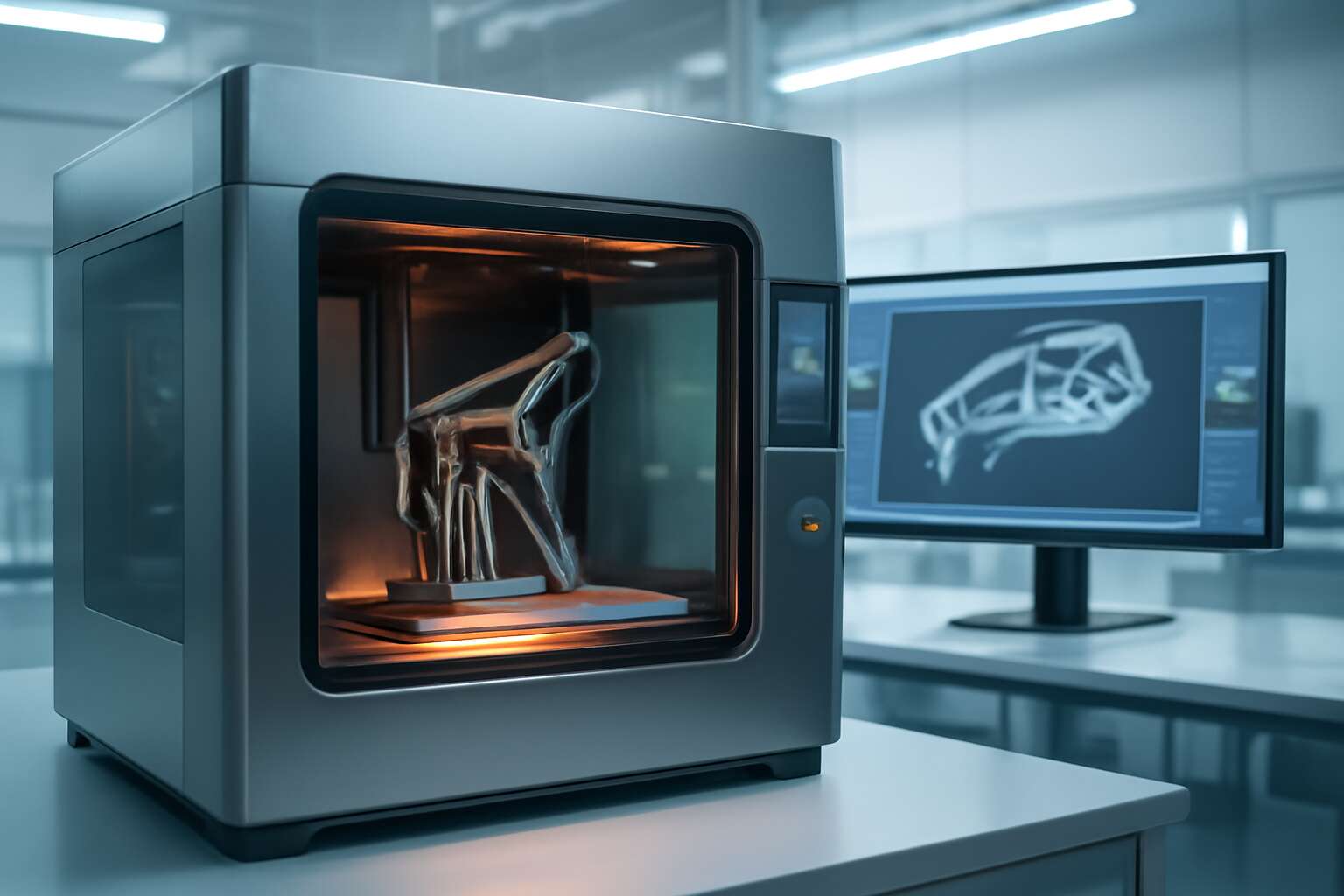
Additive manufacturing for innovative design and production
Design optimization and topology
Across South Africa’s dynamic workshops, prototyping now often slips from months into weeks—a bold tempo that reshapes risk and reward. This is the promise of additive manufacturing for innovative design and production. With design optimization and topology as twin compass points, parts are lighter, stronger, and smarter, tailored to their tasks rather than to their molds.
In practice, optimization unlocks performance envelopes that were once theoretical. Engineers choreograph load paths with software that respects the print head and the material, turning every layer into a deliberate sentence of strength.
Local teams recalibrate expectations, embracing rapid iteration while safeguarding reliability. The cadence is poetic and pragmatic: the design breathes, adapts, and endures, shaped by the unique demands of SA industry and the global horizon beyond.
Material science and process capabilities
Across South Africa, prototyping cycles are shrinking from months to weeks, a testament to additive manufacturing for innovative design and production. The right material science and process control let performance be engineered into every layer, not bolted on later.
Material science and process capabilities are the twin gears driving this revolution. From aluminium alloys to tough polymers and fiber-reinforced composites, feedstocks are chosen for task-specific performance. Precise heat treatment and in-situ metrology tame anisotropy and ensure repeatable results.
Consider these capabilities:
- Multi-material printing to integrate function and weight savings
- In-situ sensing and gradient properties for functionally tuned parts
- Post-processing pipelines that align surface finish with end-use requirements
In SA workshops, we balance exploration with reliability, turning design intent into production-ready parts while controlling costs and lead times. The future belongs to those who understand both the science and the craft.
Production scalability and workflow integration
Across South Africa’s manufacturing landscape, production cycles are shrinking from months to weeks. This is where additive manufacturing for innovative design and production shines, turning bold concepts into testable parts at speed. With scalable printers and task-specific materials, performance is engineered into every layer, not bolted on later.
Production scalability hinges on a workflow that stitches design, simulation, and fabrication into one digital thread. When data travels from CAD to the shop floor, parts move from concept to production with fewer surprises.
- End-to-end data traceability across build and post-processing
- ERP and MES integration to align production with demand
- Modular post-processing pipelines to standardize surface finish and tolerances
In South Africa, shops balance exploration with reliability, turning intent into production-ready parts while keeping costs and lead times in check.
The future belongs to teams that marry science with craft, delivering consistent performance through synchronized schedules, digital threads, and smart quality controls.
Innovation trends and case studies
South Africa’s workshops fuse speed with spirit, turning ideas into testable parts in weeks rather than months. A Cape Town designer sighs, “We turned a reckless sketch into a real component in days,” a vivid reminder of additive manufacturing for innovative design and production.
Trends bloom under the digital loom: simulations chop cycles, local micro-factories stitch supply, and materials tune to climate and craft.
- Localized manufacturing hubs trimming transport delays
- On-demand tooling that cuts waste and inventory
- Open software ecosystems speeding collaboration
Case studies ripple across Gauteng and Durban—medical devices refined, automotive fixtures perfected—showing ideas taking shape with speed and reliability. The future belongs to teams blending science with craft, letting vision breathe through steel and resin.

0 Comments