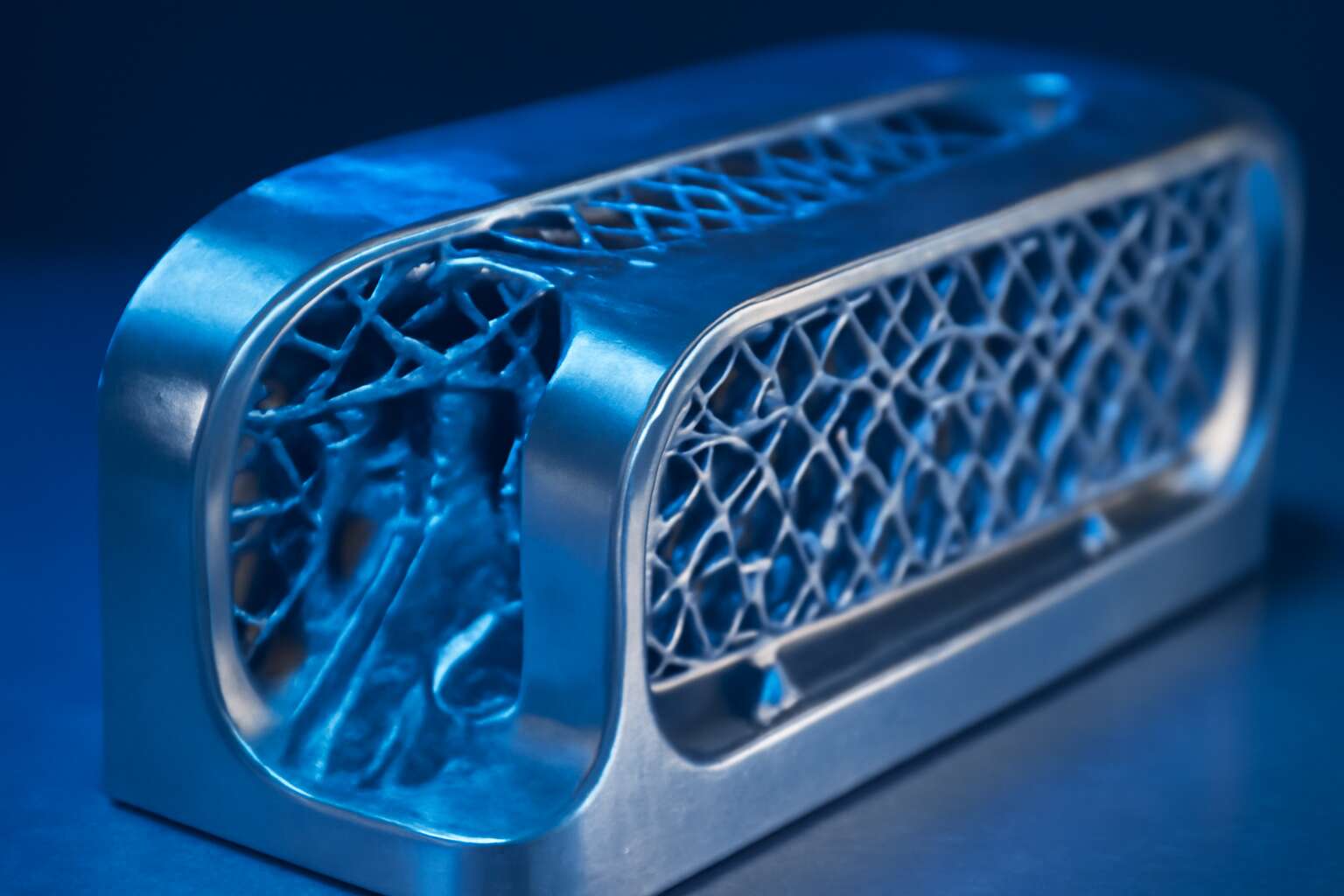
Harnessing Additive Manufacturing for Heat Exchanger Development
Fundamentals of AM in Heat Exchanger Design
Heat moves to a fresher tempo, born of additive manufacturing heat exchanger craft. In South Africa, engineers glimpse a future where cooling cores hide labyrinths of channels and leaner frames—lead times can drop by up to 40%. The promise is a new cadence, where complexity becomes a catalyst.
Fundamentals of AM in heat exchanger design begin with freedom: three-dimensional topology, lattice scaffolds, and topology optimization turn constraints into opportunities. The result is parts that breathe with the flow, reducing weight without sacrificing heat transfer.
- Complex internal geometries boost heat transfer
- Lighter parts with retained strength
- Rapid prototyping and iteration
For South African manufacturers, this means adaptable solutions across climates—from arid inland to humid coastal zones. This additive manufacturing heat exchanger opens new cooling horizons, offering corrosion-resilient surfaces and materials tuned for longevity in local service conditions.
Design Strategies for Additive Manufacturing Heat Exchangers
South Africa’s engineering scene is waking to a new tempo: lead times for cooling cores can drop up to 40% with additive manufacturing heat exchanger concepts. It’s not magic—it’s a reimagining of flow, where intricate pathways weave resilience into every unit, ready for inland heat and coastal salt alike.
Design strategies for this frontier blend performance with practical fabrication:
- Internal channels tuned for smooth flow and easy cleaning
- Gradient walls and lattices to trim weight without sacrificing strength
- Self-supporting geometries that minimize post-processing and corrosion risk
Across South Africa’s industries—mining, energy, and manufacturing—the additive manufacturing heat exchanger becomes a flexible, corrosion-resistant asset tuned for local service conditions. The additive manufacturing heat exchanger design invites rapid iteration and reliable uptime without compromising on heat transfer.
Materials and Manufacturing Techniques
South Africa’s engineering tempo has a new rhythm: prototypes sprint from sketch to test bench faster than a coffee break, and the payoff is tangible. The additive manufacturing heat exchanger isn’t a magic trick—it’s a disciplined craft that bends flow and material science into something practical for coastal salt and inland heat alike!
Materials choices now roam beyond traditional brass and copper. We’re pairing copper alloys, stainless steels, and nickel-based alloys with lattice-rich geometries, tuned for corrosion resistance and high surface area. The result is components that survive SA’s diverse service conditions without begging for frequent replacements.
- Materials: copper alloys, stainless steel, nickel‑based alloys, aluminum
- Techniques: laser powder bed fusion (LPBF), directed energy deposition (DED), binder jetting
- Post-processing: hot isostatic pressing (HIP), surface finishing, passivation
Across sectors—mining, energy, and manufacturing—the approach enables rapid iteration and reliable uptime while maintaining crisp heat transfer in harsh environments.
Applications, Case Studies, and Standards
In South Africa, uptime is currency, and plants that prototype once, test twice, and ship components that last are driving the commercial rhythm. Pilot programs have shown up to 40% faster iteration, with the additive manufacturing heat exchanger delivering resilient performance for coastal salt and inland heat alike!
Across SA’s mining, energy, and manufacturing corridors, case studies reveal faster iterations, better corrosion resistance, and dependable performance under harsh service. The evidence is tangible and repeatable.
- Faster design iteration from CAD to test bench
- Enhanced life in salt-rich coastal environments
- Clearer qualification paths through evolving industry standards
Standards are catching up, outlining test regimes, post-processing like hot isostatic pressing, and surface finishing to guarantee leak-tight, high-pressure operation. In South Africa, these frameworks ensure that heat-transfer components meet safety, procurement, and long-term plant reliability requirements.

0 Comments