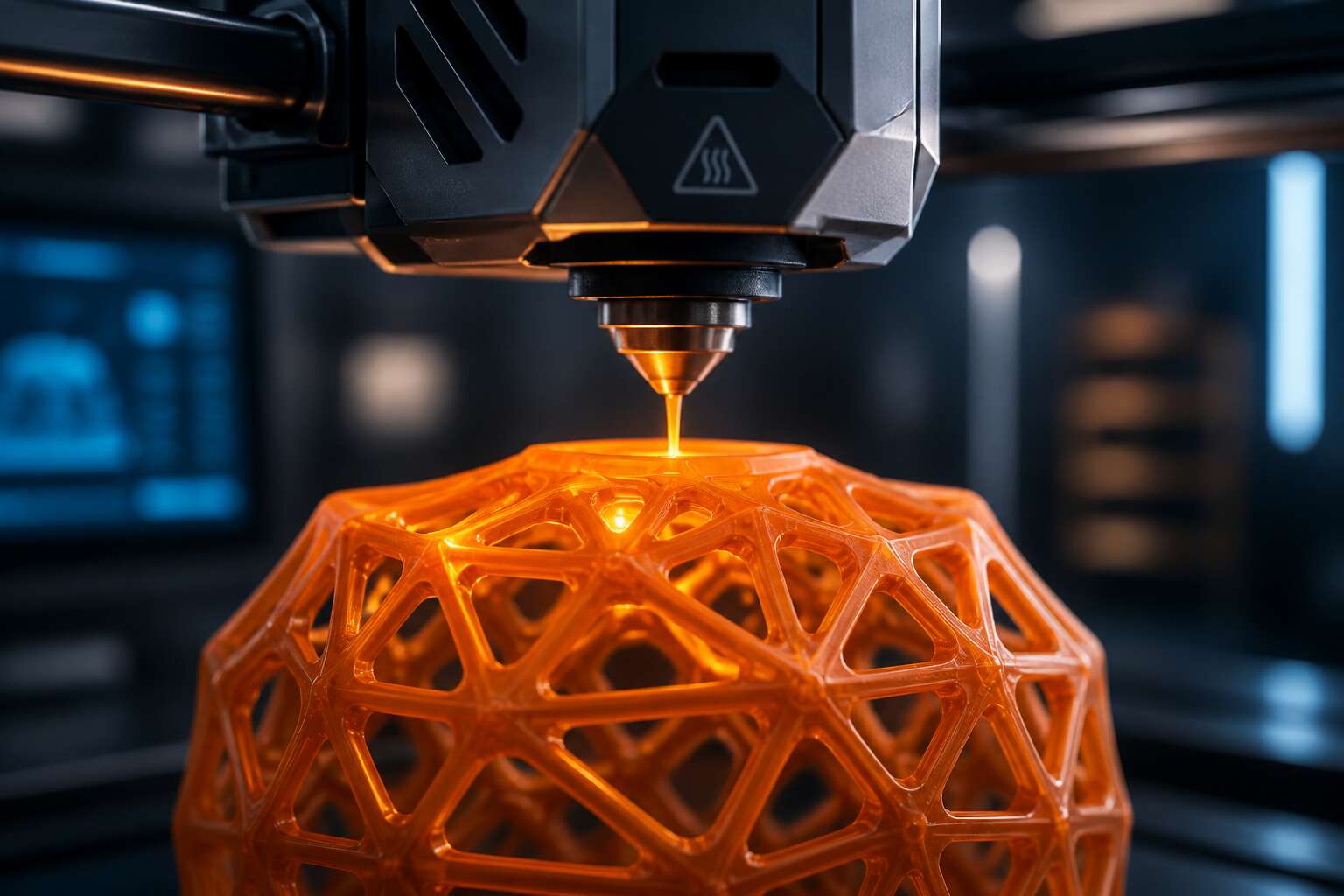
Understanding Additive Manufacturing Technology
What Is Additive Manufacturing?
Additive manufacturing is exactly what the name implies: production by accretion. A digital model is sliced into microscopic layers, and a machine fuses metal or polymer powder one slice at a time. No mold, no cutting tool, no massive block of material to remove. The design freedom alone changes how mechanical engineers approach geometry.
Fresh commercial sectors in South Africa are adopting this method for spare parts, turbine internals, and surgical guides. In my experience, the machine chamber behaves like a capsule that guards chemical and thermal secrets. The operator must track gas purity, powder size, and chiller temperatures. That is where real success or failure takes root.
- Layer thickness and line spacing
- Laser power variations
- Support structure removal
- Residual stress relief
Additive manufacturing articles tend to celebrate the print speed and beautifully rendered outputs. Those details skip the gritty inspection work. The most honest sources will be transparent about these boundaries, since they are the difference between one lucky job and a repeatable production process.
Key Technologies and Processes
Powder bed fusion heats metal in layers, but the binding technology in South African shops is thermal control. A two degree drift in chamber temperature changes part density, so I verify the thermocouple every morning. Directed energy deposition and binder jetting each carry their own failure modes. Scan path alignment with melt pool behaviour decides the outcome.
Most additive manufacturing articles show finished parts, not the calibration work. I track recoater blade wear and build plate levelling on every run. The processes that hold up are heat curve verification, humidity checks, and layer alignment.
- Verify melt pool size against the scan path
- Record powder reuse cycles per batch
- Measure part shrinkage after each layer pass
Repeatable output comes from documented process limits, not from print speed.
Materials Used in Additive Manufacturing
Polymers and Plastics
Thermoplastics are the primary materials in additive manufacturing. They can be melted and resolidified without breaking down, allowing rapid iteration.
Common polymers include PLA, ABS, and nylon. PLA offers easy printing, ABS provides durability, while nylon resists abrasion. For specific applications, these materials are valuable:
- PLA: biodegradable, low warp
- ABS: strong, impact resistant
- Nylon: flexible, wear resistant
For those exploring additive manufacturing articles, understanding polymer behavior is crucial for print success.
Metals and Alloys
Metal powders lie dormant in sealed chambers, waiting for a beam of light to wake them. While polymers bend and soften, metals demand more from the machine. Titanium offers a strength to density ratio that aerospace engineers covet. Stainless steel brings corrosion resistance to medical implants and maritime components. Aluminium alloys shed excess mass in automotive builds. Nickel superalloys endure the searing heat of turbine engines.
The selection depends on the application:
- Titanium alloys: biocompatible, high strength
- Stainless steel: durable, recyclable
- Aluminium: lightweight, thermally conductive
- Nickel superalloys: heat resistant, creep resistant
Each powder particle, typically 15 to 45 microns across, is fused by laser or electron beam inside an inert argon atmosphere. Oxidation is the enemy; a single trace of oxygen can spoil an entire batch! For those who follow additive manufacturing articles, metal printing remains the sternest test of patience and precision.
Ceramics and Composites
Ceramics are the alchemists of the additive workshop, but they demand respect. A zirconia part emerges from the printer with a hardness that scratches steel, yet it shrinks by nearly twenty percent during sintering. Alumina offers electrical insulation for high voltage switchgear, while silicon carbide endures the abrasive dust of South African mining operations. Composites, by contrast, build resilience through contradiction. Carbon fibre reinforced nylon flexes under load without fracturing, and glass filled polyamide holds its shape in humid coastal air. The printer must negotiate each layer, because trapped air creates voids and uneven cooling invites warpage. Readers of additive manufacturing articles will recognise this delicate balance.
Consider the common ceramic feedstocks:
– Alumina for thermal barriers
– Zirconia for dental restorations
– Silicon nitride for bearing surfaces
Each powder behaves differently, and the operator learns to read the grain.
Advanced and Multi-Material Printing
Two feedstocks in a single build cycle change how engineers approach assembly. Multi-material printing switches between rigid polycarbonate and elastomeric polyurethane, producing a hinge that hardens at its base and flexes at its tip. Each interface demands precise thermal control, and the printer must purge the nozzle between switches.
Common multi-material arrangements:
- Stiff cores with compliant outer surfaces
- Conductive traces embedded inside dielectric bodies
- Soluble supports removed after printing
Residual material contaminates the next layer without adequate purging. Wipe towers consume extra filament but prevent cross contamination. Software simulation predicts shrinkage differences between adjacent materials before the build starts. That saves real money! South African engineers use these machines to consolidate assemblies into single printed parts.
Readers searching for additive manufacturing articles will find that these advanced systems require careful maintenance.
Industrial Applications of Additive Manufacturing
Aerospace and Defense
Engineers at a defence contractor once spent 400 hours machining a single inlet casing. The same component now prints overnight. That shift defines aerospace today. In additive manufacturing articles, the emphasis usually falls on material properties, but the real story is operational freedom. Designers can consolidate dozens of fasteners into one lattice structure. They can embed cooling channels that no drill bit could reach. For South African suppliers, this means local production of spares that were previously imported.
Typical applications include:
– Rocket engine injectors printed from nickel superalloys
– Unmanned aerial vehicle airframes with integrated wiring conduits
– Replacement brackets for legacy fighter jets
Each part solves a specific supply chain problem. These additive manufacturing articles rarely capture the fatigue testing involved. Still, the certification path is now clear. This is not prototyping. It is certified, flight-ready hardware, delivered months faster than traditional casting.
Automotive Manufacturing
A classic car restoration shop in Johannesburg once waited eleven months for a single trim part. The vehicle sat on a lift, immobile, while the owner searched international databases. That delay is the exact problem automotive additive manufacturing now erases. The industry has pivoted from using 3D printing solely for clay models and concept styling. The current focus is on smelting entire production tooling systems and obsolete fixtures that keep assembly lines moving. The economics differ from aerospace. Weight reduction matters, but the pressing drivers are cost, speed, and the ability to halt the waste of warehousing.
Consider the manufacturing of jigs and fixtures. A traditional machined aluminium gauge can take weeks to produce and requires a specific vendor. A printed polymer gauge achieves the same dimensional accuracy overnight. This shift allows a Durban plant to adjust its robotic welders for a new model variant without shutting down production for a full week. The tolerance replication is exact. The tooling is also lighter, which reduces strain on robotic arms and lowers energy consumption.
The most impactful trend involves large-format machines. They are used for rapid tooling on lowvolume runs. The pragmatic applications are clear:
– Production of custom assembly line grippers designed for a single component
– Durable thermoforming tools for boot liners and dashboards
– On-demand replacement of plastic clips and housings that are no longer stocked
The motorsport sector in South Africa also leverages this for bespoke aerodynamic elements. A wing endplate that once required a CNC program and a solid billet of aluminium now grows layer by layer in a carbon fibre reinforced nylon. The lead time collapses from four weeks to forty eight hours. This autonomy allows local racing teams to test aerodynamic tweaks on a Friday and race with them on Saturday.
The broader value is in the elimination of the spare parts warehouse. For a high mileage fleet, storing parts for a decade is a financial drain. Additive manufacturing articles often highlight the materials, but the unspoken victory is the compression of the supply chain. A single digital file replaces a warehouse shelf. The machine becomes the inventory. This is the quiet efficiency driving the industry forward.
Healthcare and Medical Implants
Here is a statistic to make you wince: a patient-specific cranial plate can cost more than a used hatchback. In South Africa, where private healthcare costs spiral, additive manufacturing articles now focus on the operating theatre. Hospitals and implant manufacturers use the technology to produce porous titanium implants that mimic trabecular bone. The lattice structure cannot be milled, and it promotes bone ingrowth with aggressive enthusiasm.
Surgeons in Johannesburg implant acetabular cups with a texture that fools the body into accepting the foreign object. A CT scan becomes a digital file, and that file becomes a unique implant. No inventory, no sterile storage, no guesswork.
- Porous lattice structures for better fixation
- Anatomical guides that reduce theatre time
Additive manufacturing articles often quote the same benefits, but the machine compresses a complex supply chain into a single bedside file.
Consumer Goods and Electronics
The consumer goods sector shares this momentum. In Cape Town, a design studio prints ergonomic gaming controllers with internal channels for cooling. These channels are impossible to injection mold. The result is a product that stays cool during marathon sessions. Additive manufacturing articles often highlight electronics. Consider bespoke drone frames that integrate antenna mounts and battery clips into a single print. This approach reduces assembly steps and improves durability.
For audio equipment, manufacturers print acoustic metamaterials that shape sound waves without heavy enclosures. The factory floor becomes a digital library. Every file holds a product design, waiting for the next 3D printer to bring it to life.
Construction and Architecture
In Johannesburg, a 3D printer laid 40 square meters of wall in 24 hours. That beats any bricklayer! Construction sites are turning to additive manufacturing articles for structural components. Concrete is printed layer by layer, and the machine never tires.
Architects design curved facades that are impossible with formwork. The printer follows a digital blueprint, depositing material only where needed. This cuts waste by 30 percent and shortens project timelines. For South Africa, we need this now. Housing demand is urgent, and skills are scarce.
- Custom column geometries for coastal wind resistance
- Insulated wall panels with integrated thermal channels
- On-site repair of heritage buildings using scanned data
These are not laboratory experiments. They are working projects. The technology does not replace human judgment. It extends it.
Benefits and Challenges of Additive Manufacturing
Design Freedom and Customization
Design freedom in additive manufacturing changes how we think about part geometry. Complexity no longer drives up cost the way it does with CNC machining. We can create lattice structures, internal cooling channels, and organic shapes that are impossible to mill! For South African engineers, this means prosthetics tailored to individual patients and mining components adapted to local wear patterns.
But freedom brings real challenges. Build orientation affects mechanical strength. Support structures leave marks that require post-processing. Material behaviour shifts with layer height, so simulation becomes a necessity. Additive manufacturing articles frequently discuss these tradeoffs, yet hands-on testing remains essential.
Consider the common constraints:
– Overhangs demand sacrificial supports
– Surface roughness forces extra finishing steps
– Residual stress can warp large parts
Each limitation requires a design strategy. The payoff is a component that serves its exact purpose with minimal waste.
Reduced Waste and Sustainability
You know what they never mention about saving the planet? The floor of a typical machine shop, covered in swarf. CNC machining can waste 90% of a solid billet, leaving expensive metal shavings destined for the recycler. Additive manufacturing builds only what the part actually requires. For South African operations, that means fewer imported alloy offcuts and a lighter environmental footprint. Sustainability becomes a material ledger, not a marketing slogan.
The tradeoff is real: powder handling and energy consumption deserve scrutiny. Yet the reduction in waste is measurable, and additive manufacturing articles often skip over this quiet advantage. Consolidating multiple components into one printed piece also slashes inventory and transport. Consider the direct savings:
- Raw material volume
- Milling hours
- Scrap disposal costs
That is the sustainability story with actual teeth.
Supply Chain and On-Demand Production
In South Africa, waiting six weeks for a replacement component from overseas is a common frustration. Additive manufacturing articles often present on-demand production as a futuristic convenience. For local mines and power stations, it is a practical solution. Printing a worn impeller or valve seat overnight removes the dependency on distant suppliers. The supply chain becomes shorter, and the risk of production halts drops sharply.
However, this shift brings its own obstacles. Certifying printed parts for high-pressure applications remains slow. Skilled operators are scarce. Powder handling introduces safety protocols that many workshops are not equipped for.
- Reduced warehousing for spare parts
- Faster response to equipment failures
- Greater exposure to global price fluctuations for raw powders
These factors determine whether on-demand production actually delivers value. The technology requires careful investment in training and quality control, especially when human lives depend on the result.
Limitations and Cost Factors
The real cost is the technology itself. For South African workshops, equipment stretches far beyond the printer. Climate controlled rooms, certified powders, and leak proof inspection add layers of expense. A part prints overnight, yet stress testing and certification easily claim as many days. Skilled operators command salaries that rival the regional engineering sector.
Cost factors stack quickly:
- Machine purchase and calibration contracts
- Powder storage, handling, and certification
- Operator training and retention
- Laboratory inspection and quality certification
The bank statement feels the strain before the compressor does. That hidden depth is what most additive manufacturing articles skip entirely.
Quality Control and Standardization
The printer finishes a part in hours, yet weeks often vanish into the labyrinth of verification. Quality control in this industry is not a final checkpoint; it is an ongoing war against porosity and microscopic fractures. The equipment demands constant vigilance, where a single errant particle compromises an entire build.
For us in South Africa, the challenge intensifies under load-shedding’s shadow. Power fluctuations corrupt delicate processes, forcing costly reruns. Standardization remains an elusive ghost. We juggle international ISO frameworks while adapting to local realities like port delays for spare parts.
Consider the essential documentation:
– Material traceability certificates
– Process parameter logs
– Non-destructive testing reports
– Final dimensional analysis
Without these, a marine propeller or medical implant is merely a decorative object. The regulatory maze is a necessary burden, though the path to certification sometimes feels as twisted as a drilled cooling channel. Every additive manufacturing articles highlights the glamour of creation, but we live in the tedious limbo of validation.
Intellectual Property and Security
Additive manufacturing articles often highlight the freedom of digital distribution. In South Africa, that freedom also exposes a serious vulnerability. A stolen CAD file can reproduce a high-value component in minutes. We see these risks daily. The benefits of intellectual property protection in this space are real. Consider what secure digital workflows offer:
- Encrypted build parameters that survive cloud transfer
- Distributed ledger records for provenance verification
- Granular access control for subcontracted printing
The challenges are equally demanding. Small job shops resist security protocols because they slow turnaround. Load shedding forces offline transfers, which bypass encryption. Reverse engineering becomes trivial when physical parts carry no unique identifiers. All additive manufacturing articles that praise this technology must also acknowledge that our legal frameworks lag behind the speed of file sharing. The same files that enable production create a need for verifiable ownership.

0 Comments