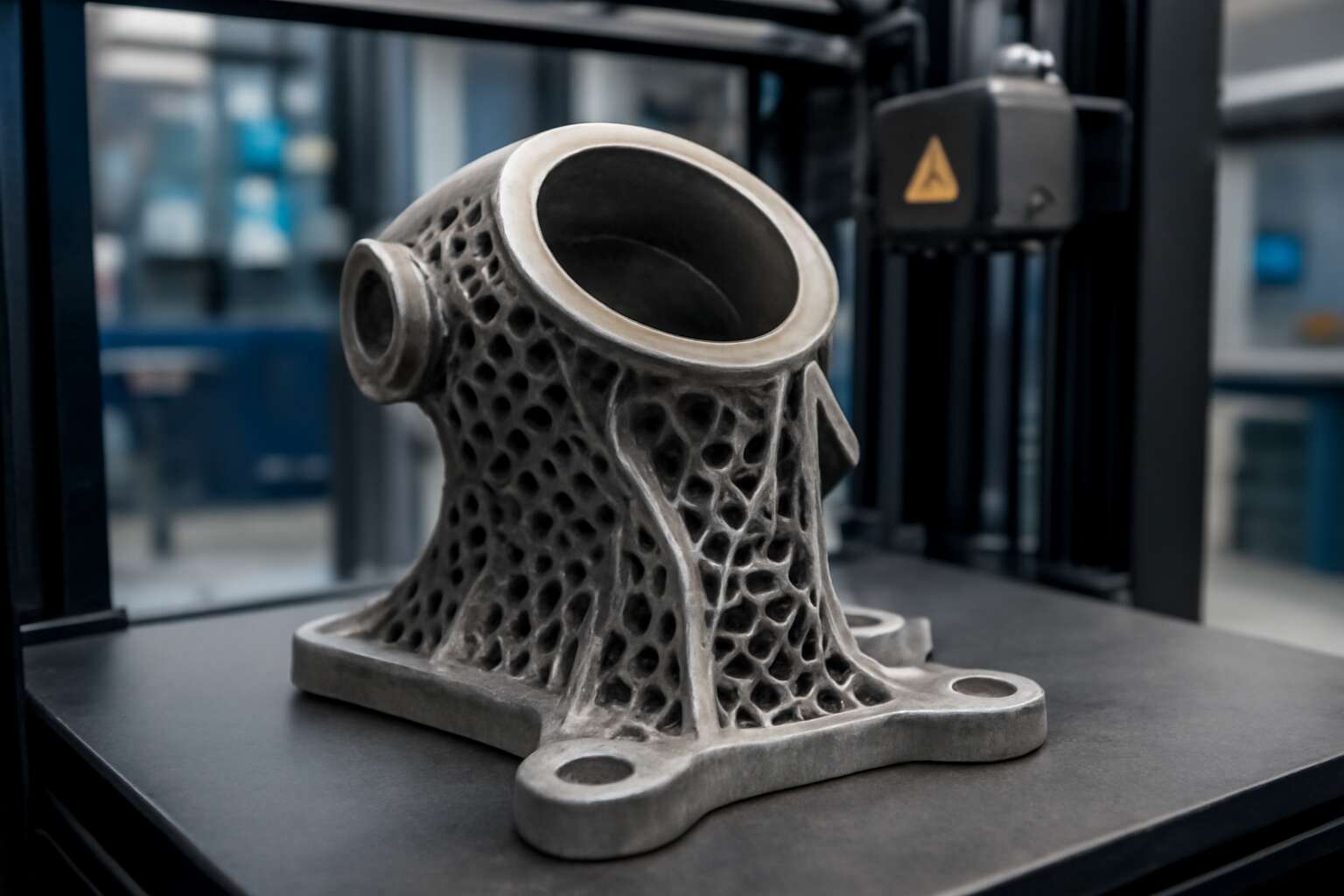
Overview and market rationale for additive manufacturing in the automotive sector
Evolution of additive manufacturing technologies for automotive applications
The car parts pipeline now streams through digital shops, slashing traditional lead times. In South Africa, additive manufacturing in automotive industry has helped some suppliers cut prototyping lead times by up to 50%, signaling a broader redesign of design, testing, and supply chains.
Why now? Lighter parts boost efficiency; local manufacturing reduces exposure to global shocks. For OEMs, on-demand production trims inventory and speeds updates, while reshaping skills and communities.
Evolution of additive manufacturing technologies for automotive applications has moved from pure rapid prototyping to end-use parts that endure heat and vibration. Metal laser processes, tougher polymers, and smarter design rules are enabling more performance from fewer parts.
- Metal laser powder bed fusion (SLM/DMLS) for structural components
- High-temperature polymers and composites for interiors
- Binder jetting and multi-material approaches for lightweight assemblies
As SA facilities mature, the focus is design-for-additive thinking and rigorous qualification to ensure safety and cost efficiency.
Key drivers of adoption in automotive manufacturing
South Africa’s auto ecosystem is learning to run smarter, not harder. Prototype cycles that used to stretch into weeks now arrive in days, slashing lead times by as much as 50%. The result? A reshaped mindset about how parts are designed, tested, and sourced—almost like the factory floor learned to whisper.
This is where additive manufacturing in automotive industry makes its case. On-demand production reduces inventory pressure, while local facilities shield the sector from global shocks. Lightweight, geometrically complex parts unlock efficiency, and design-for-additive thinking accelerates updates without costly tooling or dies.
Key drivers of adoption include:
- On-demand production and rapid iteration
- Lightweight, integrated assemblies
- Resilient, local supplier ecosystems
- Reduced tooling and waste
In South Africa, momentum is turning into practical design evolution.
Competitive advantages and value proposition of AM in automotive
Across South Africa’s auto belt, additive manufacturing in automotive industry is rewriting the rhythm of design and delivery. Prototyped parts arrive in days, not weeks, and lead times shrink by as much as 50%. This is more than speed; it’s a mindset shift toward agile testing, local relevance, and fearless iteration.
Competitive advantages and value proposition emerge from these pillars:
- On-demand production and rapid iteration
- Lightweight, integrated assemblies
- Resilient, local supplier ecosystems
- Reduced tooling and waste
In South Africa, momentum is translating into practical design evolution as OEMs collaborate with local suppliers and universities to tailor parts for SA roads, climate, and regulatory pathways. This wave—additive manufacturing in automotive industry—breathes new life into regional design and supply chains, reducing exposure to global shocks while lifting the sector’s prestige and capability.
Search intent and SEO opportunities around automotive AM
From the dust of SA’s auto belt to the humming labs of local universities, a quiet revolution is taking shape. Lead times for prototyped parts have fallen from weeks to days, and local design cycles are shrinking by up to 50%. I’ve witnessed how this recalibration transforms testing, validation, and iteration for South African roads!
The market rationale rests on a few concrete accelerants:
- Local relevance for SA roads and climate
- Regulatory pathways tailored to SA standards
- Ecosystem resilience through OEMs, suppliers, and universities
This ecosystem supports additive manufacturing in automotive industry as a strategic pillar for SA growth. As momentum builds, the SA automotive sector stands poised to reimagine its supply chains.
Global market trends and growth projections for automotive AM
Global adoption of additive manufacturing in automotive industry is accelerating, with market observers forecasting a double-digit growth trajectory into the 2030s. The leap from concept to real, testable parts is no longer a gamble; it’s speeding up calibration and reducing risk. I’ve watched labs hum with new alloys and rapid prototyping, turning ideas into production-grade components in days rather than weeks.
Market rationale rests on three catalysts:
- Resilient supply chains and nearshoring
- Rapid iteration cycles shortening validation
- Access to complex geometries and lighter parts
Global trends point to sustained expansion in the automotive sector, with OEMs and suppliers driving standardization and smarter production. The market is expected to maintain a double-digit CAGR into the late 2020s and beyond, as EVs boost demand for lighter, more efficient components. For South Africa, momentum hints at local design and supply-chain opportunities that can reimagine regional capabilities.
Materials science and design for automotive additive manufacturing
Materials and alloys used in automotive additive manufacturing
South Africa’s automotive landscape is waking to a quiet revolution: additive manufacturing in automotive industry can yield parts up to 40% lighter while stitching complex geometry into single-shot components. In practical terms, engineers can replace multiple fasteners with a lattice vault, slashing assembly time and sharpening heat management. Materials science guides alloy choice and process windows, aligning microstructure with service life and vibration tolerance.
- Aluminium alloy AlSi10Mg
- Ti-6Al-4V (Titanium)
- 316L stainless steel
- 17-4 PH stainless steel
- Inconel 625
- Maraging steel MS1
Design strategies such as topology optimization and lattice structuring unlock performance while keeping parts manufacturable. In South Africa, local suppliers blend conventional workshops with AM processes to meet OEM standards and compliance, weaving resilience into the supply chain. This is the heart of how additive manufacturing in automotive industry enables robust, compact, heat-efficient components.
Topology optimization and lightweighting opportunities
Light in a quiet forge: South Africa’s automotive workshops are waking to a dawn where parts shed up to 40% of their heft. Materials science steers alloy choice and process windows, aligning AlSi10Mg’s lightness with Ti-6Al-4V’s grit, and 316L or 17-4 PH for resilience. Proper heat management tunes microstructure for service life and smoother vibration. Topology optimization and lattice sculpting unlock performance while staying manufacturable, stitching complex geometry into single-shot components rather than a chorus of fasteners.
In this living chapter, design levers tilt toward lattice vaults and internally cooled channels. This is additive manufacturing in automotive industry shaping the future of SA supply chains. Consider these strategies:
- Topology optimization
- Lattice structuring
- Conformal cooling channels
Design for additive manufacturing best practices in automotive
South Africa’s automotive workshops are waking to a dawn where parts shed up to 40% of their heft, and the factory floor hums with new possibilities.
This is the realm of additive manufacturing in automotive industry, where materials science shapes alloy choice and process windows, tuning microstructure for service life and smoother vibration. From AlSi10Mg to Ti-6Al-4V, engineers balance lightness, strength, and corrosion resistance on the micro-scale.
Design-for-AM best practices in automotive align function with manufacturability and performance.
- Supports are minimized and orientation optimized to preserve surface quality.
- Lattice architectures deliver stiffness without excess weight.
- Conformal cooling channels redefine thermal management on the part.
- Integrated features can reduce assembly steps and fasteners.
Certification, standards, and quality assurance considerations
In South Africa, the math of materials is shaping the road ahead. Additive manufacturing in automotive industry hinges on selecting the right alloy and tuning process windows to forge microstructures that endure service life and rough roads, from AlSi10Mg to Ti-6Al-4V. Certification and standards work with design goals to deliver reliability as components move from concept to curb.
- Material traceability and chemical verification
- Process qualification and build parameter records
- Non-destructive testing and final part validation
- Post-processing controls and quality audits
Quality assurance and regulatory alignment then bind the workflow, ensuring that every part meets safety, corrosion resistance, and fatigue expectations on South African highways.
Material testing, reliability, and lifecycle performance in automotive AM
Across South Africa’s engineering landscape, forecasts project additive manufacturing in automotive industry to claim a notable share of components by 2030—an audacious shift that reshapes the design brief. Materials science becomes the compass, tuning alloy choice and process windows to forge microstructures that endure rough roads and salt-laden spray.
Material testing in automotive AM is a saga of microstructure checks, mechanical tests, and corrosion screening, with full build traceability guiding every part. This discipline underpins additive manufacturing in automotive industry lifecycles, ensuring reliability and lifecycle performance are design constraints, not afterthoughts, informing post-processing and surface treatments that guard against wear and harsh climates on SA highways.
- Material characterization and real-world alloy behavior
- Fatigue, creep, and corrosion performance across lifecycle stages
- Non-destructive evaluation for final parts
- Post-processing controls and surface stabilization
Manufacturing processes and workflow integration for automotive AM
AM processes applicable to automotive components (SLS, DMLS, SLM, FDM, EBM)
Manufacturing processes in automotive AM demand a clean handoff from design to production. SLS and FDM handle rapid prototypes and fixtures, while DMLS/SLM and EBM tackle final, high-strength metal parts with tight tolerances. The real win is workflow integration: CAD models feed printers, build parameters are locked in, and post-processing steps—machining, surface finishing, and heat treating—are planned early to protect cycle time and cost. In the South African automotive landscape, this translates to tighter traceability and a seamless digital thread across the additive manufacturing in automotive industry ecosystem.
To illustrate, consider these common workflow touchpoints with the listed processes:
- SLS for durable polymer parts and functional prototypes
- DMLS/SLM for complex metal geometries and lightweighting
- FDM for jigs, fixtures, and cost-effective tooling
- EBM for high-temperature alloys and demanding components
When paired with PLM, ERP and robust QA, the AM workflow becomes a performance multiplier across the supply chain.
Hybrid manufacturing and tooling applications in automotive
Hybrid manufacturing in automotive turns parts and tooling into a single, accelerated workflow. SLS polishes rapid polymers into durable fixtures; FDM yields cost-efficient jigs and tooling; DMLS/SLM and EBM push complex metal geometries and high-strength components toward production. In practice, a fixture might begin life in SLS and a companion end-use part in DMLS—coexisting within the same digital pipeline.
- SLS for polymer parts
- DMLS/SLM for metal finals
- FDM for jigs and fixtures
We see currents of change running through the workflow: CAD models feed printers, build parameters are locked in, and post-processing steps—machining, surface finishing, heat treating—are scheduled early to protect cycle time and cost. When paired with PLM, ERP and robust QA, the AM workflow becomes a performance multiplier across the supply chain. In South Africa, tighter traceability and a seamless digital thread unlocks hybrid manufacturing and tooling applications in the automotive sector. This is a milestone for additive manufacturing in automotive industry.
Digital thread, data management, and traceability in AM workflows
Every build is a thread beckoning a tapestry of data. In South Africa’s evolving automotive sector, the digital thread binds CAD, printers, and post-processing into one seamless flow. A leading SA engineer says, “The digital thread is our memory and compass.” When data governance and traceability ride alongside design intent, the promise of additive manufacturing in automotive industry becomes a living cadence, not a string of isolated parts.
Within this workflow, three pillars keep the rhythm honest:
- End-to-end data management and version control so every part has a verifiable history
- Digital twin integration and ERP/PLM alignment to protect cycle time and cost
- Traceability across materials, processes, and post-processing for QA and recalls
Together, these elements weave a resilient, auditable road map that makes this technology a trusted driver of South Africa’s supply chains.
Post-processing, finishing, and surface treatment for automotive parts
In the realm of additive manufacturing in automotive industry, post-processing is the quiet artisan turning a printed concept into a road-ready part. An SA engineer once quipped that “finish is where the business case is won or lost,” and the data agrees: surface integrity often dictates fatigue life and warranty costs. When post-processing is woven into the digital thread from design to deployment, the cadence remains swift and the outcome trustworthy.
From the finish line back, post-processing and surface treatment must align with material, geometry, and downstream assembly. The workflow should optimize cleanliness, control, and predictability, not spectacle. Typical steps include:
- Surface finishing and deburring to remove print artifacts
- Surface treatment and coatings for wear, corrosion resistance, and color/appearance
- Non-destructive inspection and QA checks after each stage
Lean production, automation, and supply chain implications in AM
Manufacturing processes in the realm of additive manufacturing in automotive industry demand a lean, predictive cadence. Lean production here isn’t a buzzword—it’s a discipline that trims time, reduces waste, and sharpens quality before the first part hits the road. In South Africa’s evolving auto corridors, automation must augment craft, not erode it; I’ve seen data turn uncertainty into dependable decisions!
- End-to-end digital thread integration across design, production, and after-sales
- On-demand, localized production hubs to shrink lead times and inventory
- Standardized modular automation for AM workflows and supplier collaboration
Workflow integration demands a resilient supply chain, where prototyping flows into provisioning in hours, not weeks. Automated inspection, just-in-time deburring, and traceable data become non-negotiables at every stage. The payoff, as I’ve observed, is shorter cycles, lower warranty exposure, and a stronger, more adaptable backbone.
Integration challenges and scalable production strategies for automotive AM
In South Africa’s evolving auto corridors, manufacturing processes in automotive AM demand a lean, predictive cadence. Across early adopters, validation lead times shrink by up to 40%, a whisper of the future. This is a frontier of additive manufacturing in automotive industry where waste is exorcised and quality tightened before the first part sees daylight. The dance between concept and manufacture must breathe as one, or cadence falters and delays creep in like night fog.
To tame workflow integration, build a quiet, resilient backbone with these levers:
- Localized, on-demand hubs that shrink lead times
- A digital thread linking design, build, and after-sales data
- Modular automation that scales with part complexity and volume
The payoff is shorter cycles, lower warranty exposure, and a backbone that stays lit as production grows, ready to absorb shocks with grace.
Use cases, safety, regulation, and sustainability in automotive AM
Prototype-to-production pathways for automotive components
Safety-critical applications, regulatory considerations, and risk management
Across the shop floor, a new certainty takes shape: additive manufacturing in automotive industry is accelerating not just parts, but trust. “We print confidence layer by layer,” a South African AM strategist observes, and the idea sticks: safety and speed can coexist. In this lane, safety-critical decisions hinge on rigorous validation and traceability.
Use cases span lightweighting for structural brackets, bespoke jigs, and rapid spare parts—each demanding strict risk controls.
- Design validation and nondestructive testing protocols for critical parts
- Lifecycle traceability and post-processing QA to protect performance
- Regulatory mapping, supplier qualification, and risk-informed change control
Regulatory considerations require clear risk management frameworks, such as FMEA, process capability studies, and robust supplier audits, while sustainability is pursued through energy-conscious production and responsible end-of-life strategies.
End-of-life, recycling, and circular economy for AM parts
In South Africa’s auto ecosystem, spare-parts delays are being chopped in half thanks to additive manufacturing in automotive industry—pilot programs report up to 60% faster turnarounds and dramatically reduced obsolescence. It’s not magic; it’s confidence printed layer by layer, with a practical bend toward efficiency.
Use cases span lightweight structural brackets, bespoke jigs, and rapid spare parts, each demanding risk controls. Safety and quality hinge on design validation and nondestructive testing protocols for critical parts, lifecycle traceability, and robust post-processing QA.
Regulatory mapping, supplier qualification, and risk-informed change control keep pace with governance realities. Sustainability travels hand in hand with energy-conscious production and responsible end-of-life strategies for AM parts within a circular economy.
- End-of-life pathways for AM components
- Circular supply chains and material reclamation
- Energy-efficient processing and waste minimization
Cost analysis, ROI, and total cost of ownership in automotive AM
In South Africa, the cost math of additive manufacturing in automotive industry is turning into a competitive edge, with pilot programs reporting up to 60% faster spare-part turnarounds. Use cases span lightweight structural brackets, bespoke jigs, and rapid spare parts—each demanding risk controls and lifecycle thinking, turning confidence into speed on the plant floor.
ROI and total cost of ownership hinge on design validation, nondestructive testing, and rigorous post-processing QA. Safety is woven into the process from the start; when well managed, the savings multiply. The main cost drivers include capital amortization, material efficiency, and energy use:
- Design validation and testing costs
- Post-processing and surface finishing
- Lifecycle traceability and regulatory compliance
Regulatory mapping and supplier qualification keep pace with governance realities, while sustainability travels hand in hand with energy-conscious production and responsible end-of-life strategies for AM parts within a circular economy.
Sustainability benefits and energy efficiency of additive manufacturing
In South Africa, additive manufacturing in automotive industry is turning spare parts into sprint-ready assets. Use cases span lightweight structural brackets, bespoke jigs, and rapid spare parts that keep plants running without the usual wait.
Safety is built in from the start: design validation, nondestructive testing, and robust post-processing QA turn risk into confidence on the plant floor.
Regulatory mapping and supplier qualification stay ahead of governance realities, ensuring traceability and compliant change control across the lifecycle.
Sustainability benefits and energy efficiency are the real fuel—less waste, lower tooling costs, and end-of-life strategies that support a circular economy.
- Material efficiency and energy-conscious production
- End-of-life recycling and circular economy readiness
Industry case studies and real-world examples in automotive AM
South Africa’s automotive plants are turning spare parts into sprint-ready assets. In the realm of additive manufacturing in automotive industry, components that once waited in the supply chain now arrive on the line within days, boosting uptime and output. Use cases span lightweight structural brackets, bespoke jigs, and rapid spare parts that keep plants moving.
- Lightweight structural brackets
- Bespoke jigs
- Rapid spare parts
Safety is built in from the start: design validation, nondestructive testing, and robust post-processing QA turn risk into confidence on the plant floor.
Regulatory mapping and supplier qualification stay ahead of governance realities, ensuring traceability and compliant change control across the lifecycle. Digital thread and audits are increasingly shaping automotive environments.
Sustainability benefits and energy efficiency are the real fuel—less waste, lower tooling costs, and end-of-life strategies that support a circular economy. Material efficiency and energy-conscious production, and end-of-life recycling alignment, are guiding daily manufacturing decisions.



0 Comments