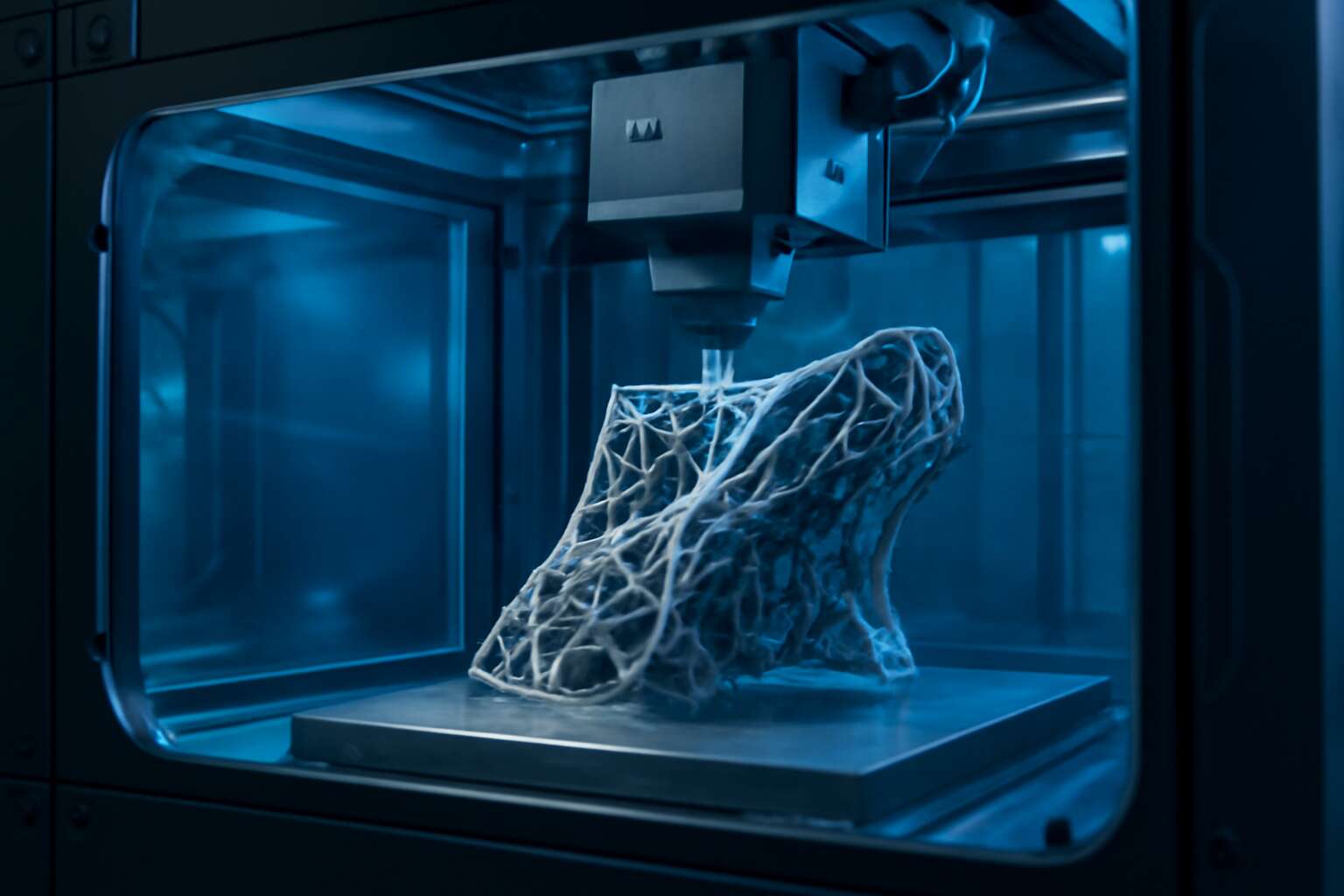
Comprehensive guide to additive manufacturing technologies and their applications
Industrial and manufacturing applications
Factories on the cusp of a renaissance prove that prototypes to production can happen in days, not months. In this brisk new era, additive manufacturing applications are rewriting the playbook for speed, customization, and resilience on the shop floor.
A holistic guide to the technologies reveals how different processes map to real outcomes. For speed and affordability, fused deposition modeling (FDM) offers rapid prototypes; stereolithography (SLA) delivers fine details; selective laser sintering (SLS) yields strong, functional parts. And when metal parts are essential, direct metal laser sintering (DMLS) opens doors that traditional tooling cannot.
- FDM for rapid prototypes
- SLA for high-detail components
- DMLS for production-grade metal parts
In South Africa, manufacturers in mining, automotive, and healthcare are weaving these technologies into everyday operations, balancing local supply chains with global standards, and keeping customers waiting less and smiling more.
Healthcare and medical device applications
Across South Africa’s clinics and research labs, additive manufacturing applications in healthcare are turning speed into a clinical advantage. Recent data show patient-specific devices can transition from concept to operating room weeks faster than traditional routes, changing outcomes and costs. This targeted overview connects the technology to real medical use cases that matter on the ground.
Key healthcare applications include:
- Custom implants using titanium alloys and biocompatible polymers
- Surgical guides and preoperative models
- Dental restorations, aligners, and temporaries
- Prosthetics and prosthetic sockets tailored to individuals
In South Africa, hospitals, universities, and medtech startups are aligning biocompatible polymers, titanium, and sterilisation standards to deliver safer, patient-centric care. The technology continuum—from FDM to DMLS—frames a future where medicine meets precision.
Energy, power, and sustainability applications
Energy and engineering in South Africa is sprinting toward on-demand manufacturing. Imagine wind turbines or solar thermal systems with components printed in one go, locking in performance and reducing lead times. “Speed is the new material,” notes a leading energy innovator, and it rings true for additive manufacturing applications that slash prototyping and maintenance cycles. It’s all within reach!
A comprehensive guide to technologies spans FDM for lightweight housings, SLS and binder jetting for durable brackets, and DMLS/EBM for high-temperature metal parts. In energy and sustainability, these methods enable heat exchangers with intricate internal channels, customised pump housings, and turbine components tuned for offshore or desert conditions.
For practical readers, consider these vectors:
- Lightweight, robust brackets for wind and hydro installations
- Custom heat exchangers with intricate cooling channels
- On-demand spare parts for remote mines and plants
Aerospace, automotive, and defense applications
Momentum in manufacturing has a pulse you can feel. In 2024, additive manufacturing applications surged more than 20%, turning spare parts into on-demand assets. “Speed is the new material,” a leading innovator declares, and that idea now fuels aerospace, automotive, and defense programs that demand lighter, integrated assemblies.
A comprehensive guide to technologies reveals how FDM creates lightweight housings, SLS and binder jetting craft durable brackets, and DMLS and EBM deliver high-temperature metal parts. In South Africa, aerospace, automotive, and defense programs—already racing toward on-demand production—benefit from these methods that enable complex fuel systems and turbine components; in automotive, they unlock custom engine components and rugged housings; in defense, they yield hardened fittings and precision assemblies with battlefield-ready resilience.
Practical vectors:
- Lightweight, high-strength airframe brackets
- Custom engine and transmission housings with integrated features
- On-demand spare parts for remote bases and aircraft fleets
Education, research, and prototyping applications
Across the labs of South Africa, a data-stitched wind drifts through classrooms and workshops. In 2024, additive manufacturing applications surged more than 20%, turning diagrams into on-demand parts and challenging the old tyranny of tooling delays. Speed is the new material, and this creed guides education, research, and prototyping with a quiet, inexorable force. A comprehensive guide to additive manufacturing technologies beckons students and researchers to harness tailored materials, layered thinking, and agile design—where every print is a test, every test a shift toward possibility.
- Accessible hands-on learning with real parts
- Rapid concept-to-test cycles for research
- Cost-efficient prototyping that scales from classroom to lab
Education, research, and prototyping carve out a bridge from theory to practice, letting engineers cradle ideas as if they were fragile specimens. In essence, this guide reveals how to choose materials, set up safe workflows, and foster cross-disciplinary collaboration—so that every sketch becomes a physical mentor for next-generation innovation in South Africa, and for the broader spectrum of additive manufacturing applications shaping classrooms and labs!

0 Comments