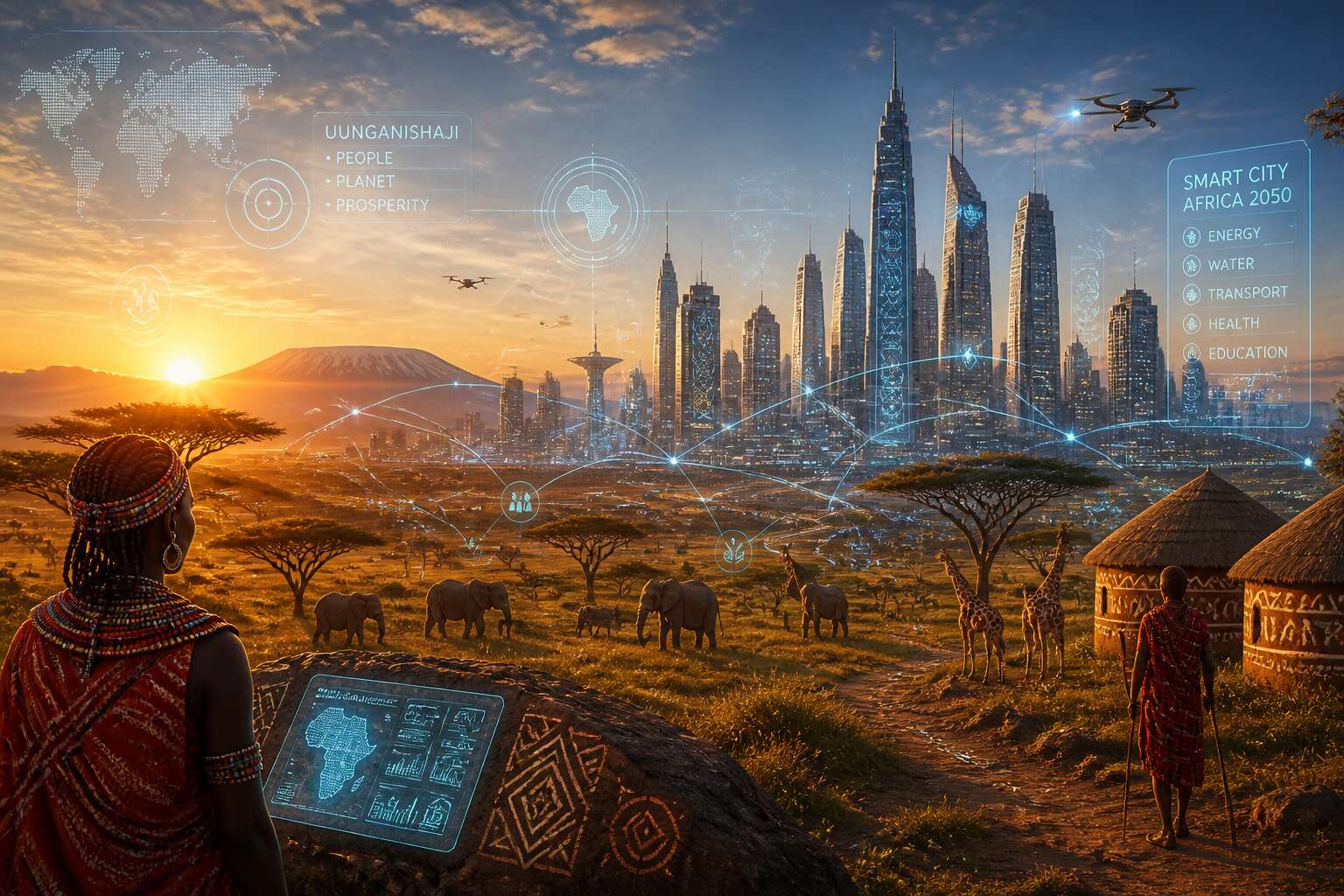
Redefining Africa’s Digital Future
The Shift from Fourth Industrial Revolution Adoption to Adaptation
Only 10% of South African businesses have moved digital projects past the pilot stage. That gap reveals the real problem! We treated the Fourth Industrial Revolution as a procurement exercise. We bought cloud licenses, installed sensors, and expected transformation to follow. It rarely did.
Adaptation demands a different posture. For this continent, it means redesigning workflows so technology serves local realities. It means questioning whether a solution built for Berlin works in Braamfontein, and accepting that slow is sometimes strategic. Let me offer a few markers of this shift:
- rethinking regulatory frameworks around data ownership
- investing in informal sector digital literacy
- measuring outcomes in productivity, not hardware deployed
Africa beyond 4ir is not about catching up. It is about setting a pace that reflects our constraints and our ingenuity. The future depends on this adaptation, not on adoption metrics.
Lessons Learned from Early 4IR Pilots
Three years into a smart irrigation pilot in Limpopo, the sensors still work but no one reads the data. That silence reveals the uncomfortable lesson of early 4IR projects. Redefining africa beyond 4ir demands honesty about failure, not another dashboard.
What actually went wrong? The pilot ignored maintenance cycles, electricity gaps, and the farmers’ own knowledge. We built for an imagined user.
The successful pilots share a different pattern:
- They started with a production problem, not a technology.
- They trained local technicians before installing hardware.
- They treated data as a tool, not a trophy.
Early pilots taught us that adaptation is a process, not a goal. The future is not about more devices. It is about trust, earned one harvest at a time. That future will be built slowly, or not built at all.
The Role of Emerging Technologies Beyond Automation
I keep returning to one number: only 22% of adults in sub-Saharan Africa use mobile internet beyond basic messaging. That statistic should define how we discuss africa beyond 4ir. Automation deserves less attention. Augmentation deserves more!
Computer vision that diagnoses maize blight from a damaged leaf does not replace farmers. It offers a second opinion. Natural language models trained on Nguni languages do not replace teachers. They extend literacy work into homes without textbooks. These are emergent properties of technology, not industrial efficiencies.
What makes these tools viable is attention to context:
- solar-powered gateways with local warranty support
- training datasets gathered by rural fieldworkers
- open APIs that let small cooperatives build their own services
The emerging technology agenda for africa beyond 4ir should follow these quiet integrations. They generate trust, and trust generates use.
Digital Sovereignty and Localized Solutions
Fewer than 2% of the world’s data centers sit on African soil. Most data generated in Africa travels overseas for processing and storage. That gap defines the urgency of digital sovereignty in conversations about africa beyond 4ir. Sovereignty here is not a slogan. It means enforceable data protection laws, local hosting capacity, and the right to decide where data rests.
Localized solutions are practical expressions of that right. I see this when a small business in Soweto uses a payment platform that settles transactions domestically. Money moves faster. Fees drop. Records stay inside the country’s legal system. These outcomes stand on deliberate choices:
- Data residency laws that keep sensitive records local
- Community-owned networks that route traffic within a district
- Public procurement rules that favour domestic cloud providers
Bridging the Urban-Rural Digital Divide
In South Africa, the distance between a fibre connection in Sandton and a dead zone in the Eastern Cape is measured not in kilometres, but in opportunity. That gap shapes how we talk about africa beyond 4ir. Rural towns still rely on load-shedding schedules and mobile data prices that strain household budgets. The digital future cannot be defined by urban dashboards alone.
- Invest in backhaul infrastructure that reaches small towns
- Adjust spectrum licensing to favour community networks
- Subsidise devices for learners and small traders
I have seen community Wi-Fi projects in Limpopo that provide free access at a taxi rank, where learners gather to study. The infrastructure exists, but the rules and pricing lag behind. Redefining Africa’s digital future means treating rural connectivity as a public utility, not a luxury.
Building Resilient Digital Infrastructure
Expanding Broadband Connectivity Across the Continent
Less than 40% of sub-Saharan Africa has reliable internet access, yet connection speed alone will not determine the continent’s trajectory. For africa beyond 4ir, the real work involves building resilient digital infrastructure that survives load-shedding, cable theft, and extreme weather.
I have watched communities in rural Eastern Cape treat a single fibre trench as their connection to everything else. That trench carries school lessons, clinic bookings, and mobile money. Expanding broadband connectivity across the continent requires more than laying cable! It demands redundant power systems, local maintenance crews, and open-access models that prevent monopolies.
Resilient infrastructure needs these components:
- Backup power at every exchange station
- Shared tower infrastructure across operators
- Locally maintained last-mile networks
These elements keep people connected when the grid falters. Without them, africa beyond 4ir remains a privilege for urban hubs alone.
Energy Access as the Backbone of Digital Transformation
Load-shedding does not care about your fibre connection. In South Africa, a server without power cannot function. Energy access decides whether africa beyond 4ir becomes a reality or remains a concept. Solar microgrids and battery banks now power rural data centres, but scale remains elusive. The national grid cannot carry the load alone.
Consider the basic hierarchy:
- Stable power for base stations
- Backup batteries for peak hours
- Local generation for off-grid sites
Without this stack, fibre optic cables lie dark. Municipalities must rethink zoning for energy infrastructure. Private investors need clear tariffs. The result is not glamorous, but it is foundational.
Data Centers and Cloud Computing Localization
One cloud region failure in Johannesburg can freeze banking for millions. Data center resilience hinges on the unglamorous details: redundancy, thermal management, and cable routes. For africa beyond 4ir, edge nodes in secondary cities cut latency and keep traffic local. Colocation providers now deploy modular facilities with liquid cooling and battery banks that bypass diesel entirely. Cloud localization also tightens data sovereignty, keeping records within national borders. Resilience in this context often comes down to:
- Dual fibre paths from independent carriers
- Eight hours of battery runtime for peak shaving
- Automated monitoring for heat and humidity spikes
None of this makes headlines, but it decides whether the project of africa beyond 4ir survives its own ambition.
Investing in Next-Generation Networks and Edge Computing
A single severed cable can take a province silent in seconds. In South Africa, where coverage still thins beyond the metros, resilience is the prerequisite for africa beyond 4ir. It does not make headlines, but it decides what stays online.
Next-generation networks need redundant backhaul, mesh topologies, and edge compute nodes close to the user. Investing in those layers means traffic never travels a single path. It takes another route when one fails.
Edge computing shrinks the failure domain. A rural clinic processes data locally instead of sending it to Johannesburg. A mine runs predictive maintenance on site. Latency drops. Continuity rises.
Resilience comes down to unglamorous details:
- Diverse fibre routes that avoid the same bridge
- Battery banks that carry peak hours
- Automated failover that switches routers in milliseconds
That is the real work of africa beyond 4ir. No flashy launches. Just infrastructure that stays standing!
Infrastructure Financing Models for Long-Term Sustainability
Building resilient digital infrastructure requires financing models that match the lifespan of the systems they fund. In South Africa, blended finance structures are emerging. Development finance institutions partner with commercial banks and pension funds. Each stakeholder carries a portion of the risk. Infrastructure financing depends on predictable revenue streams. Off take agreements from anchor tenants provide that certainty. Maintenance reserves must be ring fenced from the first day of construction.
A practical financing stack for local projects could include:
- Concessional loans from development banks to lower the cost of capital
- Guarantee instruments that absorb first losses
- Private equity tied to performance milestones
Africa beyond 4ir will not be powered by grants alone. It requires capital structured to reward reliability over speed. Long term sustainability in africa beyond 4ir means maintenance budgets written into contracts, not appended later. The money must remain present when the novelty fades.
Cultivating Human Capital and Digital Literacy
Redesigning Education for a Tech-Driven Workforce
I see a widening chasm between what South African classrooms award and what employers truly need. The future of africa beyond 4ir depends less on shiny hardware and more on cognitive agility. Our current syllabi teach memorization, but the workforce demands dynamic problem-solving under uncertainty.
Redesigning education means embedding specific, practical competencies directly into the curriculum. This requires a shift toward:
- Data storytelling to turn raw numbers into actionable strategy.
- Algorithmic reasoning to debug systemic inefficiencies.
- Collaborative remote project management for distributed teams.
This is not a peripheral add-on; it is a core reconstruction. We must prioritize micro-credentials over static degrees and treat teachers as facilitators, not dispensers of fixed facts. The urgency is palpable! Let’s stop preparing students for a world that no longer exists.
Fostering STEM Education and Research Capacity
Africa produces under 2% of global research output despite holding 17% of the world’s population. That gap defines the terrain for africa beyond 4ir. Victory will come in laboratories, technical colleges, and community coding hubs, not in policy documents alone.
Digital literacy is the quiet prerequisite. Without it, STEM education remains an elite pursuit. Research capacity demands sustained investment in local institutions solving local problems. The pipeline must move students from basic numeracy to advanced data science without losing them along the way.
Key priorities include:
- Funding postgraduate research in renewable energy and agricultural tech.
- Linking universities with small enterprises to ground theory in practice.
- Building open-access repositories for African scholarship.
I have watched young South Africans gain these skills. They stop waiting for solutions and start building them. That is the shift africa beyond 4ir requires.
Skills Development for the Platform Economy
Africa’s platform economy is growing without asking permission from your CV. In South Africa, delivery riders and remote data annotators now outnumber entry-level bank tellers. This workforce needs digital literacy that goes far beyond WhatsApp.
The gig economy rewards adaptability, not credentials. Workers must master digital payments, online communication, and self-marketing. A university degree means little when clients judge you on response time.
Consider the skill stack for a viable platform worker:
– Digital numeracy for price negotiation
– Basic cybersecurity hygiene to spot scams
– English proficiency for global clients
– Time management across multiple apps
These abilities emerge from community workshops, not lecture halls. For africa beyond 4ir, cultivating human capital means treating every smartphone as a classroom. The fastest learners will become tomorrow’s platform owners, not just its labour pool.
Addressing Brain Drain and Diaspora Engagement
Every year, South Africa loses skilled technologists to London and Sydney. Their expertise does not vanish. For africa beyond 4ir, reversing emigration matters less than building channels for contribution across borders.
The diaspora invests through remittances and property. Remote work now allows them to share expertise without permanent return. A Johannesburg startup can pay a data scientist in Berlin the same rate as one in Sandton, provided bandwidth and data centres cooperate. I have watched this arrangement succeed.
Digital literacy decides who enters this exchange. Professionals who master collaboration tools, international protocols, and remote project management make location secondary. The mechanisms that build this literacy include:
- Community-driven certification programmes
- Peer-to-peer skills transfer across time zones
- Remote advisory roles that mentor local junior staff
These channels turn emigration into a two-way exchange. Africa beyond 4ir depends on keeping the relationship with talent alive, even when the person relocates.
Lifelong Learning Pathways for Inclusive Participation
I have watched a Cape Town developer relearn his entire stack in eighteen months just to keep his seat at the table. That pace defines the new reality for africa beyond 4ir. A university degree offers only a baseline. Skill acquisition needs to become a continuous process, not a one-time event.
The practical pathways for this ongoing education are surprisingly mundane. They work best when embedded in the daily flow of work and life!
- Micro-credentialing for specific software tools
- Local community coding clubs that meet on weekends
- Peer review groups that dissect real project failures
These mechanisms lower the barrier to entry. The person who fixes phones in Soshanguve can learn mobile security modules from their living room. For inclusive participation, the only requirement is a cheap smartphone and a willingness to study after hours. The curriculum must adapt to the learner, not the other way around, if africa beyond 4ir is to include everyone.
Scaling Local Innovation Ecosystems
Homegrown Startups Shaping Continental Solutions
Over 600 active tech hubs now operate across the continent, and each one is solving local problems on its own terms. These spaces turn raw ideas into working products, often without the infrastructure that founders elsewhere take for granted.
I have watched startups in Johannesburg skip global expansion entirely and instead solve delivery issues that only exist in specific townships. That is the shape of africa beyond 4ir: a deliberate cultivation of what already works here. The most promising ventures do not copy foreign templates; they build for their own streets, markets, and constraints.
Scaling ecosystems tend to share specific traits:
- Access to patient capital that tolerates longer timeframes
- Shared infrastructure such as testing facilities and legal support
- Policy space for startups to sell directly to state buyers
Homegrown teams are still proving that continental solutions do not need external validation to matter.
Incubators, Accelerators, and Collaborative Hubs
Incubators and accelerators are the invisible scaffolding of africa beyond 4ir. They compress years of trial and error into months, guiding founders through regulatory weeds and market realities that no textbook captures.
Collaborative hubs extend this work by pooling resources. A hardware startup in Cape Town can access a shared 3D printing lab, while a fintech team in Lagos borrows legal templates tested by ten other ventures. These spaces create density, which sparks serendipity.
- Mentorship from operators who have survived local failures
- Structured pilot programmes with corporate partners
- Peer review sessions that stress-test business models
When these ecosystems mature, they produce repeat founders and angel investors. That is the real yield of africa beyond 4ir.
Access to Capital and Venture Funding Gaps
In 2021, over $5 billion in venture funding reached African startups, most settled in four hubs. Local ecosystems beyond those corridors face a scarcity of early capital. I watched founders solve grassroots problems, then spend months chasing a single cheque from an international fund that comprehends the local context. The gaps are stark:
- Early stage tickets under R500k are nonexistent.
- Local pension funds and insurance giants remain absent.
- Diaspora capital stays frozen by regulatory hurdles.
This obstacle is not liquidity. It is conviction. Capital providers in South Africa view early-stage ventures as gambling. Their fear of failure undermines progress of africa beyond 4ir. Intentional mechanisms that recycle local wealth into local founders must replace foreign aid. Scaling local innovation ecosystems without patient capital produces little beyond prototypes. The journey towards africa beyond 4ir demands a revaluation of risk, where Indigenous capital becomes the primary source, not the last option.
Intellectual Property Protection and Commercialization
Strong intellectual property protection converts grassroots prototypes into commercially valuable assets. Yet most African startups file patents only after securing funding, if they file at all. A regional utility model, filed through ARIPO or OAPI, costs less than international filings, but awareness remains thin.
Commercialization is where local ecosystems stall. A founder can protect a design, yet without certification standards, packaging expertise, or distribution agreements, the innovation stays shelved. Universities produce research with commercial potential. Technology transfer offices, where they exist, operate with minimal staffing. I have watched promising patents gather dust in these offices!
- Reform outdated copyright frameworks for software and AI outputs
- Fund patent filing subsidies for microenterprises
- Link IP registration to incubation programmes
Africa beyond 4ir will not advance on adoption alone. It requires owners who control their inventions and extract value from them. Africa beyond 4ir means treating IP as infrastructure, not paperwork.
Cross-Border Collaboration and Market Integration
Local innovation ecosystems often work without much connection. Scaling them across the continent requires deliberate cross-border collaboration. One practical lever is harmonised standards. If a Kenyan agritech sensor works in Nairobi, it should not need a fresh certification in Lagos. Another is regional procurement. Governments can buy from startups outside their borders.
To build market integration:
- Cross-border pilot programmes with shared data protocols
- Regulatory sandboxes that recognise each other’s approvals
- Pan-African distribution partnerships for hardware startups
The African Continental Free Trade Area provides the legal framework, but startups still face customs delays and payment friction. Africa beyond 4ir depends on whether a founder in Accra can sell to a customer in Johannesburg without losing three months to logistics.
Governance, Ethics, and Sustainable Development
Designing Inclusive Digital Policies and Regulation
Only 19 of 54 African nations have data protection laws. That gap reveals what is at stake for africa beyond 4ir. Policy design is not a technical exercise. It is a moral act. Governance must place dignity at the center, not efficiency.
Inclusive regulation demands we listen to the marginalized first. Their experiences expose hidden costs. Sustainable development depends on this. I have watched policies fail because they were crafted in boardrooms, disconnected from people’s lives.
Ethical governance requires certain commitments:
- Co-designing rules with local communities
- Establishing independent oversight for accountability
- Guaranteeing public access to decision making
These commitments turn principles into practice. Without them, africa beyond 4ir serves only the powerful. That is a future we must refuse!
Data Privacy and Cybersecurity in an Interconnected Africa
One unsecured database in a single African capital can compromise identities in five others. That is the reality of an interconnected Africa where data flows faster than regulation. Governance in africa beyond 4ir cannot treat privacy as an afterthought. Ethical approaches to sustainable development require cybersecurity integrated into every layer of the digital system from the outset, not appended after launch.
Data minimisation and purpose limitation are not checkboxes. They determine whether a digital tool empowers or extracts. Citizens need assurance that their digital footprint is not feeding a surveillance economy. Accountability mechanisms must include:
- Mandatory breach notification timelines
- Audits conducted by independent bodies
- Penalties tied to revenue for non-compliance
Without these, trust in africa beyond 4ir will remain conditional.
Ethical Artificial Intelligence for Social Good
An AI model trained on yesterday’s inequalities will faithfully reproduce them tomorrow. That is the uncomfortable arithmetic of sustainable development. In africa beyond 4ir, the algorithm becomes a de facto policy maker long before any minister signs a regulation.
For South African citizens, this means credit scores, hiring filters, and public housing allocations run on machine logic. The social good lies in refusing that logic when it lacks auditable provenance. We need a governance framework where fairness is a functional requirement, not a publicity tactic.
Certain safeguards should become non-negotiable:
- Mandatory bias testing before deployment
- Public registers of high-impact algorithmic decisions
- Independent appeal mechanisms for automated verdicts
Without these, trust remains a luxury. Ethical AI requires us to demand verifiable outcomes, not optimistic promises.
Green Digitalization and Climate Resilience
Governance in africa beyond 4ir must treat the environment as a stakeholder. Every data pipeline carries a carbon signature. Every automation contract implies energy costs. Without ethics that acknowledge these externalities, digital progress becomes a liability.
Sustainability demands new accounting methods at ministry level and board level alike. We need metrics that track biodiversity trade-offs alongside bandwidth growth. Deciding what to digitize requires ethical judgement. Solar-powered microgrids should power essential services before speculative token projects. Climate resilience depends on this ordering.
Green digitalization, in africa beyond 4ir, means choosing which problems deserve automation. It could follow these principles:
- Public reporting on energy use per algorithmic decision
- Strict e-waste rules for imported infrastructure
- Environmental impact reviews before national platform rollouts
That is the real governance agenda. To be resilient, African adaptation must respect ecological limits.
Measuring Impact Beyond Economic Growth
Governance in africa beyond 4ir demands metrics that reach beyond gross domestic product. Economic growth alone cannot capture ecological debt or social cohesion. Sustainable development requires measuring what automation costs communities and ecosystems.
Ethics becomes an operational framework. Decisions about data centers, spectrum allocation, and digital public infrastructure carry consequences that span generations. If impact reports only track revenue, then externalities remain invisible. africa beyond 4ir needs indicators that register both material progress and ecological integrity.
A governance scorecard could include:
- Carbon cost per citizen served by each digital service
- Ratio of local content to imported digital products
- Change in biodiversity around new infrastructure sites
- Percentage of public participation in technology planning
These measures shift accountability. Sustainable development in africa beyond 4ir is not an abstraction; it is a set of accounting choices that determine whether digital systems restore or deplete.




0 Comments