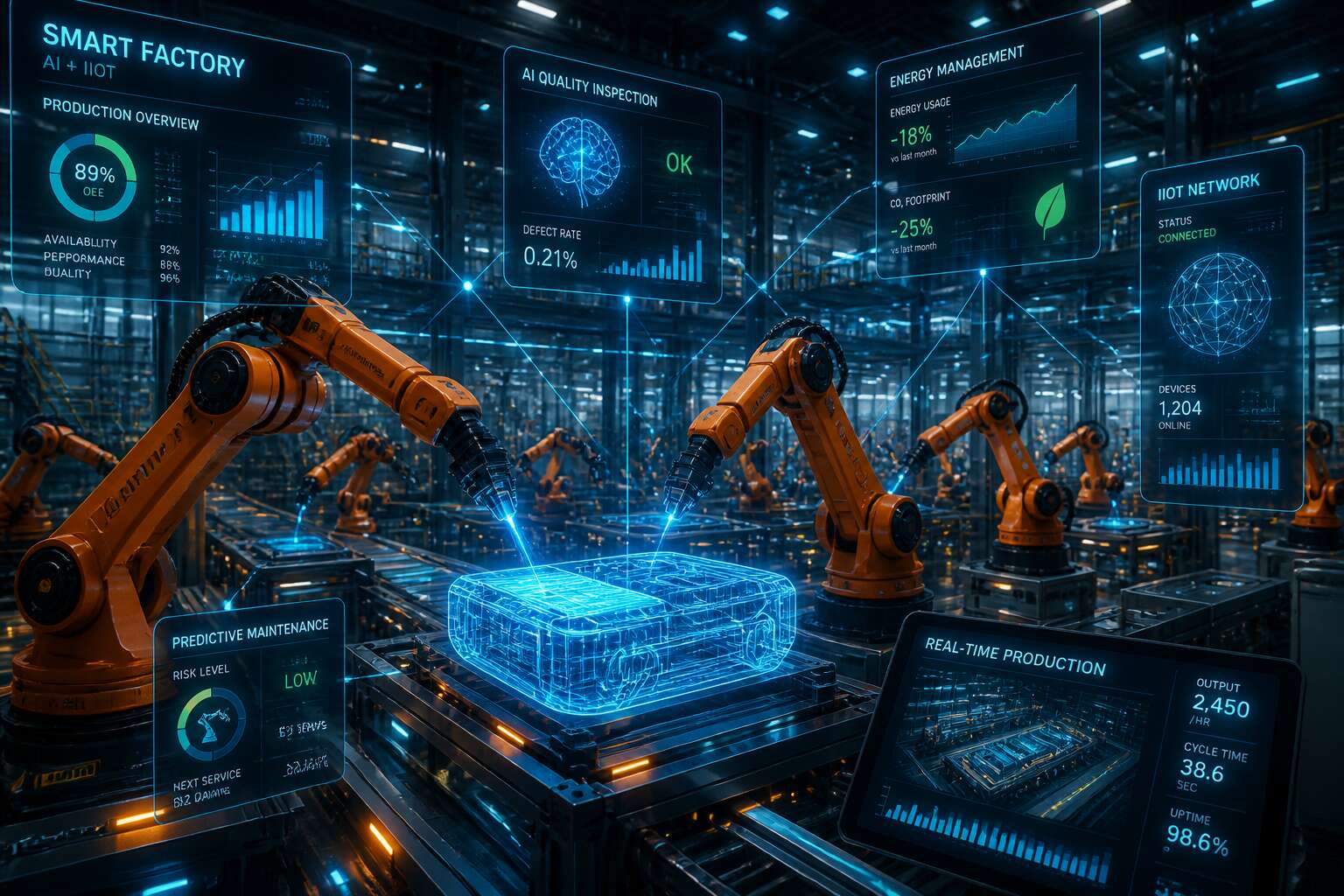
Understanding Industry 4.0 Tools
Japan already has factories that run unattended for days at a time. Their lights stay on, their robots hum, and their predictive algorithms schedule their own maintenance. Meanwhile, in South Africa, we are still arguing about whether the Eskom app can survive a stage six blackout.
The promise of industry 4.0 tools is a seductive one. They offer the allure of total visibility across your supply chain, from the raw material on a truck in Durban to the finished product on a shelf in Cape Town. But the reality of implementing them in our unique economic climate is far less glamorous. It is a grind of network redundancy, backup power solutions, and convincing your finance director that a digital twin is not a cryptocurrency scam.
At their core, these tools are about creating a nervous system for your operation.
– Sensors that track the health of a conveyor belt in real time.
– Artificial intelligence that optimises freight routes around port congestion.
– Edge computing devices that process data locally, even when the fibre cuts.
– Digital twins that let you simulate a production change without risking a real one.
The goal is a resilient, responsive business. Chief Information Officers often get seduced by the flashy dashboards. The real value, however, lies in the unglamorous work of connecting the shop floor to the top floor. If your connectivity drops at 11:00 AM like clockwork, the most sophisticated industry 4.0 tools in the world will not save you. They will simply fail faster.
Essential Categories of Industry 4.0 Tools
The weight of a decision settles like sediment in the skull, a physical pressure that precedes the thought. We like to believe we are the authors of our choices, that a conscious will directs our actions with clarity. But the more we learn about the brain, the more the boundaries of that authorship blur. Neurology reveals that the machinery of decision-making operates long before we feel the conscious intention to act. It is a disquieting thought, that the self we believe in might be a passenger in its own body.
The implications for moral responsibility are profound. If our actions are predetermined by prior neural events, can we truly be held accountable for them? This is not merely a dry academic debate. It touches the core of how we structure our justice system, our social contracts, and our personal relationships. We struggle with the need to blame and punish, yet science forces us to question the very foundation of that impulse. Is condemnation a societal necessity or an intellectual relic?
Consider the components that shape our actions:
- The unconscious processing of sensory input, which primes reactions before we are aware.
- The influence of implicit biases, which steer judgment without our conscious reflection.
- The role of neurochemistry, where hormones and neurotransmitters modulate risk and reward.
These factors complicate our understanding of free will. They do not necessarily negate it, but they demand a more nuanced view. The mind is not a blank slate, and the will is not a sovereign ruler. It is a process, an emergent property of a complex biological system interacting with its environment. When a person commits an act, we must ask not only about their legal guilt but also about the conditions that shaped their neural pathways.
Perhaps the real question is less about whether free will exists and more about how we define it. If free will is simply the ability to act according to our desires and beliefs, then we possess it. If it requires a total independence from physical causation, then it is a fantasy. The challenge lies in reconciling these two perspectives. Our moral responsibility may not depend on metaphysical notions of freedom, but on our practical capacity to reflect, to reason, and to respond to consequences. That capacity is real, even if our thoughts are not as free as we once imagined. The deepening of our scientific knowledge does not dissolve the self; it forces us to reconsider its origins, its limits, and its enduring power!
Implementing Industry 4.0 Tools in Manufacturing
At a metal fabrication plant outside Johannesburg, the difference between a profitable month and a loss often comes down to real time visibility. Industry 4.0 tools like edge devices and digital twins are starting to close that gap, but only where implementation respects the existing processes.
I have watched managers buy impressive software and then leave it idle. The tools fail when they ignore the daily routines of the shop floor. Here is what works in practice:
- Low cost sensors that capture vibration and temperature
- Simple dashboards that highlight anomalies
- Automated alerts that reach a team leader by SMS
These are not flashy innovations, but they create tangible results. South African manufacturers face unusual pressures, including unstable power and skilled labour shortages. The most successful adopters see industry 4.0 tools as a way to support operators, not replace them. That perspective makes all the difference!
Benefits and Impact of Industry 4.0 Tools
Silence on the production floor is rarely peaceful. It is the sound of missed output and costly downtime. Yet, I have seen what happens when you embrace the digital shift. The benefits of industry 4.0 tools are tangible. When a single unplanned stoppage can cost a South African manufacturer millions of rand, the ability to predict failure before it occurs is the only sane way forward.
Consider what these systems actually handle for you:
Continuous machine health monitoring.
Automated root cause analysis.
Optimized maintenance scheduling.
I have seen the data from factory floors across the country. These tools do not just report; they interpret. They let you see exactly where the waste is hiding. It is a fascinating time to be building the future of South African industry.
Challenges and Future Trends in Industry 4.0 Tools
The true test for South African manufacturers arrives when legacy equipment confronts modern automation. Industry 4.0 tools demand seamless compatibility, yet many factories still run on decades old hardware with proprietary protocols. The costs of retrofitting escalate quickly, and the shortage of skilled engineers compounds the strain.
What we expect in the near future includes:
- Intelligent edge computing that processes data where it originates.
- Digital twins that simulate entire production ecosystems before implementation.
- Autonomous maintenance systems that learn from historical failures.
These developments promise more resilient operations. However, the most significant advance in industry 4.0 tools will be the human interface, where operators gain real time insights without needing data science degrees. That shift requires courage, because trusting automated decisions feels unnatural at first. Patience ultimately separates successful adopters from disillusioned ones.

0 Comments