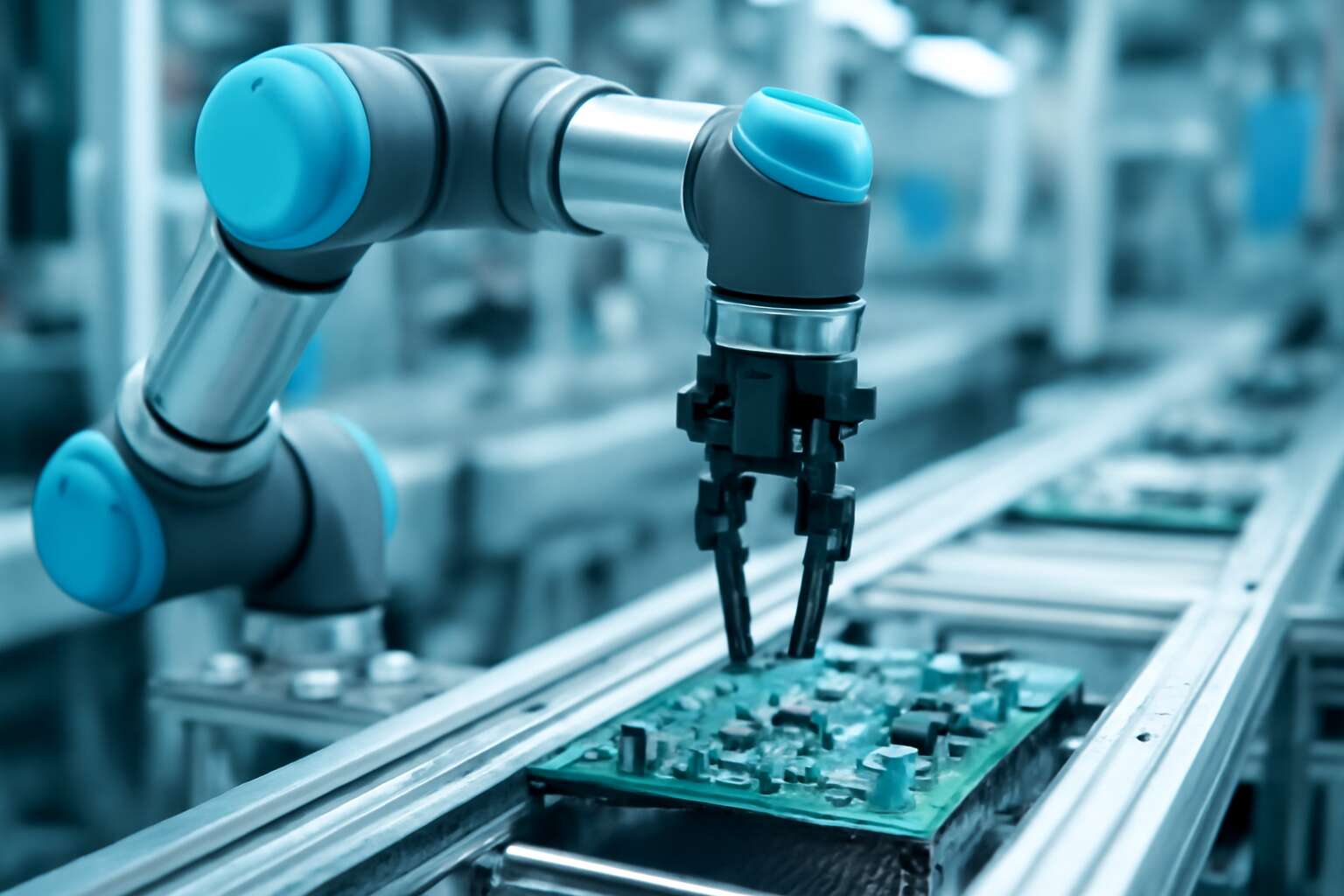
Foundational Concepts in Robotics
Definition and taxonomy of robotics
Automation reshapes the loom of industry, from factories to clinics. A 28% jump in global adoption last year signals a shift toward automated precision in robotics technology. Foundational concepts anchor the field: systems that sense the environment, reason about goals, and act to achieve them.
- Industrial robots
- Service robots
- Mobile robots
- Humanoid robots
Here is a simple taxonomy to map the landscape: industrial, service, mobile, and humanoid forms share core ideas—sensing, perception, planning, control, and autonomy—that translate into real-world capability, from precise manipulation to adaptive navigation. South African labs and startups are translating these ideas into practical automation, blending practical engineering with ethical stewardship.
Core technologies powering modern robots
Last year, global robot installations climbed 28%, quietly reshaping every corner of industry. In labs and workshops from Cape Town to Limpopo, robotics technology relies on sensors that feel the world, and actuators that turn knowledge into motion.
Foundational concepts converge: sensing, perception, planning, control, and autonomy—each translating goals into reliable action.
- Sensing and perception: translating light, sound, touch into usable signals
- Planning and decision-making: charting paths to goals in real time
- Actuation and control: precise motion and force management
- Learning and adaptation: improving performance through experience
In South Africa, academic labs and startups blend practical engineering with ethical stewardship, turning these core technologies into resilient automation that respects communities and environments.
Key metrics for performance and safety
Across South Africa, robotics technology shifts from lab to life; last year global installations rose 28%, a quiet yet sweeping reshaping of industry.
Foundational concepts—sensing, perception, planning, control, and autonomy—translate into tangible performance and safety. Key metrics measure the journey from signal to action: latency, precision, repeatability, reliability, and safety compliance.
In SA, academic labs and startups blend practical engineering with ethical stewardship, creating resilient automation that respects communities and environments.
- Latency and cycle time for real-time response
- Precision and repeatability under varying loads
- Reliability and mean time between failures (MTBF)
- Safety integrity and compliance with risk controls
- Energy efficiency and thermal management
Ethical and safety considerations in robotics
A 28% surge in global robotics installations last year is not just a number; it’s a doorway opening from lab benches to real-life routines. In South Africa, that door is being walked through by engineers who blend ambition with responsibility, turning complex machines into trusted partners on factory floors, clinics, and farms. robotics technology is increasingly understood as a human-centered tool that grows with communities, not at their expense.
Foundational ideas translate into reliable performance and safety when grounded in ethics and accountability. In practice, teams in SA co-create standards with communities, anticipating unintended consequences and building in transparency.
- human oversight and accountability
- privacy, security, and data ethics
- safety-by-design and regulatory alignment
In the end, these advances on the continent blend practical engineering with stewardship, delivering automation that respects people, privacy, and the environment.
Robotics Tech Stack and Architecture
Hardware platforms and actuators
In South Africa’s workshops and farms, robotics technology quietly becomes the backbone of daily work, turning long hours into reliable outcomes. The core idea rests on a layered stack: perception, decision, and actuation that travels from sensors to servos. A well‑designed architecture keeps things daring yet dependable.
The hardware platforms and actuators that power this stack come in three familiar footprints:
- Microcontrollers and single-board computers (Arduino, Raspberry Pi, Nvidia Jetson) for perception and control
- Industrial controllers and real‑time stacks (PLC, RTOS, ROS 2 on embedded hardware)
- Actuators such as servo motors, DC motors, and pneumatic or hydraulic cylinders
Pairing these elements with robust power and rugged connectivity suits South Africa’s varied terrain and work sites, where reliability is the first neighbor and innovation the second.
Control systems and firmware architecture
South Africa’s workshops whisper a quiet revolution—the machinery behind the scenes is becoming the real workhorse! Robotics technology quietly boosts reliability and reduces fatigue, with uptime gains widely cited as up to 30%. The result is steadier outputs, even on rugged farms and busy factories.
At the core lies a lean firmware architecture that binds sensor input to real-time control, with robust error handling and a clear separation of concerns. This design lets us swap hardware or reconfigure workflows without rewriting the entire brain.
Key firmware layers enable safe, scalable operation:
- Sensor abstraction and drivers
- Real-time control loops and watchdogs
- Safety logic and fault containment
On South Africa’s varied terrain, this architecture becomes a companion—quiet, dependable, and ready to learn from the land.
Robot operating systems and middleware
South Africa’s robotics technology movement runs on a lean, expressive software stack—the quiet engine behind sensors, actuators, and real-time decisions. Uptimes up to 30% are widely cited, turning rugged farms and busy workshops into steadier partners. This architecture links perception to action with fault containment, so swapping hardware or reconfiguring workflows doesn’t rewrite the whole brain.
At the heart of this stack are robot operating systems and middleware that manage data streams, scheduling, and inter-module communication. They offer portability across hardware, standards-based interfaces, and robust error handling, letting teams evolve capabilities without risky rewrites.
- Real-time task orchestration
- Sensor data pipelines and middleware brokers
- Secure, scalable deployment and updates
In South Africa’s diverse landscapes, such a stack becomes a cooperative partner—solemn, dependable, and capable of learning from the land. Robotics technology thus thrives where software meets soil, turning intention into dependable action.
Simulation, testing, and verification
The architecture behind robotics technology is more than code; it’s a lattice of simulations that preempt chaos on the shop floor. Early adopters report up to 40% fewer integration surprises when architecture simulation guides deployment and testing, a trend echoing through South Africa’s diverse landscapes. I watch teams knit perception and action into a living, cautious brain, where verification is not a finale but a continuous act.
Within this stack, a disciplined approach to testing and verification unfolds across three anchors:
- Architecture simulation for scenario planning and fault containment
- Hardware-in-the-loop testing to silence surprises before hardware hits the floor
- Formal verification of control loops and data integrity
This rhythm makes these systems resilient, adaptable, and trustworthy on South Africa’s farms and workshops.
Industries Transformed by Robotics
Manufacturing and logistics automation
Staggeringly, a recent industry snapshot reveals productivity gains of up to 30% in automated warehouses across South Africa’s logistics hubs, driven by robotics technology. The pace of transformation isn’t just about speed; it’s about resilience and precision under pressure, a quiet revolution that hums in the background of every shipment. The results are transformative!
In manufacturing and distribution, robotics technology is reordering the playbook. From automotive and assembly lines to cold‑storage pharmaceutical facilities, autonomous systems optimize routines, reduce human risk, and unlock flexible production. The real drama unfolds in how everyday goods are moved, sorted, and delivered with fewer errors and shorter cycle times.
- Automotive and heavy industry manufacturing
- Food, beverage, and pharmaceutical logistics
- Mining and harsh‑environment operations
- E‑commerce warehousing and last‑mile delivery
In South Africa, this shift is accelerating local capabilities, attracting investment in robotics technology and skilled roles, as automation scales up to meet demand.
Healthcare robotics and assistive devices
Robotics technology is quietly retooling South Africa’s patient care: hospitals piloting robotic assistants and instrument guidance report faster procedures, steadier hands, and fewer bumps in the road for patients and staff alike. The result is care that feels safer and more precise, even when the corridors are crowded.
- Surgical robotics that extend precision and reduce invasiveness
- Robotic exoskeletons and assistive prosthetics improving mobility
- Rehabilitation robotics guiding therapy with real-time feedback
- Autonomous hospital helpers for logistics and sterilization
In the South African landscape, this transformation goes hand in hand with local training and thoughtful regulation. Robotics technology becomes a collaboration between clinicians and machines, elevating patient experiences in clinics, care homes, and rehabilitation centers rather than replacing the essential human touch.
Agriculture, service, and hospitality robots
Across South Africa’s farms and service sectors, robotics technology quietly reshapes the daily grind. A local agritech study notes harvest efficiency rising by as much as 30% when autonomous systems handle routine tasks, reducing climate-sensitive bottlenecks and labor strain. “Robot-assisted operations turn complexity into choreography,” says Dr. Lindiwe Mkhize, a robotics engineer with a coastal research institute.
In agriculture, service, and hospitality, machines now perform with a calm precision that allows human teams to focus on strategy and care. These developments unfold in fields, hotels, and food-service environments, creating new workflows that blend efficiency with a human touch.
- Autonomous harvesters and weeding bots that navigate uneven terrain
- Greenhouse climate and irrigation robots that optimize water usage
- Robotic front-desk concierges and kitchen assistants in hospitality settings
Aerospace, defense, and public sector robotics
robotics technology glints in the wings of aerospace, defense, and the public sector, shaping missions that must endure the wind and weather of South Africa’s landscapes. A coastal defense briefing notes patrol drones halve field inspection times, catching wear before it speaks. In this crucible, quiet machines translate risk into routine, turning complex surveillance into steady sunlit clarity.
- Autonomous aerial patrols and inspection drones for critical assets
- Robotic maintenance crews for offshore platforms, railways, and municipal infrastructure
- Public-safety bots for hazardous environments and disaster response
Across borders and budgets, these tools extend the reach of scarce expertise, letting human teams plan strategy and care with a steadier compass.
Construction and mining robotics
From the dust-choked sites of South Africa, robotics technology casts a quiet gravity over construction and mining. Autonomous drills, robotic shovels, and adaptive sensors turn brutal labor into steady orchestration, shrinking downtime and widening what’s possible. Industry observers note up to 30% faster site readiness in projects where mechanized crews join the flow, a testament to machines that endure wind and grit with unwavering calm.
The transformation is a patient discipline, where steel learns to read rock and concrete as living matter.
- Enhanced safety by removing workers from hazardous zones
- Increased throughput with precise material handling
- Real-time data fuels maintenance and scheduling
In South Africa, these moving silhouettes redefine risk, enabling human teams to plan with a steadier compass.
Emerging Trends in Modern Robotics
AI and machine learning integrations in robotics
Robotics technology is entering a new phase where AI and machine learning don’t just accompany automation; they guide it. Imagine systems that adapt on the fly, recalibrating grip, balance, and task plans as conditions change. In modern settings, edge AI lets robots reason locally, slashing latency and boosting safety. The result is a choreography of perception and action that feels almost anticipatory!
Emerging trends shaping this evolution include:
- On-board learning and federated AI for privacy-preserving collaboration across fleets
- Digital twins and simulation-to-reality pipelines that shorten development cycles
- Modular, service-oriented hardware and software stacks that accelerate deployment
These shifts resonate across industries in South Africa—mining, agriculture, logistics—where ML-enabled robotics bring reliability and safer operations. The promise of robotics technology lies in more than speed; it enables smarter maintenance, better fault detection, and a resilient operational rhythm that keeps pace with demand.
Collaborative robots and human–robot collaboration
Collaborative robots are rewriting the tempo of work—partners more than tools, weaving perception and action into a single, responsive duet. In bustling workshops, we see humans and machines share tasks, learning in tandem and adapting as conditions shift. The result feels almost anticipatory, a quiet confidence that something is about to happen.
Three trends are shaping this collaborative future:
- On-board learning with federated AI that lets robots learn together across fleets without exposing sensitive data.
- Digital twins and rapid simulation-to-reality loops that shorten development cycles and de-risk deployments.
- Modular, service-oriented hardware and software stacks that snap together for faster, scalable rollouts.
Across South Africa, mining, agriculture, and logistics are feeling the shift. Teams pairing humans with adaptive robots gain safer operations, smarter maintenance, and a resilient rhythm that keeps pace with demand. This momentum fuels robotics technology across the country.
Autonomy, perception, and sensor fusion
Autonomy, perception, and sensor fusion aren’t sci‑fi fantasies—they’re the quiet engines behind robotics technology on the factory floor. A recent industry report shows autonomous perception-enabled systems lift throughput by double digits while trimming risk, and that’s the future arriving mid‑quarter—signaling it’s already here! When machines can see, reason, and move with minimal nudging, the workplace feels less chaotic and more like a well‑rehearsed dance.
Perception now hinges on multi-sensor fusion—vision, LiDAR, radar, and tactile skins. Three emerging capabilities sharpen this autonomy:
- Swarm-style coordination across fleets for complex tasks
- Explainable perception pipelines that audit robot decisions
- Rugged perception modules built for harsh environments
Across South Africa, mining, agriculture, and logistics feel the shift. Teams pairing humans with adaptive robots gain safer operations and smarter maintenance, creating a resilient rhythm that keeps pace with demand.
Edge computing and real-time decision making
Edge computing is turning milliseconds into momentum in robotics technology. Across factories, decisions that used to travel to the cloud now happen on-device, slashing latency and lifting throughput—industry pilots show gains up to 30% while trimming risk. The result? A choreography where perception, reasoning, and action align in near real time.
Real-time decision making relies on lean, local intelligence and resilient networks. In practice, fleets of robots weave harmony with edge nodes, reacting to textures, temperatures, and layouts without waiting for distant servers.
- Edge-native AI accelerators sharpen perception and control
- Deterministic, explainable decision pipelines for auditability
- Redundant, rugged edge modules that endure harsh environments
In South Africa, this fusion fuels safer operations in mining, logistics, and agriculture, weaving human and machine labor into a supple, resilient rhythm.
Adoption, ROI, and Future Outlook
Cost of ownership and return on investment
A plant manager whispered, “The machine is a partner, not a rival,” and the factory felt more alive. Adoption of robotics technology is a transformation, not a purchase, threading people, process, and potential through South Africa’s busy workshops.
- Workforce upskilling and change readiness
- Seamless integration with existing systems
- Scalability and ongoing maintenance planning
ROI follows uptime, accuracy, and safer work environments. Total ownership includes hardware, software, energy, and service, but the long arc glitters with higher throughput and smarter labor allocation. When chosen with local support, the technology frequently shortens payback and extends value.
Future outlook stresses modular upgrades and sustainability, with subscription models shaping ongoing costs. In South Africa, regional partners keep ownership costs predictable and support fast, ensuring steady evolution rather than disruptive overhaul.
Regulatory standards, safety, and compliance
A telling stat echoes through South Africa’s busy workshops: plants that adopt robotics technology see uptime gains of up to 25% within the first year. Adoption is transformation, not a purchase; it threads people, process, and potential into the factory floor, turning a machine into a partner.
ROI follows reliability, accuracy, and safer environments. Total ownership includes hardware, software, energy, and service, yet the long arc gleams with higher throughput and smarter labor allocation. When supported locally, payback accelerates and value deepens.
- Regulatory standards and safety certifications align with ISO guidelines and SA requirements.
- Ongoing compliance planning, maintenance, and data governance ensure safe operation.
Future Outlook embraces modular upgrades and sustainability, with subscription models shaping ongoing costs. In South Africa, regional partners keep ownership predictable and support fast, ensuring steady evolution rather than disruption. Regulatory standards, safety, and compliance anchor progress with rigour.
Sustainability, ethics, and societal impact of automation
Uptick comes fast: in South Africa’s workshops, uptime can rise by as much as 25% in the first year when robotics technology takes the floor. Adoption is transformation, not a purchase; it threads people, process, and potential into the factory, turning a machine into a partner.
ROI follows reliability, accuracy, and safer environments. Total ownership spans hardware, software, energy, and service—yet the long arc gleams with higher throughput and smarter labor allocation. With local support keeping ownership predictable, payback accelerates and value deepens.
Future outlook embraces modular upgrades and sustainability, with subscription models shaping ongoing costs. In South Africa, regional partners keep capabilities fresh and support fast, ensuring steady evolution rather than disruption. The ethics and societal impact of robotics technology call for thoughtful governance: balance efficiency with people, measure energy with care, and invest in upskilling for a more resilient workforce.




0 Comments