
Industrial Robotics: Real-World Use Cases
Automated Assembly Lines and Logistics
Industrial robotics have quietly become the backstage crew of modern manufacturing, yet their marquee moments steal the show. In South Africa, automation can lift productivity by about 20% and cut downtime by roughly 15%—solid gains that turn factory floors into efficient stages. These robotics examples prove precision, speed, and resilience are practical realities, delivered with flair.
On automated assembly lines, robotic arms perform welding, fastening, and inspection with a cadence no human can match; in logistics, they handle picking, palletising, and sortation, moving products from line to loading bay with near-surgical precision.
- Automated assembly line tasks: welding, fastening, riveting
- Logistics tasks: order picking, palletising, sortation
- Machine tending and quality inspection
Pairing human insight with steel reliability keeps the system humane and efficient. The right deployment lets teams reassign to higher‑value tasks while robots shoulder the grind—and the results sing in the warehouse and on the shop floor!
Welding, Painting, and Material Handling
In South Africa, the factory floor is learning to speak in a quieter but decisive language: precision. Automation can lift productivity by about 20% and cut downtime by roughly 15%, a reminder that robotics examples aren’t stagecraft but reliable partners on the shop floor.
Three real-world use cases demonstrate how welding, painting, and material handling translate into tangible results:
- Welding: robotic arms deliver consistent, strong seams with real-time process monitoring.
- Painting: precise spray patterns minimize overspray and ensure uniform color and finish.
- Material handling: agile pick-and-place and gentle handling reduce damage and boost throughput.
With this fusion of accuracy and agility, human insight stays central—machines shoulder the grind while minds guide toward higher-value work, keeping South African production resilient and finely tuned.
Robotics in Warehousing and Fulfillment
Warehouses across South Africa are whispering a controlled refrain: speed without sacrificing precision. ‘Automation isn’t erasing roles—it’s elevating them!’ a Cape Town logistics leader insists. These robotics examples reveal how warehousing and fulfillment flow becomes almost balletic under careful control and real-time feedback.
Key applications in this arena include:
- Advanced goods-to-person systems that reduce walking and boost picking speed.
- Soft-touch palletizing and depalletizing that protect products at scale.
- Inbound sorting and cross-docking that streamline replenishment.
Human insight remains the compass; machines shoulder the repetitive grind while minds steer toward dependable, high-value outcomes.
Quality Control and Inspection with Vision Systems
Quality control at line speed is no longer optional; vision systems cut defect leakage by up to 40% and halve manual inspection time. In South Africa’s factories, that translates to steadier throughput and greater resilience as lines push higher volumes.
These setups blend 2D and 3D vision, AI-driven classifiers, and precise robotic grippers to verify every item on the belt.
- 2D/3D vision for shape, size, and surface defect detection
- OCR and barcode verification to ensure correct labeling
- Adaptive lighting and tactile feedback to reduce false rejects
The result is a resilient QC loop that catches misshapen bottles, mislabeled goods, and assembly missteps before they ripple through the line!
These robotics examples show a shift toward vision-driven QC that respects human oversight while lifting standards. In South Africa’s context, that means safer products, steadier exports, and a clearer path for automation to complement skilled workers.
Consumer and Service Robots
Domestic Assistants and Smart Home Robots
In South Africa, three of five connected homes already host a whisper of automation—a spark that hints at the future. These robotics examples unfold as domestic assistants and smart home robots, easing daily chores while inviting a calmer, more coordinated life. They blend practical help with a touch of ambience, turning routine tasks into choreography rather than drudgery.
- Robot vacuums and floor moppers
- Voice-activated assistants for reminders and playlists
- Smart climate and lighting that adapt to your rhythms
- Companion and eldercare-support robots
From friendly bedside companions to vigilant safety systems, consumer robotics offer practical flair without jargon. By weaving convenience with care, they invite people to focus on what matters most—human moments illuminated by intelligent, trustworthy machines.
Hospitality Robots in Customer Service
In South Africa’s vibrant hospitality scene, service robots glide through lobbies like sentinels of courtesy. In 2024, 25% of mid-to-upscale SA hotels piloted service-robot solutions, turning front desks into gateways of quiet efficiency. These robotics examples in consumer and service roles reshape guest interactions.
- Reception and concierge robots that greet guests and guide them to rooms
- Table-service and delivery bots in dining spaces and corridors
- Cleaning and sanitation robots that keep halls and guest areas pristine
From multilingual greetings to contactless room-service drops, these machines fuse warmth with precision, offering a calm, reliable presence that lets staff focus on the human moments that matter.
Personal Robots for Elderly and Disabled Care
In South Africa’s quiet homes, personal robots slip into the morning like patient shadows, easing routines for the elderly and disabled. A persuasive whisper accompanies every gesture: care without crowding, surveillance without intrusion. I hear the soft whir of hope in the hallways, and one nurse sums it up: “The safest patient is the one you scarcely notice.”
These machines blend presence with precision, turning daily tasks into rituals that feel humane rather than mechanical. Core functions include:
- Fall detection and emergency alerts
- Medication reminders and routine scheduling
- Telepresence for remote family connection
- Mobility assistance and gentle transfer aid
- Companionship and cognitive engagement
As a showcase of robotics examples and human-centered design, these personal robots operate in homes, clinics, and care facilities across SA, weaving safety with warmth while respecting dignity and privacy.
Educational Robots for Home Learning
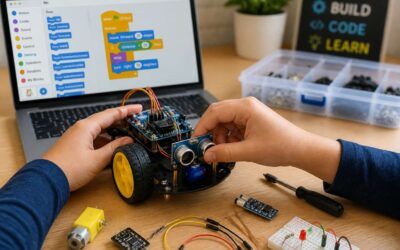
Home learning in South Africa is being rewritten by affordable consumer and service robots, turning living rooms into laboratories and sparking curiosity. These consumer and service robots provide accessible robotics examples that build coding confidence and scientific literacy without overwhelming families. What a shift for home learning!
They act as patient tutors, offering safe, interactive experiences at eye level with kids. Key capabilities include:
- Hands-on programming with kid-friendly interfaces
- Sensor experiments that reveal how data drives decisions
- Math and science challenges presented as playful missions
- Progress tracking for parents and teachers via simple dashboards
In South Africa, such tools complement classroom learning, making robotics approachable rather than intimidating.
Healthcare and Biomedical Robotics
Surgical Robots and Minimally Invasive Procedures
Healthcare and biomedical robotics are moving from lab benches to the operating theatre with startling confidence. Surgical robots and their minimally invasive procedures are redefining precision, shrinking incisions and speeding recovery. In South Africa’s leading hospitals, clinicians are blending engineering with medicine to extend expert care to more patients.
Among the most impactful robotics examples in this field are:
- Robot-assisted laparoscopic surgery that lets surgeons reach difficult areas through tiny ports
- Image-guided and navigation-enabled robotics for precise tumor resections and delicate organ work
- Catheter-based robotic solutions for complex cardiac and vascular interventions
These innovations illustrate how robotics examples translate into real-world care—better outcomes, shorter hospital stays, and safer procedures. As South Africa continues to invest in training and infrastructure, the partnership between clinicians and machines is re-shaping the healthcare landscape.
Rehabilitation and Therapy Robots
Rehabilitation and therapy robots are turning months of recovery into weeks of focused, measurable progress. In South Africa, clinics experiment with robotics examples that support mobility, dexterity, and balance for stroke survivors and spinal injury patients.
- Gait-training exoskeletons help patients stand and walk with rhythm
- Robotic therapy arms enable precise, repetitive upper-limb exercises
- Interactive biofeedback systems monitor progress and motivate patients
These robotics examples expand access to care, letting therapists supervise more sessions while maintaining safety. “Robotics extend rehabilitation beyond the traditional clinic walls,” notes a clinician.
Medical Imaging and Robotic Diagnostics
Across South Africa, early adopters report imaging that feels almost instantaneous, thanks to robotics examples reshaping healthcare. In medical imaging and robotic diagnostics, systems fuse high-resolution data with precise instrument control, delivering MRI-guided biopsy, CT-assisted planning, and robotic ultrasound that expand the clinician’s reach. A clinician notes, “Robotics extend the eyes and hands of the diagnostic team,” and patients sense the difference as care becomes calmer and more targeted.
Biomedical robotics blend soft-computed predictability with tactile feedback, easing procedures while improving safety. The same technology promises diagnostic access in rural clinics, not just metropolitan hospitals.
- MRI-guided robotic biopsy
- Ultrasound-guided robotic interventions
These advances crystallize robotics examples—an emergent cadence in healthcare where imaging and diagnostics operate as a coordinated duet, a quiet revolution in how South Africa understands the body.
Laboratory Automation and Drug Discovery
Across South Africa, laboratories report imaging-like speed in biology—robotics examples accelerating sample-to-answer cycles and brightening the horizon of care. In healthcare and biomedical robotics, laboratory automation and drug discovery blend craft with computation, turning benches into living ecosystems where automated platforms handle volumes, microfluidics orchestrate reactions, and AI interprets signals with surgical patience.
These advances unfurl a new cadence for research—
- Automated liquid handling and high-throughput screening
- Microfluidic organ-on-a-chip platforms for realistic assays
- AI-driven data analytics guiding decision making
From university labs to rural clinics, this edge breathes optimism—robotics examples turning access into precision, and patience into speed.
Autonomous Systems and Emerging Trends
Self-Driving Vehicles and Drones
Across industries, robotics examples stretch beyond factory floors into the skies and streets. Analysts project autonomous systems will touch 15% of global industrial tasks by 2030, and South Africa is quietly positioning itself to ride that wave. Imagine self-driving shuttles easing commutes in city centers while drones perform rapid inspections of critical infrastructure. The story unfolds with a sense of mystery and promise, as machines learn to navigate, decide, and adapt in real time. The best robotics examples fuse reliability with elegance, turning complex choreography into everyday convenience.
Within this emerging trend, self-driving vehicles and drones are not just novelties; they’re evolving into trusted partners, guiding logistics, safety, and rapid response.
- Self-driving delivery vans easing last-mile efficiency
- Autonomous inspection drones for critical infrastructure
- Autonomous fleet coordination and traffic-aware routing
These dynamics—bold, precise, and quietly transformative—are the core of robotics examples reshaping roadways and skies.
Robotics in Agriculture and Environmental Monitoring
Across South Africa’s sunlit fields, autonomous systems are turning data into decisive action. A veteran agri-tech visionary says, ‘The farm of the future speaks in soil moisture and leaf whispers.’ In agriculture and environmental monitoring, autonomous craft—sensors, drones, and ground bots—chart a new rhythm of care for crops and ecosystems.
- Precision irrigation and water management
- Autonomous weed and pest control
- Environmental monitoring of soil, air, and water
Smart fleets monitor soil moisture, map erosion, and alert farmers to stress before a plant wilts. Drones scout irrigation needs; robot cultivators practice precise weeding and yield forecasting, turning weather into a partner rather than a hurdle.
These evolving systems are changing the cadence of the land—quiet, scalable movements that fuse reliability with elegance. In this way, robotics examples weave a legible future for South Africa’s farms and ecosystems alike.
Swarm Robotics and Collaborative Robots (cobots)
Across South Africa, autonomous swarms choreograph work on sites from windbreaks to water lines, and pilot programs report up to 28% efficiency gains. These robotics examples reveal a future where many small agents sing as one. Swarm robotics and collaborative robots—cobots—operate without a single master, guided by shared sensors and local rules. I’ve witnessed cobots harmonize with human teams, turning careful planning into rhythmic, safe progress!
- Coordinated autonomy reduces risk by distributing tasks across many agents
- Collaboration with humans speeds adaptation to changing conditions
- Redundancy and resilience emerge from multiple small actors working in concert
In South Africa’s evolving landscapes, such innovations offer a new lexicon for efficiency and care—ushering in a future where machines complement craft rather than replace it.
Ethics, Safety, and Regulation for Robotic Technologies
Across South Africa, autonomous systems are turning risk into rhythm! In pilots, efficiency has climbed as high as 28%, a sign that robotics examples can align many tiny agents toward a common goal. These systems operate without a single master, guided by shared sensors and local rules, turning planning into progress.
Ethics, safety, and regulation are the compass and gate. As decision-making pushes into the ambient world, there is a demand for clear accountability when things go wrong and transparent data handling. Safety must be built into design with human oversight, robust fail-safes, and explicit limits on autonomy in sensitive tasks!
- Ethical governance and accountability
- Safety standards and human-in-the-loop controls
- Regulatory alignment with local and international standards
In the rural-urban tapestry of South Africa, these trends remind readers that machines should augment craft, not overshadow it.



0 Comments