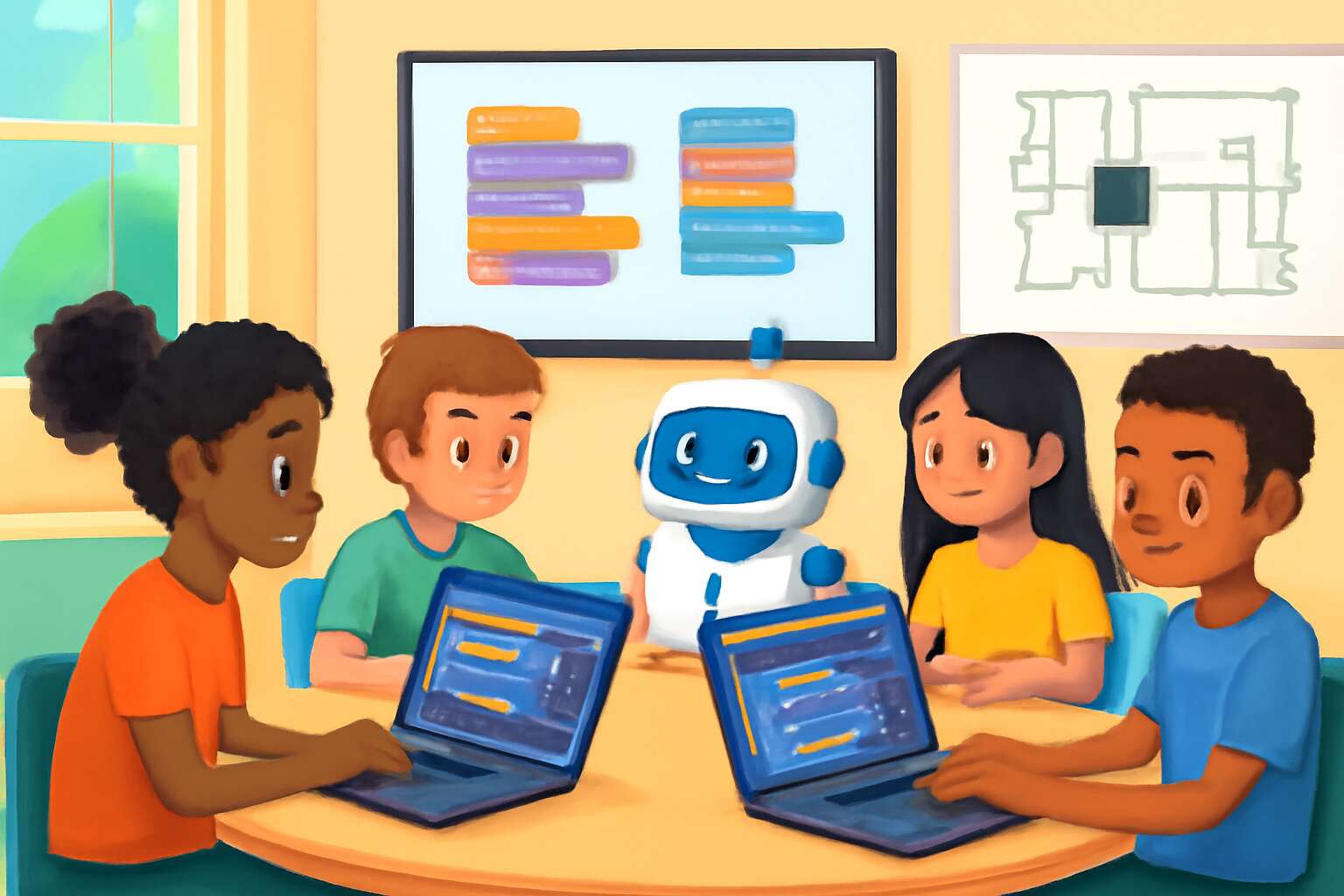
Integrating Coding and Robotics into K-12 Curriculum
Learning Objectives for Coding and Robotics
South African classrooms are buzzing as soon as a robot whirs to life. A pilot study across several districts found a 40% jump in student engagement once a coding and robotics curriculum is woven into everyday learning. The hook isn’t gimmicky—it changes how students think and work.
Integrating learning objectives for coding and robotics into K-12 means aligning projects with CAPS standards and the coding and robotics curriculum, while emphasizing problem solving, collaboration, and computational thinking. When teachers set clear goals—like designing, testing, and refining autonomous agents—the curriculum becomes a scaffold for creativity rather than a collection of gadgets!
This approach embeds real-world problem solving, cross-disciplinary literacy, and storytelling in every unit, so students learn to debug, reason, and communicate with confidence—a skill set valued across South Africa’s evolving economy.
Done right, this approach keeps assessment meaningful and projects authentic, echoing how South African students will code their futures.
Curriculum Mapping and Standards Alignment
“We don’t teach robots—we teach thinking,” a South African educator often reminds us, and a mapped approach does the heavy lifting. Integrating a coding and robotics curriculum into K-12 means aligning with CAPS and standards while inviting classrooms to tackle complex problems across subjects. The aim is to turn gadgets into tools for inquiry and creativity.
- Curriculum mapping that spans CAPS across subjects
- Standards-aligned assessment rubrics
- Time and resource planning that supports project work
- Professional development for teachers
With such alignment, this framework becomes a living instrument rather than a shelf of gadgets. It invites students to design, test, and refine solutions, narrating their reasoning as an essential literacy for the country’s evolving economy.
Age-Appropriate Hardware and Software Tools
In South Africa’s classrooms, a single microcontroller can unlock a semester’s worth of questions, turning curiosity into measurable progress. The coding and robotics curriculum becomes a living dialogue where hardware serves inquiry and software invites reflection, all within CAPS-aligned expectations.
Age-appropriate hardware and software tools empower learners to design, test, and iterate without overwhelm. A few trusted companions include:
- Micro:bit for foundational sensors and coding blocks
- Scratch-based environments for storytelling with logic
- LEGO Education SPIKE Prime for collaborative projects
These tools shine by enabling cross-disciplinary exploration — mathematics through measurement, science through robotics, geography through data collection—while cultivating digital citizenship and resilience in a changing economy.
Cross-Curricular Connections and Real-World Applications
Curiosity in a South African classroom can hum louder than the noon heat when a microcontroller joins the lesson and questions become quests. A single spark grows into a semester-long dialogue between hardware and imagination.
Where cross-pollination thrives, the coding and robotics curriculum weaves measurement, storytelling, and problem-solving into a living narrative. Learners translate rainfall data into graphs, model traffic patterns, and craft narratives that describe robots’ decisions—silence of gears, glow of screens, speaking in unison.
- Mathematics: measurement, data handling, and pattern recognition
- Science: systems thinking, experimentation, and robotics-in-action
- Geography and language: storytelling through data, digital citizenship, and ethical narration
Real-world applications emerge as students pilot prototypes that respond to local needs—water literacy, energy stewardship, and community mapping—turning classroom inquiry into tangible impact. Curiosity becomes capability, and learning remains a resonant, ongoing conversation.
Teacher Training and Professional Development
Across South Africa, classrooms are finding that professional development for teachers is the real accelerator of change. In a recent pilot, schools reported a 40% uptick in student-led inquiry after teachers engaged in targeted PD for coding and robotics curriculum! That momentum isn’t a one-off flash; it grows through sustained coaching, collaborative planning, and a culture of safe experimentation.
- Mentor coaching cycles for schools
- Micro-credentials linked to classroom-ready projects
- Assessment conversations rooted in authentic evidence
When teachers feel supported, the coding and robotics curriculum becomes a shared language across grade levels; classrooms become laboratories of inquiry where gears hum and data glow. There’s a quiet momentum, almost spectral, that lingers in halls as curious minds translate data into stories. The narrative continues, weaving curiosity into capability.
Project-Based Learning for Coding and Robotics
Designing Hands-On Projects that Merge Coding and Robotics
In classrooms where project-based learning anchors the journey, curiosity becomes a measurable outcome; “hands-on learning is how minds grow,” as one educator notes. A single, well-scoped project can turn abstract code into tangible motion, and learners emerge convinced they can shape the world. This is the pulse of a coding and robotics curriculum tailored for South Africa.
Hands-on projects are designed to merge coding and robotics in a loop of design, test, and refine. These experiments train problem-solving, collaboration, and resilience.
- Autonomous maze solver using a sensor suite
- Solar-powered weather station feeding data to a classroom dashboard
- Pocket-sized robotic arm controlled by block-based or Python code
Such experiences connect theory to practice, inviting learners to narrate their journey.
Beyond equipment, these projects thrive on local relevance—safe and inclusive—ensuring every learner participates. This approach makes the coding and robotics curriculum feel alive, rooted in community challenges and real-world applications.
Iterative Design, Prototyping, and Testing
In South African classrooms, curiosity leads the way and project-based learning turns code into motion. Early wins ripple through the hallway, and teachers report a tangible rise in student ownership of the coding and robotics curriculum.
Project-Based Learning thrives on iterative design, prototyping, and testing. The cycle becomes a living story of problem-solving.
- Define the challenge
- Prototype quickly with simple components
- Test with real-world constraints
Locally relevant challenges—limited power, water monitoring, or safe mobility—anchor the work while preserving inclusivity!
Outcomes emerge as learners narrate their journey, from sketches to sensors to dashboards, and the curriculum gains depth without losing pace—an evolving story within this field.
Student Collaboration and Roles in Project Teams
Curiosity trails behind every keyboard press when learning is allowed to breathe as a shared project. In project-based learning, students translate a shimmering idea into motion, and the room becomes a laboratory of real-world problem solving. In the coding and robotics curriculum, teams chase challenges that matter to their local communities, including those in South Africa.
Collaboration unfolds through defined roles that evolve with the project. Teams assign a coder, a hardware integrator, a tester, a data analyst, and a narrative keeper to document decisions.
- Coder/developer
- Hardware integrator
- Systems tester
- Data analyst
- Documentation leader
From whiteboard sketches to sensor-enabled dashboards, learners narrate each milestone, turning ownership into a social contract and letting the room vibrate with shared purpose.
Assessment Strategies for Project Outcomes
Across South African classrooms embracing project-based learning, problem-solving scores have risen as much as 15% last year, as students transform shimmering ideas into functional prototypes within the coding and robotics curriculum.
Assessment strategies hinge on authentic work—proof of impact, not just exams.
- Portfolio of artifacts showcasing code, hardware builds, and sensor dashboards
- Iteration logs that record decisions, tests, and pivots
- Public rubrics and peer reviews to guide progress
Results emerge as students narrate stories of real-world outcomes to communities, teachers, and mentors, turning learning into a shared, visible journey within this coding and robotics curriculum.
Safety and Ethical Considerations in Robotics Projects
Sparks fly when lines of code meet moral lines. In South African classrooms, project-based exploration of robotics reveals that safety is the compass, not a constraint. “Safety is the first module of every build,” a mentor reminds us, and the truth lands with quiet power.
In the coding and robotics curriculum, ethical considerations accompany every prototype—from consent and data privacy to transparent decision-making and inclusive design. Learners document potential risks, reflect on bias in sensors, and plan for responsible deployment in real communities.
- Safety protocols for power, movement, and hardware handling
- Data privacy, consent, and responsible use of sensor information
- Bias awareness, fairness, and human-centered outcomes
- Environmental impact and lifecycle thinking for devices
These elements turn learning into a shared, accountable journey—where projects glow in the margins of the community, and every prototype speaks to integrity as much as ingenuity.
Core Competencies and Assessment in Coding and Robotics Education
Computational Thinking and Problem Solving
South African classrooms are discovering that engagement soars when computing meets curiosity. In fact, nearly half of learners report higher motivation when computational thinking is woven into hands-on projects. The core competencies in the coding and robotics curriculum center on computational thinking and problem solving, turning messy challenges into solvable puzzles that students own.
- Decomposition: breaking problems into manageable steps
- Pattern recognition and abstraction
- Algorithmic thinking and coding fluency
- Debugging, testing, and iterative refinement
Assessment in this mode rewards visible thinking and collaboration. Students are asked to demonstrate progress through authentic tasks, with rubrics that prize process, accuracy, and reflection.
- Performance tasks tied to real-world robotics challenges
- Rubric-based evaluation of process, teamwork, and final product
- Reflective journals and data logs documenting decisions and outcomes
This approach strengthens the coding and robotics curriculum in South Africa’s diverse schools, ensuring learners leave with transferable computational thinking skills.
Programming Languages and Platforms for Beginners to Advanced
Motivation blooms when curiosity meets code. In South Africa’s classrooms, 46% of learners report higher engagement when they tackle real-world problems through hands-on projects. Core competencies emerge as a compass: clear thinking, collaboration, and resilient problem solving that grows with every attempt.
From beginner to advanced, learners travel a path from block-based coding to more expressive languages. For younger students, Scratch and visual blocks teach sequencing; for older learners, Python and JavaScript unlock data handling, control, and creative automation. This approach aligns with the coding and robotics curriculum.
- Block-based programming: Scratch
- Text-based languages: Python, JavaScript
- Microcontroller platforms: Arduino, micro:bit
- Robotics kits: LEGO Mindstorms, VEX
Assessment follows the same arc: visible thinking, collaboration, and steady growth across tasks and portfolios. Learners are rewarded for clarity of process, quality of final work, and the reflections that reveal what was learned and why.
Data Literacy and Sensor Integration
Across rural and urban classrooms in South Africa, curiosity earns its reward when students translate ideas into action. Core competencies—clear thinking, collaboration, and resilient problem solving—serve as a compass as learners move from blocks to expressive code. In this coding and robotics curriculum, data literacy and sensor integration become practical lenses through which projects unfold, turning raw measurements into meaningful stories and usable automation. A strong program treats data as a partner, guiding decisions from sensor input to software.
- Clarity of reasoning in design journals
- Quality of collaborative communication
- Evidence of iterative improvement from data and sensors
- Well-supported reflections on what was learned and why
In practice, assessment becomes visible thinking in action: students explain decisions, share design notes, and demonstrate growth across portfolios, capturing a story of data-driven enquiry that travels from class to community projects.
Formative and Summative Assessment Methods
Core competencies—clear thinking, collaboration, and resilient problem solving—steer students through the coding and robotics curriculum, guiding curious hands as ideas spark into tested action. Across South Africa’s varied classrooms, learners translate ideas into action, balancing creativity with disciplined inquiry. Assessment here is a living conversation that measures growth as much as outcome!
- Formative assessments create continuous feedback loops—teacher observations, quick checks, sensor logs, and peer reviews that drive revision.
- Summative demonstrations anchor learning with integrated projects, data storytelling, reliable code, and collaborative execution.
- Reflective portfolios capture decisions, design notes, and the rationale behind iterations from data and sensors.
In practice, this approach makes learning visible and transferable, weaving technical skill with civic relevance across South Africa’s classrooms.
Rubrics and Portfolio Standards for Student Progress
In the dim glow of a classroom lab, rubrics serve as the north star for the coding and robotics curriculum, guiding learners through disciplined inquiry, collaboration, and tenacious problem solving. They turn assessment from a verdict into a trajectory, a living map of growth rather than a single outcome!
Within this framework, rubrics anchor clear criteria for progress:
- Design decisions and iteration history
- Code quality, reliability, and debugging narratives
- Team roles, communication, and collective responsibility
- Data literacy, sensor integration, and evidence-based reasoning
Portfolios collect the evidence of growth: design notes, test logs, reflections, and data stories; they are living artifacts of student progress across the curriculum; in South Africa’s diverse classrooms they demonstrate both technical fluency and civic connection.
Accessibility and Equity in Coding and Robotics Education
Access to Resources and Inclusive Teaching Practices
Equity isn’t an afterthought—it’s the design constraint that makes a classroom sing. In South Africa’s diverse landscape, a robust coding and robotics curriculum becomes a lever for opportunity when access is intentional and resources are shared—I’ve seen it happen.
Accessibility and equity hinge on access to devices, connectivity, and thoughtfully packaged offline content. In practice, schools lean on community partnerships and localized materials that speak to everyday life.
Inclusive teaching practices turn ideas into action, with universal design for learning, flexible timelines, and ongoing assessment that respects different starting points. When the coding and robotics curriculum is designed with equity in mind, classrooms become laboratories of possibility. Teachers collaborate, students mentor one another, and curiosity travels across ages and backgrounds.
Differentiation for Diverse Learning Needs
“Equity isn’t an afterthought—it’s the design constraint that makes a classroom sing.” In South Africa, access to devices, connectivity, and thoughtfully packaged offline content shapes who participates in the coding and robotics curriculum. I’ve witnessed how partnerships with communities and local libraries turn gaps into gateways.
Accessibility and equity hinge on differentiating teaching to meet diverse needs. Universal design for learning, flexible timelines, and ongoing assessment respect every starting point, turning ideas into action. When these practices lead the way, classrooms become laboratories of possibility, where teachers collaborate and students mentor one another.
Key levers to support these aims include:
- Device loan and affordable access programs that reach rural and township schools
- Offline content bundles and downloadable lesson packs for low connectivity environments
- Community mentors and peer tutoring networks that extend learning beyond the classroom
When equity guides design, every learner finds a place to code, create, and contribute.
Budgeting, Grants, and Community Partnerships
Across South Africa, one in three rural schools struggles with reliable connectivity, and that gap shapes every decision about learning to code. Budgeting for equity isn’t a sidebar; it’s the design constraint. A well-planned coding and robotics curriculum relies on community partnerships that turn schools into gateways, not gatekeepers, to opportunity.
Funding approaches must be clear and enduring. Grants, government programs, and community partnerships are the levers that keep learning alive beyond classrooms. Key funding avenues include:
- National tech-literacy grants with rolling terms to support equipment and offline content
- CSR collaborations with tech firms to fund teacher training and mentor networks
- Local NGO grants that target under-resourced schools and libraries
This approach sustains learning, ensuring students access devices, content, and guidance without crossing digital fault lines.
Family and Community Engagement in Coding and Robotics Education
Accessibility and equity aren’t afterthoughts; they’re the oxygen of a thriving learning pipeline. Across South Africa, one in three rural schools still wrestles with unreliable connectivity, a reality that shapes every lesson in the coding and robotics curriculum. When offline content travels with resonant, hands-on materials, potential outpaces limitation.
Family and community engagement breathes life into that curriculum. When caregivers, libraries, and local mentors share the journey, students see their learning redirected toward real opportunity. Equity blossoms not from lip service but from sustained relationships that transform school walls into welcoming gateways.
In such a shared space, curiosity becomes capability, and the classroom’s hum travels beyond the fence, turning small moments into community-wide progress.
Evaluation of Program Impact and Continuous Improvement
One in three rural South African schools face unreliable connectivity, but that won’t stop progress. The coding and robotics curriculum is evaluated for real impact, not rhetoric. Accessibility and equity aren’t abstract goals; they are the metrics that show learning crossing from chalk to opportunity!
Impact is assessed across who can participate, what students can do, and how families stay involved. A transparent process surfaces gaps early and guides steady change.
- Improved access to devices and offline resources
- Measurable gains in computational thinking and problem solving
- Active caregiver and community involvement
- Teacher confidence and ongoing professional development
Continuous improvement rests on cycles of feedback, pilots, and shared governance with schools, libraries, and mentors. When communities help shape the program, gains endure beyond a single term.


0 Comments