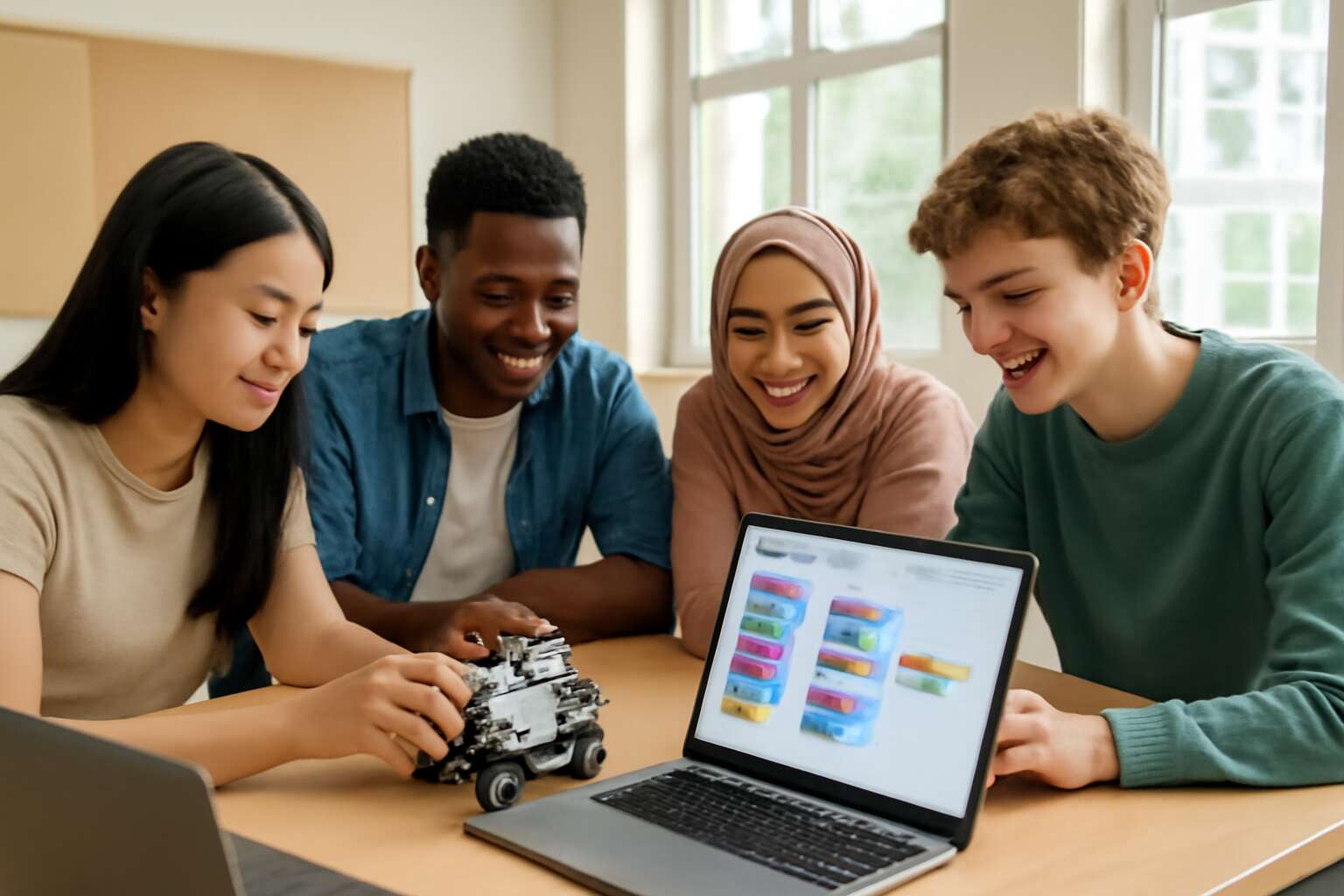
Understanding Coding Education in Modern Schools
What is computer science in the K-12 context
In South Africa’s bustling classrooms and quiet rural schools alike, a single question reshapes expectations: “Coding is literacy for the 21st century,” as a South African educator often says. When screens glow and pencils scribble, students begin to see algorithms as stories and robotics as hands-on exploration.
In the K-12 context, computer science is more than typing lines of code; it blends computational thinking with creativity, ethics, and collaboration. Understanding what is coding and robotics in schools becomes a framework for inquiry—students design, test, and iterate on ideas that connect math, science, and daily life.
- Builds problem-solving and structured thinking
- Fosters teamwork across ages and disciplines
- Links classroom work to tangible, real-world projects
Across South Africa, schools are piloting age-appropriate curricula, teacher training, and device access to keep the door open for all learners—turning curiosity into capability.
Key programming paradigms taught in schools
In South African classrooms, curiosity guides students through circuits and code. What is coding and robotics in schools? It’s not a distant sprint of screens; it’s a living map where stories become algorithms and hands-on projects come to life. Learners translate ideas into steps, test them, and refine with collaboration.
Key programming paradigms taught in schools today include:
- Block-based programming for beginners (Scratch-style) that snaps ideas together.
- Text-based languages to practice syntax and logic (Python, Java).
- Event-driven and modular design that mirrors robotic sensors and user actions.
These paradigms extend beyond screens, guiding learners to connect math, science, and daily life through teamwork across grades. In South Africa, schools weave them into curricula, supported by teachers and device access that keep curiosity thriving.
How coding builds problem-solving skills
Understanding what is coding and robotics in schools unlocks a new kind of curiosity. In South Africa, 68% of learners show higher engagement when hands-on coding with robots bridges maths and science, turning routine lessons into exploratory ventures. Classrooms become workshops where ideas become algorithms and projects come alive.
- Practical problem-solving that mirrors real life
- Collaborative design across grades
- Rapid iteration with tangible prototypes
By weaving these projects into daily learning, students translate ideas into steps, test them, and refine through collaboration rather than memorization. Coding education then acts as a bridge—connecting data patterns, algebra, and experimentation—while staying grounded in South Africa’s diverse, curious classrooms.
Role of teachers and professional development
In classrooms, what is coding and robotics in schools becomes a conversation about curiosity, turning daily lessons into collaborative experiments. In South Africa, 68% of learners show higher engagement when hands-on robot projects bridge maths and science, proving that learning can feel like discovery.
Role of teachers in this evolution is to cultivate inquiry and collaborative problem-solving. Essential duties include:
- Mentoring through project-based challenges
- Aligning work with local curricula and contexts
- Assessing growth with portfolios and peer feedback
- Encouraging safe, iterative exploration
When done well, professional development follows teachers into classrooms, shaping lasting confidence in students.
The Role of Robotics in the Classroom
Basics of educational robotics
Robotics in schools turns abstract ideas into tangible challenges. ‘Coding isn’t just future stuff—it’s today’s tool,’ a veteran teacher says, and the effect is real: students wire circuits, test ideas, and see math and science come alive. I’ve seen classrooms light up when a robot solves a challenge. In South Africa, robots help diverse classrooms feel inclusive and energize collaboration. The class becomes a workshop, not a lecture hall!
Many teachers wonder what is coding and robotics in schools, and the answer lies in hands-on practice. Educational robotics introduces simple programming concepts, sensors, loops, and debugging, turning trials into steady progress.
- Hands-on exploration that anchors theory
- Immediate feedback guiding revision
- Team-based learning that builds collaboration
Integration with STEM curricula
In South Africa, classrooms where robots share the bench see math ideas click into place—like constellations sliding into focus. “When programming becomes part of a science project, curiosity pays off,” notes a veteran educator. For those exploring what is coding and robotics in schools, the answer is a tapestry of hands-on inquiry woven into STEM.
Robotics strengthen STEM curricula by aligning with inquiry-based learning: mathematics of measurement, physics of motion, engineering design.
- Hands-on experimentation that ties theory to real-world challenges
- Cross-disciplinary projects that blend coding, sensors, and data
- Collaborative problem-solving that mirrors modern workplaces
In diverse South African classrooms, robots democratize access and spark collaboration, turning schools into laboratories of possibility.
Hands-on learning and project-based activities
When circuitry meets curiosity, classrooms transform. “When curiosity meets circuitry, learning becomes a journey,” a veteran educator notes—and in South Africa, robots turn quiet questions into bold experiments.
The role of robotics in the classroom centers on hands-on learning and project-based activities that bridge math, science, and design. Students prototype, test, and iterate, translating abstract ideas into tangible outcomes that matter to their communities.
In practice, thoughtful activities can spark genuine engagement:
- Modular kits that accelerate iteration without slowing inquiry
- Cross-classroom collaborations that showcase local problem-solving
- Peer-led reflection and presentation that build communication and teamwork
Across diverse South African schools, robotics democratizes access and turns the lab into a shared space for exploration. This framing—what is coding and robotics in schools—explains why it matters for future-ready learners.
Assessment strategies for robotics projects
A bold hook anchors this discussion: what is coding and robotics in schools is learned through making, testing, and revising. “Learning is iteration,” a veteran educator says, and in South Africa, robotics turns quiet questions into bold experiments. The classroom becomes a living workshop where abstract ideas meet tangible prototypes, merging math, science, and design with purpose.
Assessment strategies for robotics projects balance process and product. Teachers often use a mix of rubrics, logs, and structured discussions to capture growth. To support deeper learning, the approach emphasizes iteration, collaboration, and clear demonstrations of function.
- Rubrics that weight iteration and problem-solving alongside final performance
- Design journals and code traces that document decisions and revisions
- Peer feedback and reflective presentations that build communication and teamwork
Across diverse South African schools, these strategies democratize access, turning the lab into a shared space for inquiry and community impact.
Common robotics platforms used in schools
Robotics in the classroom redefines learning as a hands-on expedition. In South Africa, students test ideas, measure outcomes, and iterate toward clarity. It reframes learning as a live dialogue between curiosity and method, where questions sculpt prototypes and prototypes sharpen understanding.
Common robotics platforms empower this inquiry; a few widely used in schools include:
- LEGO Education SPIKE Prime
- VEX V5
- Makeblock mBot2
- Dash & Dot
Together, these platforms translate theory into motion, enabling diverse learners to see math, design, and coding converging.
In classrooms across the country, this is how what is coding and robotics in schools takes shape—not as a hurried kit install but as a patient, collaborative practice that invites every learner to contribute.
Curriculum Design and Standards
Aligning coding and robotics with national and state standards
What is coding and robotics in schools? It’s more than gadgets; it’s a disciplined approach to thinking that ignites curiosity. In South Africa, Nelson Mandela’s reminder that “Education is the most powerful weapon which you can use to change the world” resonates as curricula align tech modules with CAPS and national standards. A growing body of research suggests that students engaged with coding and robotics within their standard curriculum show heightened problem-solving, collaboration, and resilience.
Curriculum design for coding and robotics must map outcomes to CAPS Technology and IT-related strands, while aligning with cross-cutting competencies like digital literacy and ethical citizenship. The design process can include:
- Standards mapping and outcome alignment
- Inclusive access and equity considerations
- Modular units that allow for spiraling complexity
- Assessment rubrics tied to performance tasks
Backward design and learning objectives
Backward design puts learning outcomes at the center of curriculum design for coding and robotics. Start by defining what students should be able to do, then choose activities that reveal those abilities in real tasks. Understanding what is coding and robotics in schools helps educators map goals to CAPS Technology and IT strands while preserving room for inquiry and ethical practice. This approach keeps effort purposeful and visible to learners, parents, and policymakers alike.
- Identify measurable learning outcomes aligned to CAPS strands.
- Design authentic performance tasks that require coding and robotics integration.
- Develop clear rubrics that assess digital literacy and ethical citizenship.
With backward design, educators connect content, practice, and assessment into a cohesive path that respects classroom realities and student diversity!
Cross-curricular opportunities
Curriculum design in schools becomes a living map when learning outcomes meet real tasks. Understanding what is coding and robotics in schools reveals its potential when educators map activities to cross-curricular goals while honoring classroom realities.
Cross-curricular opportunities that amplify learning include:
- Language arts through storytelling, reflection, and documentation of code projects
- Mathematics with data collection, measurement, and pattern recognition from sensor data
- Arts and design via creative robotics and interface aesthetics
- Social studies and ethics embedded in digital citizenship and responsible innovation
By weaving standards with inquiry, schools craft inclusive pathways that respect student diversity and encourage ongoing assessment without stifling curiosity.
Equity and access considerations
In grappling with what is coding and robotics in schools, curriculum design becomes a living map that bends to inquiry and student voice. Standards anchor the plan, but learning outcomes unfold through projects, peer coaching, and flexible pacing. When classrooms design for exploration, even ideas like algorithms and sensors become tangible through playful simulations and common-sense hardware. A thoughtful blend respects local contexts while aligning with national benchmarks, inviting teachers to weave code projects into literacy, numeracy, and design so learning travels across subjects.
- equity of access
- offline or low-bandwidth resources
- language- and culturally responsive materials
Equity and access considerations are not an afterthought in South Africa; they shape every decision, from device availability to language supports and teacher collaboration. When design centers inclusion, standards are met without leaving learners behind.
Implementation, Resources, and Best Practices
Budgeting for coding and robotics programs
Implementation in South Africa’s classrooms unfolds like a careful spell. Understanding what is coding and robotics in schools helps shape a practical rollout—start with a pilot in one grade, then widen it while syncing with CAPS objectives. This cadence preserves teacher confidence, preserves time for hands-on exploration, and keeps the magic of inquiry alive.
- Pilot programs in one grade with local support
- Aligned timetabling and CAPS integration
- Mentor teachers with short, local PD sessions
- Simple, durable kit choices to ease maintenance
Resources for South African schools include open-source software, affordable hardware, and partnerships with local universities or tech hubs. These channels stretch budgets and unlock equitable access across communities.
Best practices budgeting for coding and robotics programs blends foresight with flexibility. Allocate for durable kits, ongoing professional development, spare parts, and maintenance; build in refresh cycles every few years; and seek community sponsorships to sustain momentum without sacrificing quality.
Choosing hardware and software ecosystems
Implementation: In South Africa, what is coding and robotics in schools becomes tangible when you pilot in one grade and scale up with CAPS in mind. Opt for a cohesive hardware–software ecosystem that’s simple to maintain, modular. Start with durable, easy-to-use kits and build a culture of hands-on inquiry from day one.
- Durable, modular kits
- Local supplier support
- Open-source software boost
- Easy maintenance and spares
Resources: South African schools benefit from open-source software, affordable hardware, and partnerships with local universities or tech hubs. These channels stretch budgets and help bring equitable access to communities far from the urban core.
Best practices: Budget with foresight and flexibility—plan for refresh cycles, ongoing PD, and community sponsorships. Choose a balanced ecosystem that prioritises teacher confidence, safety, and student curiosity while remaining aligned with CAPS.
Professional development for teachers
In South Africa, what is coding and robotics in schools becomes tangible when a single-grade pilot proves scalable under CAPS. Start with a cohesive hardware–software ecosystem that’s simple to maintain and modular enough to grow with confidence. Use durable, user-friendly kits and cultivate hands-on inquiry from day one.
Resources for South African schools lean on open-source software, affordable hardware, and partnerships with universities or tech hubs. These connections stretch budgets and broaden access to communities outside the urban core, via mentors, makerspaces, and shared learning days.
- Local mentorship from universities and tech hubs
- Open-source toolchains and platforms
- Community sponsorships and grants
Best practices for professional development focus on foresight, ongoing PD, and safety. Keep training hands-on, collaborative, and aligned with CAPS while fueling teacher confidence and student curiosity.
Assessment data and reporting
Implementation: In South Africa, what is coding and robotics in schools becomes tangible through a cohesive hardware–software ecosystem that’s simple to maintain and modular enough to grow with confidence. Start with durable, user-friendly kits and cultivate hands-on inquiry from day one. A one-grade pilot that proves scalable under CAPS, supported by a shared language among teachers, technicians, and learners.
Resources: Open-source software, affordable hardware, and partnerships with universities or tech hubs form the backbone. Local mentorship from universities and tech hubs, open-source toolchains and platforms, and community sponsorships and grants expand access beyond the urban core.
Best Practices Assessment data and reporting: Assessment should be ongoing, formative, and aligned with CAPS without bogging down teachers. Use lightweight rubrics, digital dashboards, and transparent reporting to celebrate progress and guide instructional decisions while safeguarding privacy.
Community partnerships and parent engagement
Implementation: In South African classrooms, understanding what is coding and robotics in schools helps translate curiosity into capability. A cohesive hardware–software ecosystem sits at the core—durable, user-friendly kits that grow with learners, and a one-grade pilot scalable under CAPS, supported by a shared language for teachers, technicians, and learners.
- Durable, user-friendly kits
- Modular growth for learner confidence
Resources: Open-source software, affordable hardware, and partnerships with universities or tech hubs form the backbone. Local mentorship from universities and tech hubs, open-source toolchains and platforms, and community sponsorships and grants expand access beyond the urban core.
- Open-source software
- University and tech-hub partnerships
Best Practices: Community partnerships and parent engagement are essential. Ongoing, formative assessment with privacy protections and lightweight rubrics guides instruction while celebrating progress. Engage families through showcases and workshops, and invite local mentors to classrooms.
- Host community showcases
- Offer parent workshops
Safety, ethics, and inclusivity in tech education
In exploring what is coding and robotics in schools, implementation must marry curiosity with safeguarding. In South African classrooms, safety protocols, consent, and age‑appropriate content anchor exploration, while inclusive design ensures every learner can participate. A clear, shared vision guides teachers, technicians, and learners through hands-on projects that test ideas with care.
Resources extend beyond devices to responsible access. Open-source software with privacy controls, affordable hardware, and local mentors help sustain momentum. Partnerships with universities can audit ethics and accessibility, while community showcases illuminate pathways for families and learners across diverse contexts.
Best practices prioritize safety, ethics, and inclusivity in every lesson. By embedding privacy by design, transparent data handling, and accessible language, schools invite broader participation and trust.
- Safety protocols, incident reporting, and responsible lab management.
- Ethics and privacy by design, with clear protections for student data.
- Inclusive access through adaptive tools, multilingual resources, and equitable scheduling.


0 Comments