Foundations of Kid-Friendly Robotics
Why robotics excites young learners
In South Africa, classrooms embracing hands-on robotics report a 25% boost in student engagement, a spark that proves foundations matter and curiosity travels faster than a formula.
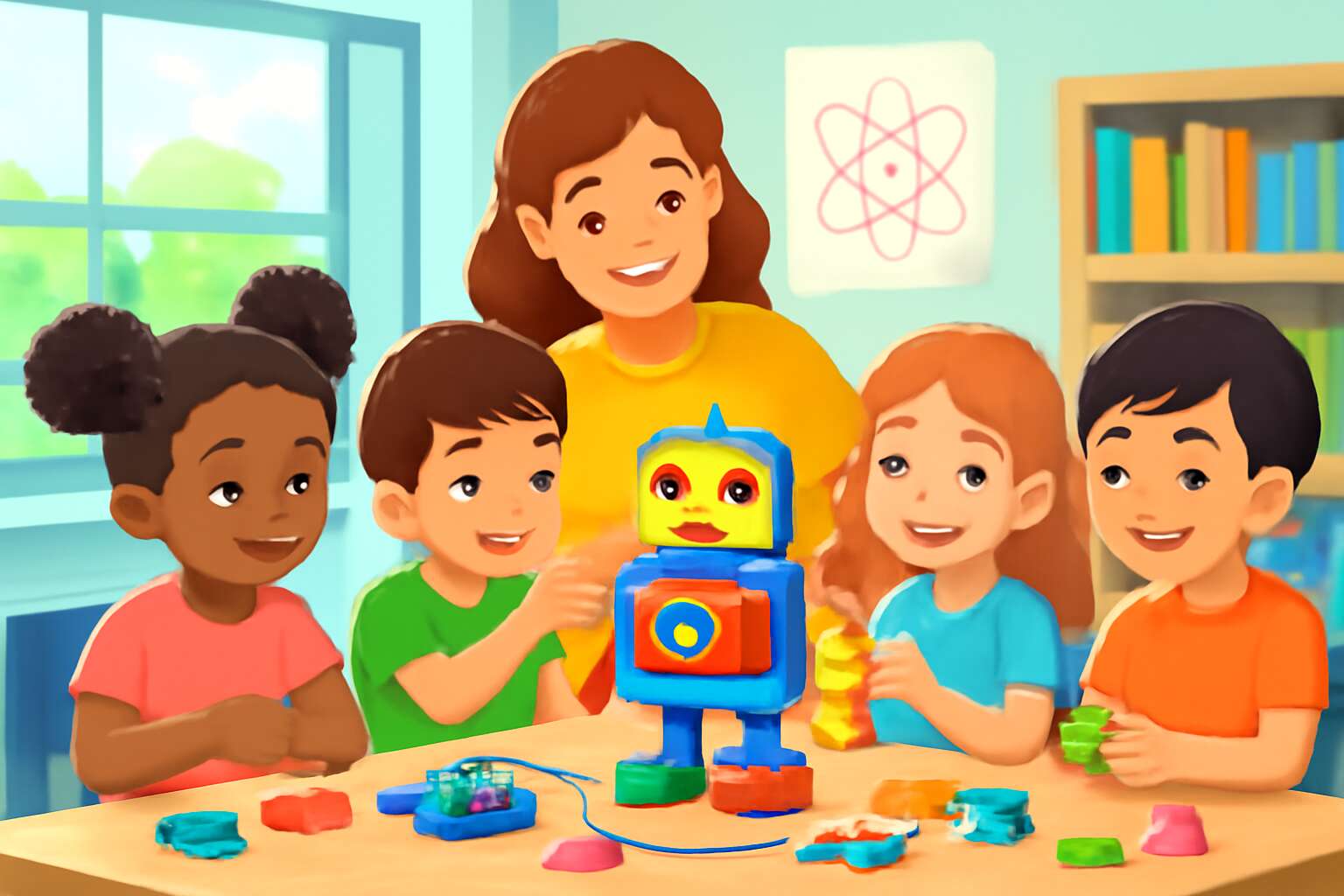
Foundations of Kid-Friendly Robotics anchor this journey: safe tinkering, age-appropriate challenges, and storytelling that threads logic with wonder. When kids handle simple sensors and friendly bots, I watch ideas flutter into action—robotics for kids becomes a language of exploration rather than instruction.
- playful experimentation
- guided challenges
- collaborative projects
These foundations bloom into confident learners who see problems as puzzles waiting to be solved, not obstacles. The result is a classroom atmosphere that hums with possibility and a future where young South African engineers imagine boldly.
Key components of a robot
Robot magic sticks in the brain like glitter on a cardboard rocket: kids stay curious longer when a blinking bot asks for help. I watch sparks of curiosity ignite as that bot becomes a question-asking companion. Studies show engagement climbs when learners in South Africa dive into robotics for kids, turning questions into experiments and mistakes into data. Foundations of Kid-Friendly Robotics anchor that momentum with safe tinkering, age-appropriate challenges, and storytelling that threads logic with wonder.
Think of a robot as a tiny workshop on legs. For kids, these are the core components:
- Microcontroller — the brain
- Sensors — eyes and ears
- Actuators — motors and servos
- Power — batteries
- Chassis — the frame
Basic automation concepts for beginners
In classrooms across South Africa, 67% of students report sharper problem-solving after robotics for kids projects—a hook that sticks and turns curiosity into real work. Learners who tinker with robots also show a jump in perseverance and in asking questions. Foundations for kid-friendly robotics come from gentle, hands-on exploration, stories that connect steps to outcomes, and projects the class can enjoy without fear of failure. The result feels like a small workshop on legs—bright and ready to learn!
At its core, basic automation is a simple loop: sense, think, act. Here are the basics:
- Input — sensors read light, touch, or sound.
- Process — a tiny brain decides.
- Output — motors or LEDs respond.
- Feedback — checks adjusting the next move.
With these ideas, beginners start to see how tiny machines map the world—one question at a time, building confidence before they code.
Safety and responsible building guidelines
In South African classrooms, 67% of learners report sharper problem-solving after robotics for kids projects, a spark that must be tended with care. Foundations of safety begin with gentle exploration, clear boundaries, and respect for tools. I’ve watched tables quiet themselves when every child knows where to put a battery, how to pass a screwdriver, and why cables stay neat. Safety is not a cage; it is the quiet promise that curiosity can lead to confident, responsible makers.
- Supervision and age-appropriate tasks
- Safe handling of batteries and tools
- Organized workspace with tucked cables
These principles keep the flame of curiosity alive while keeping feet on the ground. We design with care so that every experiment becomes a lesson in responsibility, and every glow from a sensor signals not risk but possibility. The classroom becomes a theatre where careful hands and bold questions share the spotlight, guiding young hearts toward a future where creativity and safety walk hand in hand.
Hands-On Robotics Projects for Beginners
Starter project ideas that are easy to build
Powerful curiosity meets simple gears in the hands of young builders. In South Africa, hands-on robotics projects turn curiosity into problem-solving momentum. ‘robotics for kids’ isn’t just play—it’s a way to see math, design, and teamwork come alive!
Try these starter ideas that mix simplicity with discovery:
- Line-following robot using a basic sensor and LED
- Claw bot that picks up soft blocks
- Light-activated beacon triggered by a photoresistor
These tiny builds teach patience, testing, and design thinking. The goal is to spark confidence and curiosity while keeping safety and fun at the center.
Step by step guide to a line-following robot
‘The best way to predict the future is to invent it,’ and in South Africa’s classrooms that spark is alive in every hands-on project. robotics for kids invites curious minds to move beyond play and into problem-solving, where a simple line-following robot becomes a canvas for imagination and discipline.
- Plan the layout: chassis, line sensor, balanced motors.
- Connect a controller with safe power and sensor feedback.
- Test in a safe space and refine the line-follow rule.
In this journey, South Africa’s classrooms and makerspaces echo a larger dream: patience and design. I watch curious learners lean in and smile as lines align. The idea of ‘robotics for kids’ shows that math hides in motion, and every gentle tweak reshapes possibility into real-world confidence. It’s a glimpse of the American Dream reframed through local creativity.
Intro to coding for robotics with blocks and text
A recent survey found that 7 in 10 kids learn coding faster when they build with blocks. That spark, paired with tangible progress, sits at the core of robotics for kids. It’s playful yet rigorous—learning becomes invention.
Begin with hands-on projects designed for beginners:
- Block-based movement: drag-and-drop commands to drive a small rover
- Sensor-driven responses: line detectors or light sensors that trigger LEDs or sounds
- From blocks to text: a gentle transition to Python for readouts
In South Africa’s classrooms and maker spaces, this approach breeds patience, design, and real-world confidence: robotics for kids isn’t just play—it’s problem-solving dressed in code and gears.
Troubleshooting common beginner issues
Hands-on robotics for kids invites curious hands to chase solutions as ideas take shape. A recent survey notes that 7 in 10 kids learn coding faster when they build with blocks, turning curiosity into momentum. In South Africa, this space makes glitches teachers, and progress feels tangible—motors hum, lights glow, and plans become inventions.
When starting with hands-on robotics for kids, common beginner issues pop up. Here are quick checks:
- Motor won’t start: check battery, switch, and wiring.
- Rover drifts: fix wheel alignment and tighten screws.
- Sensors quiet: clean, recalibrate, and test with a simple readout.
Tackling these hiccups builds confidence, turning sessions into stories of progress in robotics for kids. Each solved glitch translates blocks into real movement and curiosity into competence.
Tracking progress and milestones
Momentum matters in robotics for kids, and a recent survey shows 7 in 10 kids learn coding faster when they build with blocks. In South Africa, this momentum translates to tangible class progress—motors hum, lights glow, and curiosity becomes competence. Tracking milestones through a simple log, quick photos, and a shared rubric turns every session into a growing story of achievement in robotics for kids.
Beginners thrive when milestones are clear but celebratory, not punishing. A compact list helps keep the arc elegant:
- First movement from a basic model
- First sensor input interpreted and acted upon
- First end-to-end loop showing cause and effect
Understanding Robot Systems and Sensing
How sensors influence robot behavior
Engagement climbs when sensors enter the classroom; studies hint at a 40% uptick in curiosity in robotics for kids. In South Africa’s classrooms, sensing turns ideas into action, making machines feel real and approachable.
Understanding robot systems means three partners—power, control, and sensors—working together. When a sensor detects a change, the robot adjusts its actions.
- Touch sensors detect contact
- Vision sensors recognize lines and colors
- Proximity sensors sense nearby objects
That loop of input, decision, and motion shows how learning translates data into movement. A line-following toy uses light sensors to stay on track, while proximity readings prompt safer navigation.
Power and energy basics for robots
In South Africa’s classrooms, a bright spark electrifies learning when sensors light up and power flows—curiosity climbs by 40%. Understanding robot systems means three partners—power, control, and sensors—working in concert. The moment a sensor detects a change, the robot adjusts its actions, turning data into movement. This is the heartbeat of robotics for kids.
Power and energy basics come into view as a small battery fuels a motor through a controller. Battery power stores energy; the motor translates it to motion; the controller governs the flow, keeping heat in check and play in balance.
- Battery power: stored energy that fuels movement
- Control: the brain directing when and how fast to move
- Efficiency and heat: keeping circuits safe and playful
That cadence—input, decision, motion—writes a narrative of thinking and testing. Grasping how power breathes life into a device lets young minds grow confident, curious, and resilient in South Africa’s vibrant classrooms.
Exploring simple algorithms with real-world examples
In SA classrooms, sensors lighting up a prototype often spikes curiosity—suddenly learning feels tangible. Understanding robot systems is a trio: energy, control, and sensing, working in harmony to turn data into motion. That friendly rhythm makes robotics for kids an approachable puzzle.
Power is the battery’s breath, control the brain’s quick decisions, and sensors the world’s nerves. A sensor notices change and nudges the loop to respond—turn, stop, or glow—showing how theory becomes practice in minutes.
Exploring simple algorithms with real-world context helps.
- Threshold decisions: a light sensor directs movement toward brightness.
- Obstacle awareness: a distance sensor prompts a stop to avoid a wall.
These moments prove thinking plus sensors equals motion.
Hands-on activities to reinforce STEAM skills
robotics for kids turns classroom curiosity into a living experiment. In South Africa, hands-on robots spark steady attention and fearless questions. “Robotics makes thinking visible,” a Cape Town teacher says, and the moment a sensor glows and a motor hums, understanding blooms.
Understanding robot systems means seeing energy, control, and sensing as one rhythm. The battery breathes life, the control system makes quick decisions, and sensors read the world—bringing theory into action in minutes. When learners witness this harmony, tricky concepts click.
Hands-on activities reinforce STEAM skills while keeping the mystery alive. Try small experiments that map sensor signals to motion—then log the data to reveal the loop at work.
- Adjust a light sensor to steer toward brightness on a tiny rover.
- Set a distance sensor to prompt a gentle stop before an obstacle.
- Record sensor readings and connect them to motor responses to see the loop in action.
Choosing Safe Kits and Learning Resources
Selecting age-appropriate kits and tools
Curiosity fires like a spark in a lantern, but safety threads the fuse. “Curiosity thrives when safety is the first ingredient,” a veteran educator notes. For robotics for kids in South Africa, choosing safe kits and learning resources is the compass that keeps wonder from wandering into risk. Seek age-appropriate designs that minimize small parts and come with clear, illustrated guides that teach while you build.
- Clear age guidance and manageable parts counts
- Non-toxic materials and durable enclosures
- Progressive challenges that scale with skill
Local distributors and community workshops offer kits with language support and parts availability, ensuring trusted guidance as young builders grow curious about sensors, circuits, and code in a safe, engaging environment.
Safe setup at home or in the classroom
Curiosity burns like a midnight lantern, but safety is the quiet keeper of wonder. In the realm of robotics for kids, the right kit is a candle in the storm—clear instructions, gentle parts, and sturdy enclosures that resist the urge to spill mischief into tiny fingers. In South Africa, local distributors and community spaces help families find options with language support and reliable parts, so learning can unfold with confidence rather than chaos.
- Clear, illustrated guides that teach while you build
- Compact, child-safe components that fit small hands
- Multilingual resources and local guidance for steady support
Safe setups at home or in classrooms become rituals of calm when you designate a dedicated, clutter-free workspace, supervise gently, and introduce tools one by one, letting curiosity lead while safety steps stay within reach.
Finding courses, clubs, and camps for continued learning
Choosing safe kits and learning resources is the compass for young inventors. In robotics for kids, seek kits with clear instructions, snug enclosures, and parts sized for small hands, plus guidance that grows with curiosity. In South Africa, local distributors and community spaces often provide language support and reliable parts, letting learning unfold with confidence rather than chaos.
Options to sustain momentum include:
- Online modular courses mixing video lessons with hands-on challenges
- Local STEM clubs at community centers or libraries
- Holiday camps and after-school programs rotating through coding, building, and robot storytelling
When courses or camps take shape, safety standards, age-appropriate content, and mentors who tailor challenges blend into a thoughtful ecosystem. The right mix of kits and resources in robotics for kids can transform wonder into durable skill, turning each project into a stride toward confident, creative citizenship.
Budgeting for robotics education
Bold hands, careful minds—robotics for kids thrives where guidance and grit meet. In SA homes and classrooms, I’ve watched engaged learners complete projects faster when kits offer clear instructions and safety nets. “Curiosity grows when the tool fits a child’s hands,” a mentor often says.
Choose kits with snug enclosures, age-appropriate parts, and color-coded manuals; look for language support from local distributors and community spaces to keep learning confident rather than chaotic, unraveling the mystery of discovery.
Budgeting for robotics education becomes a treasure hunt rather than a trap. Consider upfront kit quality, durability, and growth potential; combine with local clubs or holiday programs to moderate costs.
- Expandable starter kits with onward growth
- Library or school loan programs for parts
- Seasonal discounts from SA distributors
With the right mix, this journey becomes durable skill and confident citizenship.
Encouraging responsible digital citizenship in robotics
Curiosity rockets when the tool fits a child’s hands—ideal for robotics for kids across SA classrooms and living rooms. The first win is a kit that is safe, engaging, and sets up good digital citizenship from day one. “Curiosity grows when the tool fits a child’s hands,” a mentor often says.
Choose kits with offline coding options, language support from local distributors, and clear safety guidelines to keep learning confident rather than chaotic.
- Offline-friendly programming environments
- Age-appropriate parts with robust enclosures
- Multilingual manuals and caregiver notes
These resources nurture responsible digital citizenship—teaching kids to think before they share, to respect others’ ideas, and to troubleshoot ethically. When the flow is right, robotics for kids becomes not just an activity, but a responsible habit that travels beyond the bench.


0 Comments