Overview of German Smart Manufacturing
What smart manufacturing means for German industry
Smart manufacturing isn’t a trend—it’s a production revolution, as one German plant manager says. The factory floor is becoming a living network where machines whisper to software, and data travels with intent. This is at the heart of industry 4.0 germany, and it asks us what trust in automation really means.
German industry treats innovation as a discipline of people and processes. Sensors, digital twins, and interconnected robots don’t just cut waste; they reveal tacit knowledge—know-how that once lived in a craftsman’s hand now visible as real-time guidance.
- Integrated sensors
- Real-time analytics
- Flexible automation
From a South African viewpoint, the appeal is resilience and a competitive edge in global supply chains. The challenge is translating German smart manufacturing into local practice that respects context and craft.
Historical context and milestones in Germany’s digitization journey
Industrial history in Germany met a living forecast in 2011: Industrie 4.0, a blueprint to weave cyber-physical systems into every factory heartbeat. The idea reframed production as a networked organism, where data travels with intention and machines answer with precision. It wasn’t mere modernization; it was a cultural shift—an invitation to rethink how people, processes, and partners collaborate on the floor and beyond.
- 2011: Industrie 4.0 concept launched.
- 2013: Plattform Industrie 4.0 formed to align standards.
- 2015: High-Tech Strategy anchors digitalization nationwide.
- 2017: Industrial Data Space advances secure data sharing.
For South Africa, the milestones offer a map toward resilience and a sharpened edge in global supply chains. This is the heartbeat of industry 4.0 germany.
Pillars of Germany’s digital factory ecosystem
Germany’s smart manufacturing rests on a handful of pillars that turn data into durable productivity. The plant floor becomes a living network where sensors, machines, and software speak the same language. This is industry 4.0 germany in practice—delivering end-to-end visibility, rapid reconfiguration, and disciplined automation that respects human expertise.
- Platform and standards alignment for seamless data exchange
- Secure data spaces that protect IP while enabling collaboration
- Digital twins and simulation across the production lifecycle
- People and upskilling to steer autonomous systems
These pillars anchor a broader ecosystem: interoperable architectures, cross-sector data sharing, and continuous learning that keep factories resilient in a changing global market.
For South Africa, the pillars offer a practical map to resilient factories and stronger supply chains, inviting local partners to adopt safer, scalable digitization that travels beyond borders.
Digital infrastructure and connectivity in German manufacturing
“Connectivity is the factory’s nervous system,” a German plant manager says, and the metaphor lands in seconds. Behind that lies a digital backbone linking sensors, machines, and software into a coherent field of action. On the shop floor, data travels with purpose—real-time visibility, rapid reconfiguration, disciplined automation that still respects human expertise. I’ve seen lines light up when data speaks in chorus.
Three essential elements support this tempo:
- Low-latency networks and edge intelligence on the line
- Trustworthy data exchange via interoperable interfaces
- Live models and simulations guiding decisions
Together, they knit a fabric that translates efficiency into practical digitization.
For South Africa, this becomes a pragmatic map: translate the connectivity into safer, scalable digitization that travels beyond borders. This is industry 4.0 germany translated for Africa, yielding resilient supply chains and a workforce guided by data, not overwhelmed by it.
Germany’s Strategy, Policy and Frameworks
National strategy for smart manufacturing and digitization
Germany is not chasing a trend; it is weaving a durable lattice where smart manufacturing becomes policy and practice. Platform Industrie 4.0 anchors a national strategy that binds standards, data governance, and investment incentives into one coordinated fabric, a road map for industry 4.0 germany.
Key policy levers in this framework include:
- Interoperability standards to connect machines, systems and value chains
- Data governance and security protocols that build trust across sectors
- Public-private investment and pilot programs that scale digitization
For South Africa’s manufacturers watching global shifts, this model offers a reference where policy clarity accelerates digital investment across the factory floor and the broader logistics network.
Regulatory environment and policy support for digitization
A relentless engine hums beneath Germany’s factory floors—policy, not whim, powers the transformation, a quiet conductor in the storm. In industry 4.0 germany, Platform Industrie 4.0 binds standards, data governance, and investment into a single, living fabric that steers machines, people, and value chains. For South Africa’s makers, it’s a blueprint for turning digitization into policy and practice.
In this framework, three levers align policy with progress:
- Interoperability standards that connect machines, systems and value chains
- Data governance and security protocols that build trust across sectors
- Public-private investment and pilot programs that scale digitization
That policy-driven lattice reduces risk, accelerates capital deployment, and aligns worker skills with automated workflows on the factory floor and in the logistics network. South Africa can borrow the cadence—translate policy clarity into capability, and let digitization become practice rather than promise.
Standards, interoperability and data governance in Germany
Factories in Germany speak in a soft hum of data, where policy is the compass, not a rulebook. In industry 4.0 germany, the system turns digitization into durable practice, weaving strategy with shop-floor reality. A plant manager once whispered that standards are not obstacles but weather patterns guiding every shift.
Germany’s strategy threads RAMI 4.0 and Plattform Industrie 4.0 into a single, living framework, with Gaia-X anchoring data sovereignty across sectors. Interoperability standards such as OPC UA bind machines, controllers, and cloud services into one language, while data governance protocols nurture trust as value chains cross borders. For readers in South Africa, the map feels familiar: policy clarity and cross-border standards that empower pilots to scale.
Three levers stand at the ready to bind policy with progress:
- RAMI 4.0 reference architecture for consistent interoperability
- OPC UA for secure, vendor-agnostic data exchange
- Gaia-X-inspired governance that protects data sovereignty across ecosystems
Funding, incentives and public-private collaboration for German firms
Policy acts as a compass, not a rulebook, and in Germany that compass points toward industry 4.0 germany with a bold, collaborative cadence. A plant manager once whispered that strategy and shop floor rhyme, turning digitization into durable practice and pilots into scalable programs.
Funding streams flow from federal and state coffers into demonstrators, digital infrastructure, and cross‑sector platforms. The BMWK channels programs into joint projects; ERP funding for the Mittelstand; Forschungszulage spurs R&D; KfW credit lines accelerate capex, while policy nudges encourage cross‑border pilots across industries. For readers in South Africa, policy clarity and cross-border collaboration offer scalable pilots.
Three levers bind policy with progress in practice:
- Public-private joint ventures
- Tax incentives and subsidies
- Regional innovation clusters
Industry clusters, accelerators and regional digitization initiatives
“Policy should coach, not conquer,” a regional director once told me, and it captures how Germany frames industry 4.0 germany as a living map turning bold strategy into durable practice.
National strategy aligns federal guidance with state and municipal initiatives, nurturing industry clusters and accelerators that translate pilots into scalable programs. Regional digitization initiatives stitch SMEs, research labs, and local utilities into shared platforms, letting lessons travel from a shop floor to regional corridors.
For readers in South Africa, the German model offers a patient, real-world template: standards shared across borders, transparent governance, and a culture that values collaboration over competition.
Technologies Driving German Smart Factories
IoT and IIoT adoption in German plants
Factories across Germany’s industrial heartlands hum with a new cadence, where machines speak in machine-to-machine tongues and uptime becomes a currency. IoT sensors monitor vibration, temperature, and throughput, turning raw data into actionable insight that trims waste and keeps lines running like clockwork.
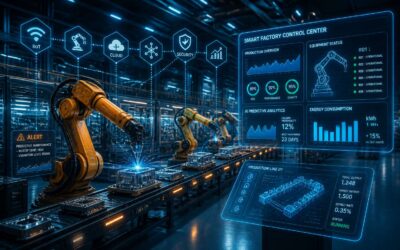
At the core are edge devices, IIoT platforms, and digital twins that mirror the plant in real time. The concept of industry 4.0 germany captures the essence: connected lines, predictive maintenance, autonomous optimization, and a fabric of secure data exchange that travels from shop floor to cloud without friction.
- Intelligent sensors and gateways
- Edge computing and real-time analytics
- Digital twins and simulation models
- AI-driven maintenance and quality assurance
- Interoperable data platforms and standard APIs
These technologies weave resilience into every batch, inviting South African partners to imagine global, German-inspired automation.
Automation, robotics and advanced manufacturing in Germany
On Germany’s factory floors, a fresh cadence steals across the belts: machines talk in real time and uptime becomes currency. Sensors listen for vibration, heat, and throughput, turning noise into actionable insight. industry 4.0 germany isn’t a distant theory—it’s the air in the modern plant’s lungs.
Technologies driving this evolution are elegant in their clarity:
- Robotics and autonomous systems that choreograph complex assembly lines
- Edge computing and real-time analytics that winnow data at the source
- Digital twins and dynamic simulations that stress-test every scenario in silico
- AI-driven maintenance and quality assurance that anticipate faults before they appear
From the shop floor to the export corridor, these tools invite South African partners to dream of global, German-inspired automation—where precision, resilience, and human ingenuity walk hand in hand.
AI, analytics and digital twins in production
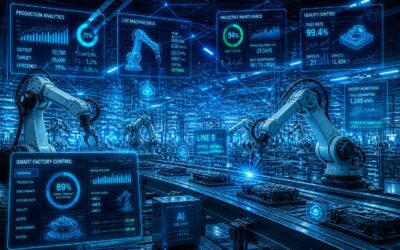
Sensors never sleep; on German factory floors, AI translates scrutiny into savings and resilience. In the era of industry 4.0 germany, AI, analytics and digital twins fuse into the plant’s nerve center. Edge computing pushes decisions to machines in real time, turning data into decisive action!
Three technologies stand out as the levers of movement:
- AI-driven predictive maintenance that senses wear and schedules service before a fault halts a line.
- Edge analytics that sift sensors at the source, delivering crisp insights while trimming bandwidth and delay.
- Digital twins and dynamic simulations that stress-test every scenario in virtual space, guiding real-world decisions.
Together, these technologies redraw the map of production, inviting South African partners to imagine shared value chains shaped by precision, interoperability, and human ingenuity on the global stage—an invitation wrapped in technical elegance.
5G, edge computing and real-time data in manufacturing
On German factory floors, 5G is not merely faster; it is the tempo that turns machines into a cooperative chorus. Edge computing lifts decisions to the nearby brink of action, while real-time data streams keep every line calibrated and alive. This is the spirit of industry 4.0 germany, where connectivity and cognition fuse into a single, breathing factory.
Key enablers include:
- 5G-enabled ultra-low latency for synchronized lines
- Edge computing delivering decisions at the machine edge
- Real-time data pipelines guiding throughput and quality
Together, these elements rewrite what a plant can become, inviting partners to imagine value chains shaped by precision, interoperability, and human insight.
Cybersecurity and resilience for German manufacturers
In a landscape where production lines never sleep, cybersecurity is the quiet backbone of progress. industry 4.0 germany demands systems that think ahead, anticipate disruption, and defend lifecycle integrity even as data flows at the speed of decision.
Key practices shaping resilience include:
- Zero-trust architectures with continuous verification
- OT/IT segmentation and secure edge gateways
- Resilient incident response, backups, and supplier risk reviews
German manufacturers blend cybersecurity with agility—ensuring, even when networks flex, productivity remains buoyant and compliant. For South Africa, these patterns resonate as manufacturers chase resilience and reliable throughput—industry 4.0 germany embodied in steel and silicon.
Case Studies and Sector Highlights in Germany
Automotive industry: digitization of production lines
In Germany, plant-floor digitization is translating to tangible gains: early pilots report double-digit productivity boosts and markedly shorter changeovers. This is what industry 4.0 germany looks like in motion—where real-time data from sensors meets intelligent scheduling to keep lines humming and flaws at bay.
- Digital twin-enabled line balancing at major plants across Mercedes-Benz and BMW groups.
- Modular, flexible automation networks in VW’s flexible production lines handling multiple models without retooling.
- Cloud-based MES integration among suppliers to synchronize procurement, manufacturing and quality data in real time.
These case studies illuminate sector highlights that resonate beyond Germany. For South African manufacturers, the pattern is clear: interoperability, agile sensing, and secure data sharing can unlock similar gains in timing, quality and resilience.
Mittelstand success stories in digital manufacturing
Factories across Germany’s Mittelstand are writing a quiet legend in metal and code. A pilot program recently yielded double-digit productivity boosts and dramatically shorter changeovers, turning shop floors into living laboratories. This is industry 4.0 germany in motion—where real-time sensor chatter meets intelligent scheduling, keeping lines humming and flaws at bay.
Three standouts illustrate the path forward.
- Digital-twin guided line balancing at Mercedes-Benz and BMW plants.
- Modular automation networks on VW’s multi-model lines, enabling rapid model swaps.
- Cloud-based MES linking suppliers with manufacturing and quality data in real time.
For South African manufacturers, the pattern is clear: interoperability, agile sensing, and secure data sharing unlock timing, quality, and resilience.
Chemicals and pharmaceuticals: process digitization and compliance
In Germany’s chemicals and pharmaceuticals corridors, case studies glow with digitization—process digitization and compliance become everyday language on the plant floor. Regulators, operators, and engineers share a common rhythm, turning data into safe, auditable practice. This is industry 4.0 germany in action.
- Digital-twin guided process design and compliance checks that reduce validation cycles
- Cloud-based MES linking manufacturing with supplier and quality data for real-time oversight
- Modular automation networks enabling rapid changeovers while preserving batch integrity
For South African manufacturers, these patterns translate into interoperability, secure data sharing, and resilient supply chains that can weather disruption while maintaining pace with global demand.
Energy and utilities: smart grids, asset management and optimization
Across German energy corridors, case studies in smart grids and asset management read like a living blueprint for progress. In recent pilots, fault isolation speeds up by as much as 25% and unplanned downtime falls, proving that industry 4.0 germany is turning data into dependable, auditable practice.
- Smart grid orchestration balances demand and supply in real time
- Asset management platforms fuse sensor data with maintenance histories
- Optimization routines shorten response times and extend asset life
For South African manufacturers, these patterns translate into interoperable data sharing, resilient supply chains, and a readiness to scale with global demand, all rooted in the same energy-lean philosophy that powers industry 4.0 germany.
Logistics and supply chain digitization in Germany
Germany’s logistics corridors pulse with precision and speed. In recent pilots, disruption response tightens by up to 25%, while on-time deliveries rise as data-driven visibility matures. Case studies across the Rhine and northern hubs show how industry 4.0 germany translates into leaner, auditable operations—patterns South African manufacturers can mirror with the right partners and standards, especially where cross-border trade intersects digitization.
- Smart warehousing with autonomous fleets and real-time inventory visibility
- End-to-end traceability built on digital twins and interoperable data sharing across partners
- Cross-border logistics corridors powered by 5G, edge computing, and standardized APIs for seamless handoffs
For South African manufacturers, these patterns translate into resilient supply chains and scalable operations ready to meet global demand, grounded in the same energy-lean ethos powering global digitization.


0 Comments