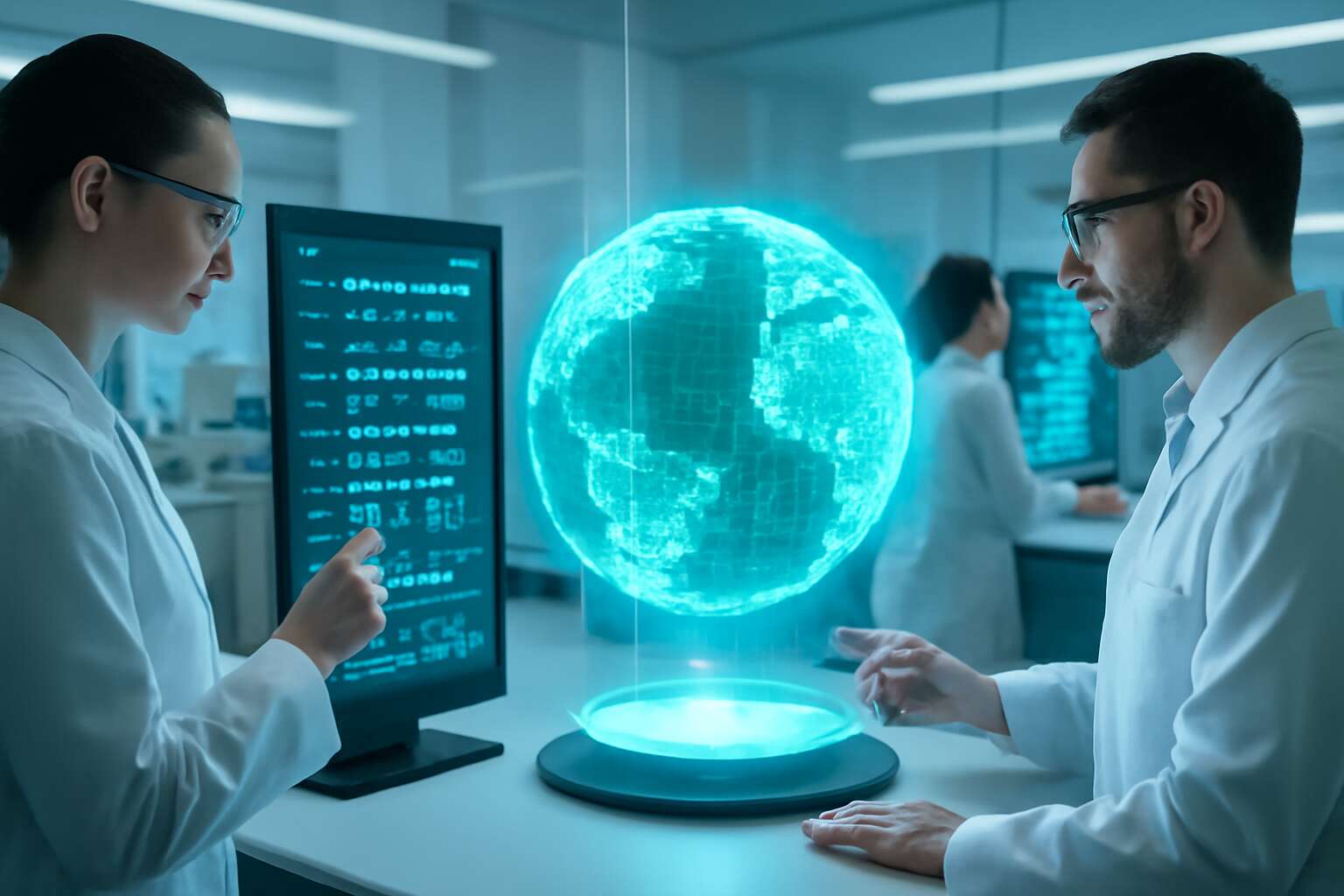
Biotechnology in health and medicine
Advances in gene therapy and personalized medicine
Across the globe, a single genetic insight can ripple through patient lives—this is how biotechnology is changing the world. In health and medicine, advances in gene therapy and personalized medicine are becoming practical realities rather than distant promises. In South Africa, these shifts carry a moral weight as clinicians balance innovation with access, equity, and the quiet drama of real-world outcomes.
Consider these frontiers reshaping care:
- Tailored gene therapies that reprogram faulty cells and mend disease at its root
- Genome-guided treatments that match medicines to individual biology
- Safer delivery systems that minimize risk and widen reach
These shifts are less about gadgets and more about human narratives—the patients who hope, families who wait, practitioners who wrestle with what “care” truly means. I listen for the quiet stories behind every trial!
CRISPR and gene editing breakthroughs
The night clinic hums with patient patience; CRISPR has become a lantern in the genome’s corridors. Across labs and clinics, thousands of trials are translating bold concept into tangible therapies, turning fear into feasibility and doubt into data!
In health and medicine, base and prime editing whisper back to the original letters, correcting single faults with fewer side effects. This is how biotechnology is changing the world, guiding safer delivery and precise cures from city hospitals to rural clinics across South Africa.
- Base and prime editing that corrects mutations with precision and less collateral risk
- In vivo delivery advances using lipid nanoparticles and novel vectors to widen reach
- CRISPR-based diagnostics enabling rapid detection at point of care
Vaccines and infectious disease control
In 2024, real-time genomic surveillance cut outbreak response times by 60% in pilot districts across South Africa, a stark sign that how biotechnology is changing the world is not science fiction but daily reality in clinics and labs!
Vaccine science leans on nimble platforms that adapt as pathogens whisper their next move. Thermostable formulations endure in rural clinics, while cold-chain gaps shrink thanks to new stabilizers. Point-of-care diagnostics glow like lanterns in the ward, guiding swift decisions without waiting for distant labs.
- Thermostable vaccines that endure South Africa’s climate
- mRNA and viral-vector platforms that pivot quickly
- Mobile, at‑home testing that speeds containment
These threads weave a more resilient health system, and we feel disease control shifting from fate to crafted science, a hopeful dawn for communities from Cape Town to the Highveld!
Biopharmaceuticals and biosimilars
In modern health, how biotechnology is changing the world becomes visible in hospital corridors and pharmacy shelves. Biopharmaceuticals and biosimilars are transforming patient access, potency, and stewardship of therapies. These medicines, produced in living systems, have the precision to target diseases with fewer side effects, while saving costs that once seemed impossible in vast markets like South Africa.
Consider the practical shifts unfolding today:
- Broader patient access through lower-cost biosimilars
- Faster, more adaptive manufacturing that keeps pace with demand
- Stronger local partnerships shaping equitable supply chains
From Cape Town to the Highveld, clinicians are weaving these biologics into everyday care, balancing innovation with real-world constraints. The result is a more resilient health system where therapies scale without sacrificing safety or quality.
Diagnostics and digital health integration
Diagnostics and digital health are where medicine meets everyday life, and the momentum is undeniable. ‘Diagnostics is the new engine of patient trust,’ a Cape Town clinician once told me, and we feel that momentum from clinics to rural clinics alike. how biotechnology is changing the world reveals itself in smarter screening, faster triage, and real-time alerts that keep patients safer and more hopeful.
In practice, diagnostics and digital health integration look like:
- Rapid point-of-care tests that empower frontline workers
- Mobile health data apps that connect patients and clinicians
- AI-assisted imaging and cloud dashboards that speed decision-making
Across South Africa, this fusion is reshaping patient journeys—less waiting, more precision, shared stewardship of care. how biotechnology is changing the world continues as data flows, sensors listen, and care teams coordinate across borders.
Agriculture, food security, and sustainable farming
Genetically modified crops and crop resilience
South Africa’s fields navigate a climate of sudden droughts and fickle rain; resilience is no longer optional, it’s essential. A Karoo farmer notes, “Seeds that endure are the new currency of the field,” and biotechnology makes that resilience tangible, turning uncertainty into stability for farmers and communities.
Genetically modified crops offer crop resilience through tailored traits that cope with stress, while farmers in SA harness this technology to safeguard staples such as maize and sorghum.
- Enhanced drought tolerance
- Pest and disease resistance
- Improved nutrient use and yield stability
This momentum demonstrates how biotechnology is changing the world, translating lab breakthroughs into everyday resilience on South African farms, where sustainable farming practices and crop resilience sustain communities and markets alike.
Plant biotech and sustainable farming practices
South Africa’s fields dance with unpredictable rain—when it comes, it comes fast. Drought-prone seasons mean resilience isn’t optional; it’s survival. This is how biotechnology is changing the world. Plant biotech helps crops sip less water, stand up to pests, and stay productive even when weather misbehaves. A local farmer quips, “Resilience is the new rainfall,” and the math backs him up: steadier yields anchor families and regional markets.
As SA embraces sustainable farming, biotech crops align with soil health and nutrient efficiency, shrinking waste and boosting food security. Farmers blend science with stewardship, cutting fertilizer runoff and preserving maize and sorghum for communities. The result is harvests that feed people, protect livelihoods, and keep prices stable without sacrificing the land. Here are practical pillars of this movement:
- Precision irrigation and water-use efficiency
- Integrated pest management and crop diversification
- Soil health practices, composting, and biostimulants
Biofortification and nutrition enhancement
South Africa’s fields carry a quiet revolution: biofortified crops that nourish as they endure drought and pests. A striking stat lingers: one in three SA children faces micronutrient gaps. Biofortification and nutrition enhancement reveal how biotechnology is changing the world, turning humble staples into reservoirs of essential minerals and vitamins.
From soil to table, these crops weave resilience with nourishment. Here are examples shaping daily diets:
- Vitamin A–rich maize boosts vision and immune function
- Iron- and zinc-fortified sorghum supports energy and anemia prevention
- Leafy greens enhanced with folate and minerals enrich pregnant nutrition
Beyond measured nutrients, these crops steady rural livelihoods, curb healthcare costs, and keep markets buoyant with dependable harvests. In South Africa’s story of food security, biofortification is more than science—it is a bridge between sustenance and possibility.
Microbial solutions and soil health
In South Africa’s fields, a quiet alchemy unfolds, where soil health becomes the seed of resilience and nutrition. Microbial solutions are reimagining nutrient cycling, and sustainable farming practices breathe long, steady life into every season. This is how biotechnology is changing the world by weaving life into the land and the plate!
- Bioinoculants that boost nutrient uptake in poor soils
- Mycorrhizal networks expanding the reach of roots
- Phosphate-solubilizing microbes releasing essential phosphorus
From field to feast, these practices lower input costs, improve soil structure, and stabilize yields—a saga where science partners with stewardship to secure food security for SA’s diverse communities.
Industry, energy, and the environment
Biofuels, biochemicals, and the circular bioeconomy
A striking statistic shows investment in bio-based industries has surged by double digits in the last five years, reshaping South Africa’s industrial landscape. From manufacturing floors to research labs, markets are awakening to gentler, smarter processes that save resources and spark resilience. This is how biotechnology is changing the world.
Biofuels, biochemicals, and the circular bioeconomy sit at the crossroads of energy and environment.
- Biofuels that turn waste streams into power for transport and industry
- Biochemicals that replace petrochemicals in everyday products
- Circular bioeconomy strategies that convert residues into value through recycling and recovery
In this blend of industry and ecology, biomanufacturing reframes growth as stewardship, inviting communities to participate in a more equitable, innovation-led future.
Bioremediation and environmental cleanup
Investors have poured into environmental biotech with double-digit gains over the past five years, reshaping South Africa’s industrial landscape. In industry, energy, and the environment, bioremediation offers a cleaner path to cleanup and renewal.
Bioremediation uses friendly microbes to digest hydrocarbons, heavy metals, and other pollutants, enabling in situ cleanup that minimizes displacing soil and water. This is how biotechnology is changing the world, turning polluted sites into living labs of resilience!
Consider these practical avenues already finding traction:
- Soil bioremediation with resilient microbes
- Water treatment using biofilters and enzymes
- Air detoxification via biofilters and fungal systems
In South Africa, collaborations between universities, industry, and local communities are accelerating pilot projects and creating jobs while restoring ecosystems.
Industrial biotechnology and manufacturing efficiency
Industrial biotech isn’t a dream—it’s tightening the screws of efficiency in factories across South Africa and beyond. When bioprocesses replace hazardous chemicals, energy use trims, waste shrinks, and production lines breathe easier. This is how biotechnology is changing the world, turning stubborn bottlenecks into lean, resilient operations.
- Digital twins and real-time analytics optimize throughput while trimming energy demand.
- Biocatalysts and bio-based solvents cut emissions and material waste.
This is how biotechnology is changing the world for South Africa’s factories—more sustainable, more productive. Across South Africa, universities, industry, and communities are testing scalable bioprocesses that cut energy intensity and boost job creation. The result is a manufacturing sector that runs cleaner, faster, and more resilient—precisely the kind of change this era demands.
Bio-based materials and plastics innovation
Across South Africa’s factories and farms, the stubborn world of plastics is bending to biology. “We can’t outprint waste with willpower alone—we need biology,” a plant manager in Gauteng shared. This is how biotechnology is changing the world, reimagining materials to respect land and sea.
- Bio-based polymers produced from agricultural residues reduce fossil feedstock use.
- Enzymatic recycling enables plastics to re-enter the circular economy rather than landfills.
- Bio-based solvents and additives lower emissions in manufacturing.
In communities from the Karoo towns to coastal towns, these biotechnologies trim energy demand, shrink waste, and create jobs—proof that industry, energy, and the environment can grow together, not apart.
Synthetic biology in industrial processes
Factories are rewriting their playbook! In South Africa, synthetic biology is making industrial processes leaner, cleaner, and faster. “Biology runs the factory floor,” a Gauteng plant manager notes.
Engineered enzymes and fermentation shifts replace harsh solvents, trimming energy use and emissions while keeping output steady.
- Lower energy demand
- Cleaner solvent systems
- Waste valorisation and on-site production
This approach also creates jobs and regional resilience, linking industry, energy, and the environment. This is how biotechnology is changing the world on the factory floor.
Data, ethics, and regulation in biotechnology
Data science, AI, and biotech research
Data is the new currency in the biotech era, guiding experiments from bench to bedside with a precision that would impress even a lab-tech fortune teller. AI-powered analytics sift terabytes, turning noisy signals into clear, actionable insights for researchers and industry partners alike.
- Data governance and access control
- Bias detection in AI models
- Transparent, auditable decision processes
Ethics and regulation walk hand in hand with this digital boom. In South Africa, POPIA and local ethics boards demand consent, data minimization, and meaningful benefit sharing. “how biotechnology is changing the world” becomes real only when data stewardship and human considerations lead the way.
That means governance, transparency, and ongoing oversight. In practice this looks like auditable AI, reproducible experiments, and clear avenues for redress—exactly the kind of rigor that makes South Africa a credible partner in global biotech ventures.
Ethics, equity, and access to biotech innovations
Data is the new currency; in biotechnology, trust is the collateral. In South Africa, POPIA and ethics boards translate promise into practice, demanding consent, data minimization, and meaningful benefit sharing. Governance becomes the quiet backbone, ensuring auditable AI and transparent data flows that respect people as much as progress.
Ethics, equity, and access to biotech innovations must be woven into the research fabric, not tacked on after a breakthrough. Core commitments include:
- Consent and privacy safeguards
- Data minimization and transparent use
- Meaningful benefit sharing with communities
With auditable processes and reproducible experiments, the global biotech network moves faster without trampling rights. This is how biotechnology is changing the world in practice, and it speaks to a South Africa-ready future that honors science and society.
Regulatory frameworks and biosafety
‘Trust is the collateral for progress,’ notes a South African bioethics expert. Data governance and biosafety stand as quiet sentinels guiding clinical data sharing and environmental monitoring. In SA, POPIA and ethics review boards translate promise into practice, insisting on transparent data flows and responsible experimentation. Rigorous risk assessments, containment standards, and cross-border compliance form the backbone that keeps bold science aligned with the public good!
Regulatory frameworks and biosafety protocols must be auditable and adaptable. The pace of discovery demands data lineage, version control, and model accountability to be woven into daily workflows.
- Regulatory oversight with risk-based assessments
- Transparent data governance under POPIA and international norms
- Auditable AI and reproducible experiments
Such governance nurtures trust and accelerates progress without compromising rights. This is how biotechnology is changing the world.
Intellectual property and open science in biotech
One in four life-science collaborations now hinges on transparent data governance, a quiet revolution shaping research trust. In SA, POPIA and ethics review boards translate promise into practice, insisting on consent, data lineage, and responsible experimentation. These guardrails are not barriers but beacons, guiding data flows toward progress. This is how biotechnology is changing the world.
Intellectual property and open science share a delicate balance between invention and access. Respectful governance invites innovation while safeguarding patients and farmers, turning patents into pathways rather than walls.
- IP protections that incentivize discovery while enabling broader access
- Open data and publications that accelerate collaboration while protecting privacy
- Collaborative licensing and partnerships that extend benefits across communities
In South Africa, such balance translates science into shared prosperity, marrying ambition with accountability.
The future landscape of biotechnology
Startups, funding trends, and entrepreneurship
From my desk in Cape Town, the next decade’s landscape for biotechnology startups is shaped by mission-driven founders, pragmatic funding, and a hunger for practical solutions that cross borders. In South Africa and beyond, investors increasingly expect proof of impact, not just promise, and regulatory sandboxes are accelerating testing of new ideas. This momentum mirrors a broader trend: how biotechnology is changing the world with tangible, scalable benefits.
- Venture capital and government co-funding of seed rounds
- Corporate venture arms that bring scale and distribution
- University and CSIR partnerships for proof and pilots
- Regional biotech hubs that reduce early-stage risk
Entrepreneurship will rely on literacy in regulatory nuance and patient-centric design, with a dash of bold experimentation. The future is collaborative, not solitary, and South African startups can punch above their weight on the world stage as they scale ideas that matter.
Global collaboration and capacity building
The future landscape of biotechnology is a living map, pulsing with new alliances. In the last two years, cross-border collaborations grew at a pace that astonishes even observers, with a 30% uptick in initiatives across continents. This is how biotechnology is changing the world: a shared language of science, ethics, and practical impact that crosses borders faster than data streams.
Global collaboration and capacity building will hinge on accessible expertise, harmonized data, and inclusive partnerships. Think regional knowledge hubs, virtual exchanges, and open-access platforms that accelerate early pilots without sacrificing safety or equity.
- Open data standards for cross-border research
- Global training programs connecting academia and industry
- Shared pilot projects with patient-centred intent
In South Africa, this tapestry will weave talent from universities, research councils, and local startups into a global chorus that can scale solutions for health, agriculture, and the environment. The future is collaborative, bold, and wonderfully uncertain!
Education, workforce development, and public awareness
A 45% surge in biotech education programs across South Africa in three years signals a renaissance in learning and opportunity. This is how biotechnology is changing the world—a living map where classrooms, clinics, and farms exchange skills in real time.
Education, workforce development, and public awareness are not silos; they’re a single thread weaving through communities. Regional hubs, open-access resources, and inclusive curricula promise safer, faster innovation.
- Regional knowledge hubs linking campuses, startups, and clinics
- Virtual exchanges that pair mentors and students across provinces
- Open-access training modules focused on safety, ethics, and practical skills
In SA, this tapestry shapes a compassionate science that serves people and the planet—urgent, hopeful, and relentlessly curious!

0 Comments