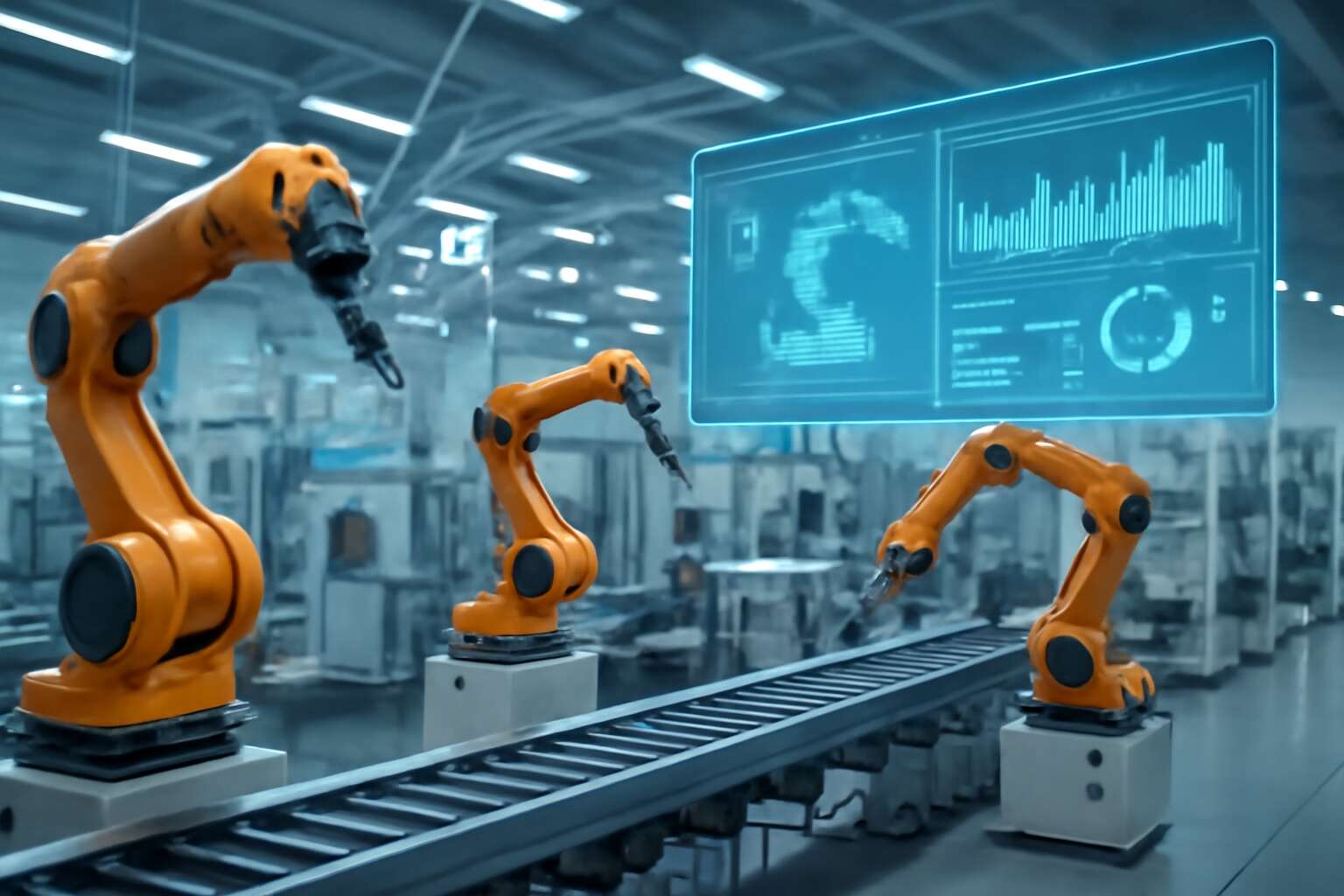
Industry 4.0 Core Technologies Landscape
Digital Twin and Simulation
Across South Africa’s factory floors, a quiet revolution hums beneath the surface: systems that learn, adapt, and predict. A single digital twin can mirror a production line in real time, turning hours of data into instant insight; simulations test changes without risk. In fact, SA manufacturers report up to 25% shorter cycle times—a glimpse of what industry 4.0 key technologies can unlock. These technologies act as operational levers, stitching sensors, machines, and people into one responsive fabric. When data becomes dialogue, maintenance becomes prognosis, and throughput gains bloom with less drag!
In this landscape, Digital Twin and Simulation stand as living models mapping shop-floor realities to future outcomes. The following pillars keep the braid intact:
- Industrial IoT and real-time data flow
- Edge computing for responsive analytics
- AI-driven optimization and scenario testing
Together, these elements align supply with demand and sharpen resilience across sectors that power the economy.
Connectivity, IIoT and Edge Computing
Connectivity is the backbone of industry 4.0 key technologies shaping South Africa’s factory floors. Real-time links between sensors, machines, and people turn raw readings into fast, business-ready insight. When data moves at the speed of need, downtime shrinks and throughput climbs.
IoT and edge computing push intelligence to the edge, where microprocessors sanity-check quality, schedule maintenance, and tune energy use without cloud round-trips. Local analytics cut latency, reduce bandwidth costs, and keep plant floors responsive even when networks falter.
- Industrial IoT devices bridged with robust networks
- Edge computing nodes for on-site analytics
- Secure cloud integration for scalable insight
These elements weave into a cohesive fabric that keeps SA manufacturers competitive in a volatile global market.
Advanced Analytics and AI
Factories across SA are listening to data—sensor hums translating into decisive moves. A plant manager once said, “We stopped chasing downtime and started chasing insight,” a mindset that now colors every shift and line on the floor.
Advanced analytics and AI carve a landscape where patterns emerge from streams, guiding decisions before issues bloom. Picture predictive analytics that optimize throughput, anomaly detection that flags deviations, and energy graphs that trim waste.
Key capability areas anchor into domains that yield measurable advantage:
- Predictive analytics for operations
- Prescriptive optimization for supply chains
- Explainable AI for governance and trust
- On-site intelligence for resilience and local decision-making
As the industry 4.0 key technologies take root in South Africa, manufacturers gain a sharper edge—less drift, more precision, and a human-centric rhythm of production.
Automation, Robotics and Human Collaboration
Factories on South Africa’s horizon learn to breathe in tempo with machines, the floor becoming a living instrument. A line hums with possibility, where automation, robotics, and human collaboration compose a new score—the industry 4.0 key technologies guiding every decision.
Automation unfolds as a choreography: machine vision guiding inspection, servo motors threading precision, and cobots standing shoulder to shoulder with people, ready to quicken the pace or ease it when needed.
Consider the landscape:
- Adaptive automation that scales with demand
- Collaborative robots that share the floor with people
- Human-in-the-loop interfaces for fast, intuitive decisions
On the floor, automation, robotics and human collaboration forge a future where precision is a habit and risk is reduced—an articulate embrace of industry 4.0 key technologies.
Additive Manufacturing and Smart Factories
On South Africa’s factory floors, additive manufacturing is shifting from curiosity to output. It trims lead times, enables on-demand spare parts, and scales customization. This aligns with industry 4.0 key technologies, redefining how manufacturers balance resilience and agility.
Smart factories tied to additive processes stitch production paths with real-time data, reducing waste and inventory. Complex geometries become feasible, waste is cut, and local factories breathe easier. The approach binds design, engineering, and sourcing into a single digital thread, letting SA firms respond faster to demand.
- Localized production and spare parts on demand
- Lightweight components and complex geometries enabled by additive manufacturing
- Faster prototyping and design iteration reduces time-to-market
Together, additive manufacturing and smart factories complement the existing floor practices, turning the SA manufacturing landscape into a continuous innovation loop.


0 Comments