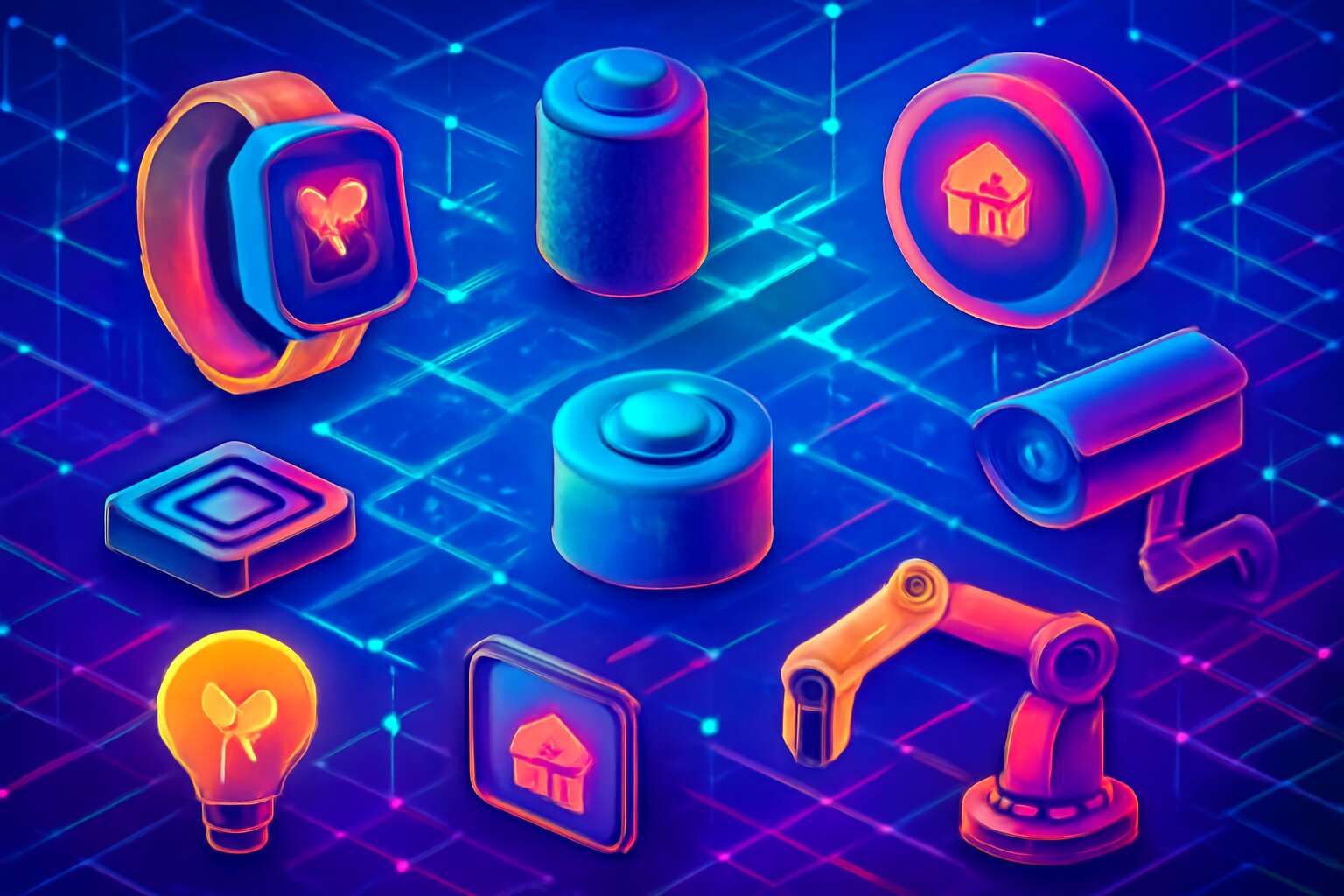
Concepts and Fundamentals of the Internet of Things in Computer Science
Definition and Core Components of IoT
In a world where a kettle could whisper your calendar into the cloud, a quiet science conducts the chorus: the internet of things. Global IoT connections are projected to top 29 billion by 2030, and here in South Africa that rhythm threads through smart-city pilots, mining corridors, and forward-looking enterprises.
- Sensors and actuators
- Connectivity and networks
- Data processing and analytics
- Applications and user interfaces
Delving into the internet of things in computer science reveals a simple truth: it is a network of physical objects embedded with sensors, software, and network connectivity, enabling data exchange and intelligent action.
From a computer science vantage, interoperability, security, and scalable architectures knit the field together. This isn’t a gadget parade but a disciplined tapestry where devices share data and decisions, transforming offices, farms, and factories into coherent systems. In South Africa, that coherence powers grid monitoring, water management, and retail networks.
Key Protocols and Communication Models
Across South Africa’s smart-city pilots and mining corridors, the internet of things in computer science reveals itself as a living lattice of signals and decisions. By 2030, about 29 billion connected devices will be online, turning ordinary objects into partners in planning and operations. Data must move, be understood, and act—reliably and securely!
Interoperability, security, and scalable architectures are the spine of the field. The core models—publish-subscribe for decoupled dialogue, request-response for targeted queries, and event-driven streams for reactive sensing—shape how devices coordinate without chaos, pushing edge insights toward unified systems.
- MQTT for light, publish-subscribe messaging
- CoAP for constrained networks
- HTTP/REST for broad compatibility
In practice, these patterns underwrite grid monitoring, water management, and retail networks across the region.
Data Management and Analytics in IoT
South Africa’s city corridors and mining belts are turning ordinary sensors into a living nervous system. By 2030, around 29 billion connected devices will be online, demanding reliable data management. The internet of things in computer science hinges on data that moves, is understood, and acts with security. Momentum is remarkable.
- Data quality and lineage
- Time-series storage and indexing
- Governance and privacy policies
In practice, analytics pipelines balance edge processing with cloud resilience, transforming streams into dashboards, forecasts, and proactive alerts, all while preserving interoperability across diverse platforms.
Edge Computing versus Cloud Computing for IoT
The internet of things in computer science operates like a cathedral of circuits and whispers. By 2030, 29 billion devices will be online, weaving a living nervous system across South Africa’s streets and mines. Edge computing keeps the pulse at the source, while cloud computing lends memory and breadth to the chorus of data!
The balance is a careful dance: push the signal to the edge when speed matters, harvest deeper insights in the cloud when scale is needed. The narrative is a quiet philosophy in silicon, guiding decisions across platforms and networks.
- Latency and real-time responsiveness
- Bandwidth efficiency and privacy
- Resilience amid intermittent connectivity
In this framework, interoperability remains the steady heartbeat, shaping deployments that feel almost otherworldly yet are profoundly practical for industries across the region.
Standardization and Interoperability in IoT
By 2030, 29 billion devices online will weave a living nervous system across South Africa’s streets and mines. In the realm of internet of things in computer science, standardization is the quiet architect that lets machines understand one another. Interoperability becomes the hinge that unites sensors into a chorus.
- oneM2M’s unified API and reference architecture
- ISO/IEC and IEEE safety, privacy, and quality guidelines
- shared data models and ontologies for cross-platform meaning
These standards are not abstractions; they are rules of a cathedral where hardware and human operators share a common tongue. In South Africa’s energy, mining, and transport sectors, interoperability dissolves silos and accelerates deployment. Interoperability grounds the internet of things in computer science practice.
Yet the night remains thick with challenges: divergent ontologies, vendor lock-in, and evolving laws. The remedy is governance and collaboration that keeps devices speaking as one.
IoT Architecture and Protocols
Device Layer and Sensing Technologies
Across the digital landscape, a quiet current runs from sensor to server—and the device layer is the heartbeat. The internet of things in computer science is not merely gadgets; it’s how tiny sensors and nimble actuators translate the world into data, and how that data travels with grace through the network.
- Temperature and humidity sensors
- Proximity, infrared, and light sensors
- Accelerometers and gyroscopes
- Gas, chemical, and environmental sensors
At this layer, sensing technologies meet lean communication stacks designed for devices with limited power and compute. Short-range options like BLE, Zigbee, and Thread stitch a responsive mesh, while longer-range links such as LoRaWAN extend reach. The protocols—MQTT, CoAP, and lightweight HTTP-like variants—govern how data streams are published, requested, and secured as they hop toward gateways or the cloud. In South Africa, I’ve watched these device-layer choices power smart farms, water networks, and city infrastructure.
Network and Connectivity Protocols
The internet of things in computer science is reshaping daily life—more than 20 billion devices are online globally, stitching cities, farms, and factories into a single nervous system. I see architecture as a quiet conductor, guiding signals from the field to gateways and onward to the cloud with purpose and restraint.
From my vantage, data travels a three-tier path: edge devices do local sensing and filtering; gateways marshal traffic for reliable transmission; and the cloud performs analytics, storage, and governance. In South Africa, this arrangement powers smart farms, water networks, and municipal services, balancing latency, bandwidth, and data sovereignty as it scales.
Below are core considerations that shape network and connectivity decisions in practice:
- Edge intelligence and local decision-making
- Gateway orchestration and resilient backhaul
- Standardized data models and interoperable interfaces
Middleware and IoT Platforms
Architecture in the internet of things in computer science acts as a quiet puppeteer, threading edge wisdom to gateways and onward to the cloud. In practice, the stack leans on layered protocols, robust middleware, and purpose-built platforms that translate signals into meaningful action. Edge devices collect, filter, and stage data; gateways choreograph batches; cloud platforms perform governance and insight—yet the magic lies in the interfaces that keep these layers speaking in a shared language.
- Middleware services for device management and data orchestration
- Protocol translation and secure interconnect
- Event routing, policy enforcement, and telemetry gathering
Platform capabilities—device registry, firmware orchestration, analytics pipelines, and governance—root the system in reliability. Together, middleware and platforms turn disparate devices into a coherent fabric, ensuring resilience, compliance, and scalable insight across South Africa’s smart landscapes.
Security and Privacy by Design in Architecture
In South Africa’s fast-evolving smart landscapes, the architecture of the internet of things in computer science acts as a quiet conductor—precise, unflappable, and a touch mysterious. Edge devices sense and filter, gateways choreograph, and the cloud governs—yet resilience lives in the unglamorous interfaces that keep every layer speaking the same language.
Security and privacy by design must ride every layer. This approach threads authentication, encryption, and continuous auditing from edge to cloud, turning potential faults into predictable behavior within the system. The architecture that anticipates risk is the architecture that lasts.
- Privacy by design
- Data minimization
- Secure by default
Bracing for the long haul, this approach keeps the South African digital ecosystem resilient and trustworthy.
Applications and Domains in Computer Science
IoT in Smart Computing and Intelligent Systems
Cities pulse with data, and farms hum with sensors. By 2030, about 75 billion connected devices will be part of daily life, reshaping how we work and plan. The internet of things in computer science turns silent sensors into an expressive network that shapes services and outcomes.
Applications span multiple domains, reinforcing how intelligent systems improve reliability, efficiency, and well-being.
- Smart cities and critical infrastructure
- Industrial IoT for manufacturing and logistics
- Agriculture and food-chain resilience
- Healthcare, remote monitoring, and eldercare
Across South Africa, engineers and businesses are uniquely positioned to capitalize on these trends, balancing innovation with privacy, energy efficiency, and practical deployment realities. It’s a landscape where smart computing and intelligent systems truly meet local needs.
Industrial IoT and Cyber-Physical Systems
Applications and domains in computer science extend from factory floors to field horizons, where the internet of things in computer science turns data into dependable action. Industrial IoT and cyber-physical systems choreograph machines, sensors, and operators into cohesive workflows that cut downtime, sharpen forecasting, and reimagine supply chains. In South Africa, mining corridors, citrus groves, and energy grids ride these intelligent networks, balancing resilience with privacy and turning daily operations into measurable outcomes—truly transformative!
- Industrial automation and predictive maintenance
- Smart agriculture and food-chain traceability
- Healthcare remote monitoring and eldercare
- Cyber-physical infrastructure for energy and water management
Across South Africa and its neighbors, these domains translate data streams into safer, more efficient services—melding local ingenuity with global standards. The result is a future where machines anticipate needs, networks endure, and communities flourish.
IoT in Cloud Computing and Data Infrastructures
Cloud-native infrastructures turn streams of sensor data into scalable intelligence; analyses show cloud-backed IoT deployments speeding decision cycles by up to 30% in manufacturing and logistics.
In South Africa, internet of things in computer science unlocks new resilience for farms, mines, and cities, weaving data into dependable actions without sacrificing privacy.
Within this domain, the focus is on turning data infrastructures into trusted services—stable pipelines, real-time analytics, and self-healing models that keep supply chains and public utilities humming.
Key capabilities shaping this landscape include:
- Event-driven data fabrics linking edge sensors to cloud analytics
- Digital twins and predictive models for maintenance and logistics
- Privacy-by-design and governance for SA contexts
From Johannesburg to the Karoo, it is a story of local ingenuity meeting global standards, where cloud-scale insights become practical, measurable outcomes.
IoT in AI and Machine Learning Workflows
Speed matters. In operations where streams meet smart decisions, cloud-backed IoT deployments can speed decision cycles by up to 30%, turning raw sensor chatter into strategic action.
In the realm of applications and domains within internet of things in computer science, AI and machine-learning workflows breathe life into data streams: real-time anomaly detection, predictive maintenance, and supply-chain optimization rise from quiet sensors to decisive action.
- Agriculture and farming: soil moisture sensing, irrigation optimization, crop-weather forecasting
- Smart cities and utilities: intelligent street lighting, water networks, air-quality monitoring
- Industrial sectors and mining: predictive maintenance, remote asset monitoring, safety analytics
- Logistics and manufacturing: fleet tracking, inventory visibility, autonomous warehousing
From Johannesburg to the Karoo, these domains weave resilience into the fabric of daily life, where data becomes intention and intention becomes dependable action.
Testing, Simulation, and Digital Twins in IoT
Fast, safe IoT deployments aren’t an afterthought—they’re the main act. In cloud-backed IoT ecosystems, decision cycles can shrink by up to 30%, turning noisy sensor chatter into decisive action. The trio—testing, simulation, and digital twins—transforms data into dependable strategy across sectors.
Here’s how they flow:
- Testing under synthetic workloads and fault injections to catch edge cases before field deployment
- High-fidelity simulations that mirror agriculture, logistics, and industrial processes
- Digital twins that run live data from assets to forecast failures and optimize performance
From the Karoo’s farms to Johannesburg’s plants, these tools let teams push AI decisions into the real world with confidence. In the broader internet of things in computer science, testing, simulation, and digital twins turn abstractions into action—without wrecking the day.
Security, Privacy, and Ethics in IoT
Threat Landscape and Attack Vectors in IoT
By 2030, experts foresee more than 50 billion devices interlacing the globe in the internet of things in computer science. That vast tapestry promises convenience yet invites vigilance. In South Africa, data rights under POPIA are not abstract; they are the shield and compass guiding every connected choice.
Security, privacy, and ethics drift across this landscape like guardians and wily spirits. Attack vectors are often predictable yet dangerous:
- Weak or default credentials and insecure interfaces
- Unpatched firmware and insecure over-the-air updates
- Supply-chain compromises and counterfeit hardware
- Botnets and driver fatigue in large-scale deployments
Ethical design asks: who owns the data? How long is it kept? How is consent captured in a world of everyday sensors? In our journey through the hum of devices, privacy becomes a living covenant, not a checkbox.
Authentication, Authorization, and Access Control for IoT
With more than 50 billion devices forecast online by 2030, the world tightens around a new nervous system. The internet of things in computer science is more than a trend; it’s a moral test of trust. Authentication, authorization, and access control aren’t flashy features—they’re the gatekeeper trio deciding who can act, when, and on what data. I hear the hum of devices everywhere and feel the weight of responsibility!
South Africa’s POPIA reminds us privacy is not optional, but a legal and ethical duty. Data rights become visible when sensors hum in homes and clinics.
- Who owns the data produced by devices?
- How long should it be kept and who may access it?
- How is consent captured in a world of constant sensing?
Ethical design treats people as endpoints, not afterthoughts; it invites ongoing conversation between code and community. Privacy and ethics are not checkboxes—they are commitments.
Data Privacy and Compliance in IoT
In a world buzzing with predicting sensors and smart devices, internet of things in computer science reshapes how we live. By 2030, more than 50 billion devices will be online, turning data into a public asset and a private risk, with real security implications.
- Data ownership and stewardship
- Retention timelines and who may access data
- Consent in perpetual sensing and broad data use
Ethical design treats people as endpoints, not afterthoughts; it invites ongoing conversation between code and community. In South Africa, POPIA anchors privacy as a social contract rather than a checkbox, guiding every datapoint from household sensors to clinical monitors.
Secure Software Development Lifecycle for IoT
Trust saturates every wire and sensor as the internet of things in computer science grows toward 50 billion connected devices by 2030. Security, privacy, and ethics are not add-ons but the compass guiding every line of code, from firmware to cloud.
Within a Secure Software Development Lifecycle for IoT, restraint and responsibility govern design choices.
- Security by design: embed protections from first code line
- Privacy by default: minimize data collection, encrypt data in transit and at rest
- Ethical governance: continuous consent, explainability, and accountability
In South Africa, POPIA anchors a social contract around datapoints from household sensors to clinical monitors, reinforcing the need for transparent data stewardship and ongoing public dialogue.
Future Trends, Research Challenges, and Career Paths
Emerging Technologies and Edge Intelligence
Future Trends in internet of things in computer science lean toward edge intelligence, autonomous devices, and privacy-preserving analytics that run where data is produced. In South Africa, resilient networks and local data sovereignty are shaping deployments in farming, mining, and urban services, turning complexity into clarity and efficiency!
- AI-enabled edge analytics to cut latency
- 5G and beyond for dense IoT deployments
- Low-power sensing and energy harvesting for remote sites
Research challenges include interoperability across protocols and platforms, data sovereignty and privacy, securing billions of endpoints, and ensuring reproducible results amid rapid hardware evolution.
Career paths grow around IoT systems engineering, edge-AI development, data governance, and platform integration. In a SA context, demand spans utilities, agriculture, and smart city initiatives where edge prowess unlocks real-time value.
Sustainability and Green IoT
A single edge decision can ripple through a city’s grid and farming plots alike, shaping outcomes. The internet of things in computer science is redefining planning, monitoring, and response. In South Africa, resilient networks and local data sovereignty steer deployments, turning complexity into clarity and opportunity. I’ve witnessed this translate into tangible savings.
Future Trends lean toward AI-enabled edge analytics to cut latency, 5G and beyond for dense IoT deployments, and low-power sensing with energy harvesting for remote sites.
- AI-enabled edge analytics to cut latency
- 5G and beyond for dense IoT deployments
- Low-power sensing and energy harvesting for remote sites
Research challenges include interoperability across protocols and platforms, data sovereignty and privacy, securing billions of endpoints, and ensuring reproducible results amid rapid hardware evolution. Career paths—IoT systems engineering, edge-AI development, data governance, and platform integration—are expanding, with sustainability and Green IoT guiding design as South Africa’s utilities and cities evolve.
Standards and Regulation Ecosystem
The internet of things in computer science is reshaping how cities plan, monitor, and respond. AI-enabled edge analytics cut latency at the source, turning decisions into action in milliseconds. 5G and beyond will fuel dense IoT deployments, while low-power sensing and energy harvesting keep remote sites humming. This combination translates to faster insight and more resilient infrastructure!
Research challenges include cross-protocol compatibility across devices and platforms, data sovereignty and privacy concerns, securing billions of endpoints, and keeping results reproducible as hardware evolves.
Career paths in this field span IoT systems engineering, edge-AI development, data governance, and platform integration. Standards and regulation ecosystems are adapting to guide deployments across South African utilities, cities, and enterprises, unlocking clearer career paths and trusted, scalable solutions.
Career Opportunities and Skill Sets for CS Professionals
Future Trends: The internet of things in computer science is reshaping how cities plan, monitor, and respond. By 2025, global IoT connections are projected to top 75 billion, and AI-enabled edge analytics deliver decisions in the blink of an eye. 5G and beyond will fuel dense deployments, while low-power sensing and energy harvesting keep remote sites humming. This combination translates to faster insight and more resilient infrastructure!
Research Challenges: Cross-protocol compatibility across devices and platforms, data sovereignty and privacy concerns, securing billions of endpoints, and keeping results reproducible as hardware evolves pose the biggest puzzles.
Career Paths, Opportunities and Skill Sets: In South Africa, CS professionals are poised for roles in IoT systems engineering, edge-AI development, data governance, and platform integration. The toolkit includes security-by-design, cloud-edge orchestration, cross-disciplinary collaboration, and regulatory literacy.
- IoT systems engineering
- edge-AI development
- data governance and privacy compliance
- platform integration and orchestration
Research Directions and Open Problems in IoT
IoT is not merely a string of smart devices; it’s the nervous system of modern infrastructure. The internet of things in computer science is accelerating rapidly, with billions of connections by the mid-2020s and edge analytics delivering decisions in the blink of an eye as 5G densifies deployments.
Yet scale breeds stubborn challenges: ensuring cross-platform harmony, guarding data sovereignty, securing billions of endpoints, and keeping results reproducible as hardware fleets evolve. Research in robust governance and lightweight cryptography becomes as essential as the sensors themselves.
In South Africa, CS professionals are poised for roles spanning IoT systems engineering, edge-AI development, data governance, and platform orchestration. The trajectory invites cross-disciplinary collaboration, security-by-design, and regulatory literacy as core competencies.
- Open problem: verifiable reproducibility across diverse hardware lifecycles
- Open problem: privacy-preserving edge analytics at scale
- Open problem: energy-neutral sensing for remote sites and long-term sustainability

0 Comments