Foundational IoT research topics
Smart sensors and edge devices
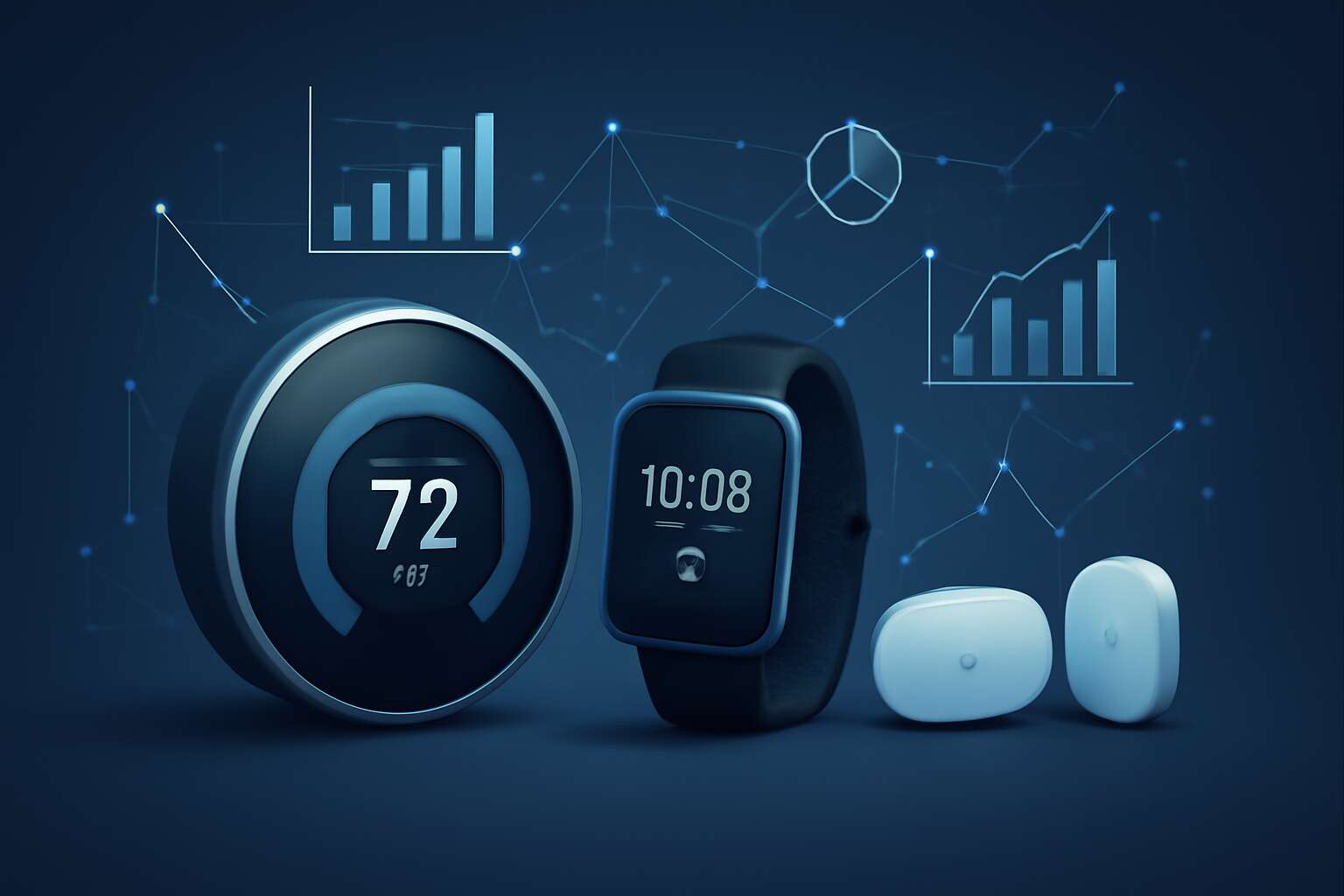
Edge decisions move at the speed of a well-timed coffee spill—fast and a little chaotic. In SA labs, intelligent hardware sits where the action happens, and cloud chatter fades to whispers. Real-time responses slash downtime and boost efficiency in a way no spreadsheet can match. The internet of things research topics have shifted from concept to pragmatic craft, right here in our backyards and beyond.
Foundational internet of things research topics revolve around smart sensors and edge devices. Picture rugged, low-power sensing, tight calibration to defeat drift, and lean edge computing that delegates tasks without begging the cloud for mercy.
- Energy-efficient sensing with self-calibrating drift correction
- On-device AI inference and local decision-making
- Secure, over-the-air firmware updates for remote fleets
For South Africa’s networks, that edge-forward mindset shines by cutting latency, easing intermittent connectivity, and empowering rural deployments while keeping sensitive data closer to home.
IoT data analytics and big data
In 2024, global IoT data traffic topped 2.5 zettabytes—a river of signals that never sleep. Foundational IoT research topics echo in boardrooms and labs, where data analytics and big data turn noise into narratives and patterns into plan. South Africa’s networks ride this tide, translating streams into decisions that cut waste and lift uptime. The momentum is palpable—almost lyrical!
- Real-time streaming analytics and anomaly detection across sensor streams
- Privacy-by-design data governance and compliant storage aligned with SA standards
- Scalable architectures that blend on-site, edge, and cloud for resilience
From these foundations, institutions craft dashboards that spell weather for operations, guiding energy, transport, and agriculture with a quiet, confident voice. The broad theme remains: internet of things research topics continue to evolve from concept to craft in South Africa and beyond.
Security and privacy in IoT ecosystems
Security in IoT isn’t a feature; it’s the quiet backbone of every community network and rural homestead. In the realm of internet of things research topics, foundational questions circle around protecting devices, data, and people as they connect farms, clinics, and classrooms. South Africa’s networks—often hardy but frugal—depend on steadfast safeguards that keep streams private, devices trustworthy, and uptime resilient against the unexpected.
Key guardrails include robust boot processes, secure firmware updates, and privacy-by-design governance aligned with SA standards.
- Secure boot and trusted firmware update pipelines
- Lightweight cryptography and access controls for low-power sensors
- Privacy-by-design data governance aligned with SA standards
When these foundations stand firm, dashboards translate risk into reliable operations across energy, transport, and agriculture.
Interoperability and standardization in IoT
Across South Africa’s extensive networked farms and rural clinics, devices must speak the same language or progress stalls. A common industry estimate says 60% of IoT pilots stall due to interoperability gaps—a stark reminder that without standards, data is stranded in silos. “Interoperability is the quiet backbone,” one researcher notes, “the moment you feel it, it’s too late to ignore.”
Foundations of interoperability and standardization rest on open data models, common protocols, and conformance testing. In the context of internet of things research topics, we explore how different ecosystems can share meaning, not just wires.
- Common data schemas and semantic models
- Open protocols and well-defined interfaces
- Conformance testing and certification schemes
With these guardrails, cross-vendor deployments in energy, transport, and agriculture become resilient and scalable. In the realm of internet of things research topics, standardization is not a gatekeeper but a bridge to collective progress.
Energy efficiency and power management in IoT
Power is the quiet engine of every IoT journey. In field trials across South Africa’s farms and rural clinics, disciplined energy management can extend device life by up to five times. “Energy efficiency is not a luxury; it is the first line of reliability,” a field engineer notes. Foundational to the internet of things research topics is learning to sip power without losing sight of the signal.
- Energy harvesting and micro-power sources
- Duty cycling, sleep modes, and adaptive wake schedules
- Energy-aware edge computing and routing
Design becomes a careful dance: selecting low-power radios, packing lean data packets, and pushing heavy analytics to the cloud only when it adds value. In South Africa’s grid-challenged areas, solar-powered sensors keep watch over fields and clinics, while dynamic power management keeps a network singing through long nights. These principles are the backbone of energy efficiency and power management in IoT, shaping sustainable, scalable deployments.
IoT architectures and networking research
Edge computing architectures for IoT
By 2026, experts forecast 1.2 trillion connected devices, turning networks into living ecosystems. In this expansive horizon, internet of things research topics increasingly focus on architectures and edge computing as the heartbeat of responsive, local intelligence. South Africa’s mixed connectivity only deepens this inquiry.
Edge-centric architectures bring computation to the data source, slashing latency and easing bandwidth. The model often blends small edge nodes with centralized clouds—a fog-like continuum.
- Latency reduction
- Bandwidth optimization
- Offline resilience
- Data sovereignty
This arrangement mirrors a community clinic at the village square—local, trusted, and connected. Networking research explores scalable protocols, secure edge-to-cloud designs, and mesh topologies suited to varied terrains and spectrum realities in South Africa.
Fog computing vs cloud for IoT
Latency drops in a heartbeat—edge computing can cut response time by up to 50x in many IoT setups. Fog computing threads data through a lattice of local nodes, bending the cloud into reach. In IoT architectures, the fog sits at the edge, whispering results to devices before they blink into the cloud’s vast memory. South Africa’s patchwork networks demand adaptive topologies—dense urban cores and rural outposts alike—where response time matters as much as resilience.
- Proximity to data sources reduces response time and keeps critical decisions local.
- Resilience in variable connectivity environments, including offline modes and intermittently connected nodes.
- Selective cloud offloading preserves bandwidth for high-value analytics.
- Compliance and data sovereignty by keeping sensitive data closer to home.
These considerations shape internet of things research topics across South Africa and beyond.
LPWAN and cellular connectivity trends
Connectivity is the oxygen of IoT, and in South Africa it travels across a patchwork of urban fiber and rural radio—fragile, fierce, and relentlessly adaptive. Architectures are tilting toward lean, resilient networks that keep decisions local while staying ready to offload when the cloud is ready. LPWAN technologies—LoRaWAN and NB-IoT—offer far-reaching, low-power coverage, while cellular options such as LTE-M push higher data rates where needed. These realities feed into internet of things research topics as researchers map optimal gateways, adaptive routing, and offline-first strategies that bridge sporadic connectivity and real-time demands.
- LPWAN scalability in dense urban cores and open rural belts
- Energy harvesting and smart power management for sensors
- Quality of service and network slicing for critical data
In this landscape, proximity to data sources remains essential, and SA’s evolving mobile networks shape the edge toward smarter decisions before the cloud yawns into memory.
IoT network security models
Across the quiet seam between heartbeat and beacon, architectures for IoT bend toward lean grace and stubborn resilience. South Africa’s networks stitch edge devices to urban fiber and rural air, where decisions emerge near the source and the cloud lingers as memory rather than tempo. The study of internet of things research topics becomes a lantern, revealing how layered network designs survive cut connections and regrow strength when links return.
- Zero-trust edge attestation
- Lightweight encryption for constrained links
- Hardware-backed secure boot
- Adaptive network slicing for critical data
Networking research becomes a craft of balancing immediacy and delay, privacy and visibility, as SA enterprises chase reliable operations in a land where signal shadows creep across the veld and data flows back to the cloud only when it can breathe again.
Industrial IoT and smart manufacturing topics
Predictive maintenance and asset health analytics
Unplanned downtime costs South African manufacturers millions each year. Predictive maintenance and asset health analytics are changing that trajectory. In the realm of internet of things research topics, these tools turn sensor data into actionable maintenance decisions.
Vibration, temperature, and lubricant data feed AI models that forecast bearing wear and conveyor wear rates. Real-time dashboards flag anomalies, scheduling maintenance before failures disrupt production. The result is longer asset life, steadier throughput, and smarter capital spend across mining, manufacturing, and logistics sectors.
- Real-time condition monitoring
- Asset health scoring and anomaly detection
- Prescriptive maintenance scheduling
These practices in South Africa require local data governance, scalable edge analytics, and alignment with existing maintenance workflows.
Digital twins for manufacturing and operations
South Africa’s factories chase uptime; downtime costs millions each year. Digital twins for manufacturing and operations are turning that risk into insight. They link virtual models with real-time sensor streams, letting teams test changes without risking a live line. This is at the heart of internet of things research topics, translating data into actionable momentum on the plant floor.
- Digital twin model
- Live data feed
- Simulation engine
- Visualization dashboard
South African teams are embracing edge-ready twins, unlocking remote monitoring and rapid scenario planning.
Industrial cybersecurity for OT and ICS
Industrial cyber incidents are no longer a headline; they’re a daily operational risk in South Africa’s factories, where downtime costs millions! As factories go digital, OT networks become richer—and more vulnerable—turning cyber risk into a measurable line item on the plant floor.
Industrial cybersecurity for OT and ICS demands practical controls. Secure-by-design devices, accurate asset inventories, and tight network segmentation are non-negotiable. In the wider realm of internet of things research topics, researchers explore zero-trust models, ICS-specific anomaly detection, and incident response playbooks tailored to control environments.
Key focus areas include:
- Network segmentation and zone-based controls
- Secure remote access and privileged account management
- ICS-ready threat intelligence and incident response
- Supply chain security for control-system components
All of this circles back to internet of things research topics, shaping safer, smarter factories across South Africa.
Supply chain visibility and traceability with sensors
South Africa’s manufacturing floors are testing grounds where one hour of downtime can erase millions from a plant’s ledger. As lines of machines, sensors, and software converge, industrial IoT shifts from novelty to necessity. In the realm of internet of things research topics, visibility isn’t a luxury—it’s the diagnostic spine of resilient operations.
Supply chain visibility and traceability with sensors weave a continuous thread from supplier to shop floor, turning scattered data into actionable intelligence. Key capabilities include:
- Real-time product location and status across the network
- Batch-level traceability for recalls and compliance
- Quality and condition indicators from ambient sensors
Such a fabric demands rigorous data standards, secure integration with ERP systems, and governance that protects privacy while enabling agile, local decision-making.
Emerging application areas and interdisciplinary IoT topics
Healthcare wearables and remote monitoring
Across South Africa’s mornings, data streams ripple like rivers, shaping a future where care travels with you. “Care runs on a pulse of data,” a line often whispered in clinics. In the spectrum of internet of things research topics, healthcare wearables and remote monitoring stand as living bridges between patient and clinician, turning everyday devices into vigilant sentinels of well-being.
From wrist-worn ECGs to discreet glucose sensors, interdisciplinary threads tie biosignal science to patient privacy, regulatory nuance, and clinical workflows. The aim is to translate streams into timely action—alerts, telehealth check-ins, and dosing cues—especially in rural clinics where connectivity can be rare currency.
- Continuous, noninvasive vital-sign monitoring in daily life
- Clinician-ready dashboards that distill noise into insight
- Privacy-preserving data architectures honoring consent and governance
These emerging application areas broaden the internet of things research topics, weaving health equity with precision care and inviting collaboration across engineers, clinicians, and policy makers.
Smart cities and urban IoT initiatives
Cities across South Africa are letting sensors do the talking, from Cape Town’s coast to Joburg’s skyline. Urban IoT deployments are rising fast, turning sidewalks into data streams that guide services and sustainability. This momentum sits squarely in the realm of internet of things research topics, a frontier where concrete streets meet digital infrastructure.
Smart city and urban IoT initiatives hinge on cross-disciplinary teamwork—engineers, urban planners, public health experts, and policymakers weaving dashboards, standards, and ethics into real outcomes.
- Smart street lighting that adapts to pedestrian flow and weather
- Traffic and transit analytics for safer, more efficient commutes
- Environmental and public health sensing for air, noise, heat, and water readiness
- Municipal asset tracking and utility management for resilience
Together, these threads unlock equitable, data-driven governance that serves diverse communities across South Africa.
Agriculture IoT and precision farming
In South Africa’s fields, farms become data frontiers where soil sensors converse with cloud dashboards and irrigation valves. This is one of the internet of things research topics, woven into agriculture IoT and precision farming as a force multiplier for drought-prone landscapes.
Key facets include:
- Soil moisture and nutrient mapping
- Drone-assisted crop imaging and pest detection
- Variable-rate irrigation and fertilizer scheduling
Interdisciplinary teams—agronomists, data scientists, and extension officers—translate sensor signals into actionable plans. The result is resilient, climate-aware farming that respects biodiversity while boosting yields across South Africa.
V2X communications and connected vehicles
South Africa’s night streets hum with a new kind of clockwork. By 2030, V2X-enabled networks could cut urban congestion and crash risk, turning crowded corridors into living data streams! These are among the internet of things research topics guiding mobility through twilight and dawn, where connected vehicles whisper to the city and the city answers back.
V2X communications stitch vehicles, traffic signals, and pedestrians into a single, wary chorus. Interdisciplinary teams—transport engineers, urban planners, data scientists, and policymakers—translate signals into safer routes, adaptive signaling, and privacy-conscious analytics.
Emerging focal points include:
- Vehicle-to-Infrastructure for real-time signal optimization and incident response
- Vehicle-to-Vehicle networks enabling cooperative safety and traffic flow
- Vehicle-to-Pedestrian awareness systems protecting vulnerable road users
As South Africa’s pilots peel away into the dawn, this field remains a discipline of careful balance: speed and safety, data and dignity, efficiency and resilience. The road is an archive, and we are its chroniclers!
Environmental monitoring and climate research with sensors
South Africa’s landscapes demand a different kind of vigilance: environmental monitoring with sensors turning climate into data you can act on. From urban heat islands to river health, real-time sensing keeps communities prepared. Interdisciplinary teams—ecologists, hydrologists, data scientists, and policymakers—translate signals into safer schedules, smarter water use, and resilient ecosystems.
Within the realm of internet of things research topics, environmental monitoring and climate research with sensors become a chorus of lessons learned and futures forecast. We’re listening to the planet’s whispers, then translating them into policy, agriculture, and conservation.
- Air quality and greenhouse gas sensing
- Soil moisture, rainfall, and runoff monitoring
- Water quality and aquatic ecosystem health


0 Comments