Biotechnology Fundamentals for New Learners
What Biotechnology Really Is
Biotechnology shapes health, farming, and industry, turning clues from the lab into real-world outcomes. Across South Africa, biotech teams are turning clever ideas into crops that weather drought and tests that catch disease earlier. For biotechnology for beginners, a clear map helps you see where science touches daily life!
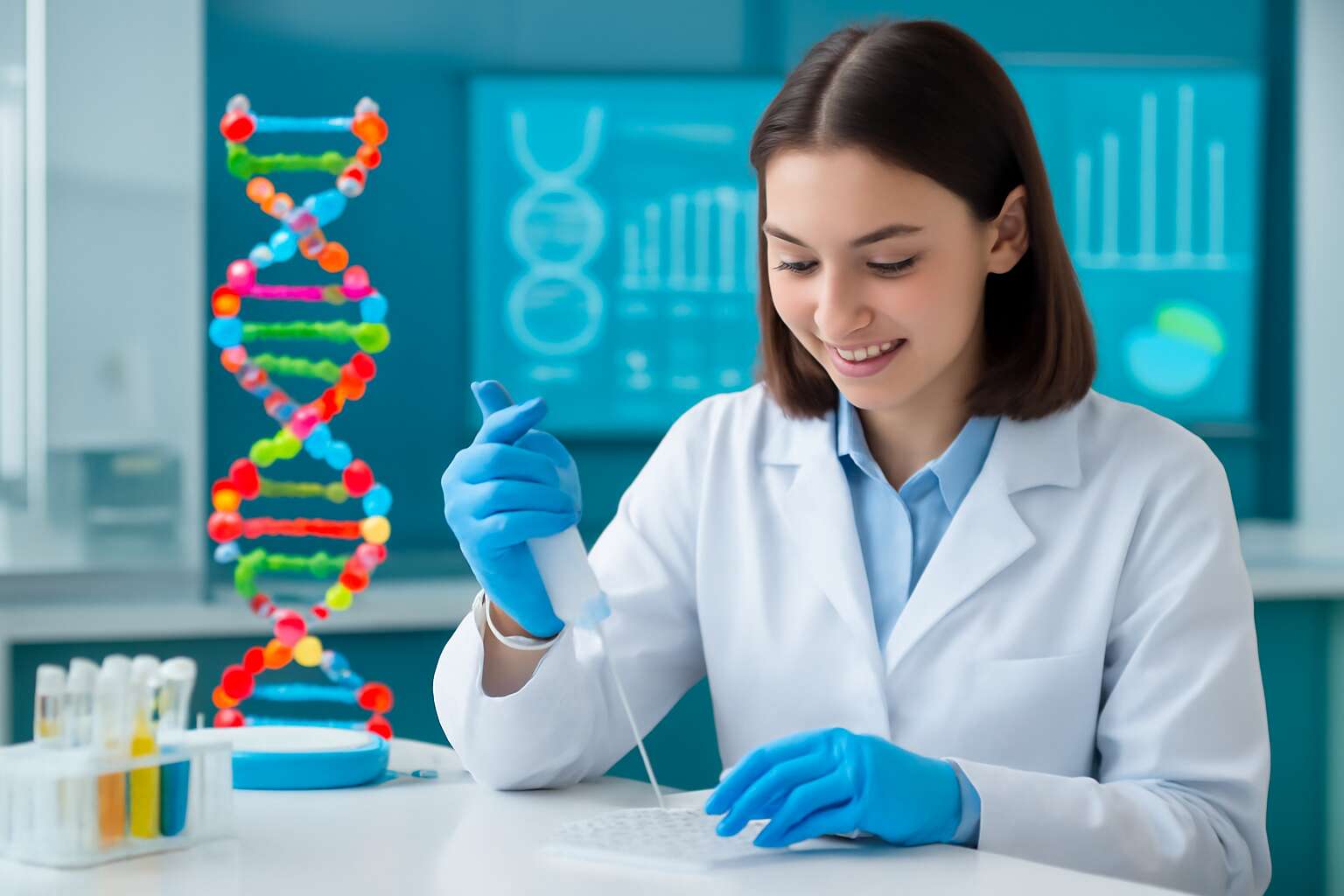
What is biotechnology really? At its heart, it is using living systems to make useful products or resolve problems. It blends biology with technology to study organisms, their genes, and their processes, then applies that knowledge to health, agriculture, and industry.
- DNA and genes as instruction manuals
- Bioprocesses that turn biology into products
- Testing, safety, and regulation guiding real-world use
These elements show why biotechnology resonates with South African labs, classrooms, and startups, turning curiosity into real possibilities.
Core Disciplines in Biotechnology
Imagine fields where crops weather drought because someone understood gene flows—biology in action! biotechnology for beginners is the first step toward turning that promise into daily life.
Core disciplines act as compass points: genomics, molecular biology, bioprocessing, bioinformatics, and regulatory science.
- Genomics and gene editing
- Molecular biology
- Bioprocess engineering
- Bioinformatics and data analysis
- Regulatory science and safety
These fields stay accessible: you don’t need to be a genius to learn the basics; you can see how labs, farms, and clinics connect.
In South Africa, this knowledge grows through classrooms, startups, and community labs, inviting thoughtful consideration of equity, access, and responsibility.
How Biotechnology Impacts Daily Life
Biotechnology quietly shapes the groceries you buy and the clinics you visit. In a country where drought challenges farmers, smart biology turns weather into less punishing arithmetic—more reliable yields, fewer losses, safer food. This is biotechnology for beginners—a doorway to understanding how science touches everyday life.
For new learners, the impact is not distant. It is visible in fields, hospitals, and markets, where tools from gene-informed crop selection to rapid diagnostics meet real needs. I see it in daily choices—what we plant, buy, and trust!
Here are everyday touchpoints:
- Drought-tolerant seeds and smarter crop practices in local farms
- Rapid tests that speed up diagnosis in clinics and rural health posts
- Cleaner processing and storage that extend freshness and reduce waste
In South Africa, classrooms, startups, and community labs connect people with these advances, inviting thoughtful consideration of equity, access, and responsibility.
Common Biotechnology Terminology
Biology is the software of life, and its tools are turning ideas into real solutions. biotechnology for beginners—a doorway into how labs translate questions into crops, clinics, and products. In South Africa, researchers remind us that small knowledge can ease big challenges!
Key terms build the backbone of learning: genome, gene, assay, and sequence. They anchor how scientists read organisms, design experiments, and interpret results.
- Genome
- Gene
- CRISPR
In practical language, these ideas translate to faster tests, safer crops, and better data. South African classrooms and labs feel the pull of these terms every day.
Ethics and Safety in Biotechnology
In South Africa, bioscience is advancing fast, but a single lab decision can ripple through farms and clinics. Across the country, 68% of bioscience programs now mandate ethics and safety training before students touch a pipette.
Biotechnology for beginners learns that ethics goes beyond paperwork; it shapes project design, risk assessment, and data stewardship. Safety means proper PPE, containment, decontamination, and clear waste protocols — a quiet shield guiding every step.
A culture of responsible innovation is built on shared responsibility.
- risk assessment before every project
- transparent reporting and accountability
- community engagement and consent where applicable
That blend of science and stewardship helps ensure progress serves people and the planet.
Practical Ways to Learn Biotechnology
Developing a Beginner-Friendly Reading Plan
A mentor liked to say, “Reading is the pilot light of innovation.” In biotechnology for beginners, a focused reading plan is more than discipline—it’s a passport to understanding complex ideas without drama or doom. Let’s ignite curiosity with gentle structure!
To build a beginner-friendly reading plan, I start with a clear purpose and a modest pace. Choose a core text and rotate with short articles or diagrams to reinforce concepts.
- Ground the learning in a core text and quick glossary references
- Keep sessions short and regular
- Mix media to reinforce concepts
- End with a reflective note to solidify understanding
Consistency matters more than intensity; a friendly commitment beats sporadic bursts. I’ve found that sharing a quick summary with a colleague turns reading into a conversation, not a solitary chore—perfect for biotech culture in South Africa!
Hands-On Experiments You Can Try Safely
In the quiet glow of a lab lamp, curiosity becomes method! “Great discoveries begin with a single observed detail,” a veteran mentor likes to say, and that mindset anchors biotechnology for beginners in practical, safe exploration.
Practical, safe learning hinges on simple, supervised stepping stones. Use ready-made kits, pair demonstrations with quick notes, and connect observations to theory. For newcomers, the emphasis rests on concepts such as observation, inference, and data interpretation rather than chasing complex protocols.
- Engage with ready-made kits that emphasize observation and interpretation
- Keep sessions short and focused, with reflective notes
- Discuss results and design ideas through brief case studies
Across South Africa, community labs and schools can host guided conversations where learners compare what they see, debate interpretations, and share insights—an approach that keeps biotechnology for beginners approachable and human.
Online Courses and Certifications for Starters
Across South Africa, online learning in biotechnology for beginners has momentum, turning curiosity into credentialed capability. A rising trend shows learners who complete entry-level online courses gain practical confidence within weeks.
Practical online routes blend short videos, guided simulations, and reflective notes. A well-designed starter program—centered on biotechnology for beginners—lets you learn at your pace, then test ideas through quick, supervised tasks and real-world case studies.
- Microcredentials that stack toward a certificate
- Short, instructor-led courses with live Q&A
- Hands-on virtual labs and data interpretation modules
In South Africa, platform partners curate local content that connects online study to community labs and local industry, ensuring every learner sees a pathway from course to practice in biotechnology for beginners.
Finding Reputable Resources and Communities
Across South Africa, biotechnology for beginners is turning curiosity into capability; more than half of online learners report practical confidence within weeks. Knowledge is the seed of tomorrow, and the right path lets it bloom with quiet, purposeful momentum.
Practical routes rely on reputable resources and communities. I’ve learned that solid options blend curated content, guided discussions, and hands-on practice. Explore these pillars for biotechnology for beginners:
- Vetted platforms with microcredentials
- Local community labs for supervised activities
- Mentor networks and peer groups
In South Africa, partners curate local content that connects study to community labs and regional industry, creating a clear pathway from course to practice in biotechnology for beginners. It’s a shared journey, stitched by local case studies and real-world impact.
Biotechnology Applications Across Industries
Healthcare and Medicine
Biotechnology is quietly rewriting the medicine playbook, and in South Africa its influence is felt in clinics and labs today. “The future of care is data-guided and biopsy-precise,” a leading researcher notes, and that promise is already translating into faster diagnoses and smarter treatments. For biotechnology for beginners, the journey from bench to bedside is becoming clearer as science meets patient needs in real time.
Across healthcare and medicine, biotechnology touches diagnostics, vaccines, and new therapeutics. Key touchpoints include:
- Diagnostics and rapid testing
- Biologics, vaccines, and monoclonal antibodies
- Genomic-guided personalized medicine
From SA clinics to global research hubs, these advances are not distant dreams but daily tools shaping outcomes.
Agriculture and Food Science
In South Africa, the farm-to-fork equation is being rewritten by biotech, with farmers deploying drought-tolerant crops and bioprocessed ingredients that taste as good as they perform. Agriculture and food science harness microbial power, enzymes, and data to cut waste, boost yield, and keep nutrients intact. For biotechnology for beginners, this sector reads like a practical field guide rather than a distant lab fantasy!
Consider these industry touchpoints:
- Precision agriculture using sensors, drones, and data to conserve water and soil.
- Bioprocessing in food science to extend shelf life and preserve nutrients.
- Biological inputs like biofertilizers and biopesticides to reduce chemical load on crops.
From SA farms to global kitchens, biotech’s practical toolkit is turning research into everyday resilience.
Industrial Biotechnology
In a world where drought gnaws at yields and food waste gnashes at margins, biotech shows up as a practical toolkit, not a sci‑fi rumor. A bold voice in agriculture once quipped, “Biotech turns research into resilience.” Across industries, industrial biotechnology uses microbes, enzymes, and data to cut waste, boost efficiency, and keep nutrients intact. From South Africa’s fields to global kitchens, these advances prove theory can feed the pantry!
- Precision agriculture with sensors, drones, and data to conserve water and soil
- Bioprocessing in food science to extend shelf life and preserve nutrients
- Biological inputs like biofertilizers and biopesticides to reduce chemical load on crops
For readers starting out, biotechnology for beginners shows how a lab’s toolkit translates into everyday resilience.
Environmental Biotechnology
Some 1.3 billion tonnes of food are wasted annually, a statistic that sounds like a siren for change. Environmental biotechnology offers a practical toolkit: microbes that clean water, enzymes that recover resources, and data that optimize processes. For biotechnology for beginners, the idea is simple: living systems convert waste into value and make industry more resilient.
- Wastewater treatment that reduces energy use and pollutants
- Bioremediation that restores soils and waterways
- Bio-based materials and fuels that replace fossil equivalents
Across sectors—from South Africa’s water-stressed regions to global supply chains—environmental biotechnology touches packaging, textiles, and energy, weaving sustainability into everyday operations with a quiet, persistent elegance.
Diagnostics and Precision Medicine
Biotechnology is no longer science fiction; it’s reshaping diagnostics and treatment in real time. The promise is crystal clear: the right diagnosis at the right moment can save lives! For biotechnology for beginners, diagnostics and precision medicine offer the most accessible entry point into a field of quiet, relentless change.
In diagnostics and precision medicine, we turn data into decisions.
- Rapid point-of-care tests that work in clinics and field settings.
- Genomic sequencing guiding personalized therapies and risk profiles.
- Liquid biopsies and digital data platforms enabling continuous monitoring.
Across South Africa and beyond, labs tailor these advances to local needs—hospitals, clinics, and community programs stand to gain. This is how beginners can imagine a future where precision medicine is practical, not theoretical.
Entering a Career in Biotechnology
Possible Career Paths for Beginners
South Africa’s biotech horizon is expanding, with robust demand for practical minds— a double-digit uptick in entry-level roles on the near horizon. For biotechnology for beginners, the path from classroom to bench feels less like a cliff and more like a stairwell, each rung offering hands-on learning and real impact!
Beyond the basic lab grunt, beginners can explore roles that blend science with process, quality, and storytelling. Possible career paths for beginners include:
- Lab technician supporting culturing and assays
- Quality assurance coordinator ensuring safety and compliance
- Process technician in biomanufacturing with a focus on scalability
- Bioinformatics assistant translating data into actionable insights
Where curiosity meets discipline, opportunities multiply—right here, in South Africa’s evolving bioscience ecosystem.
Essential Skills and Tools for Biotech Roles
Biotech roles reward practical minds. In South Africa, a double-digit uptick in entry-level roles is on the horizon, and that means a clear ladder from class to bench. For biotechnology for beginners, entering the field demands more than curiosity—sound technique, reliable data, and disciplined work habits are your anchors.
Essential skills and tools span hands-on lab craft, data literacy, and safety. You’ll build proficiency with core techniques, manage documentation, and navigate industry-grade software.
- Sterile technique and safe sample handling
- Data literacy: Excel and basic statistics
- Quality systems and GMP-style documentation
- Laboratory instruments: pipettes, spectrophotometer, centrifuge
- Digital tools: ELN/LIMS software and basic scripting
With curiosity and discipline, you’ll turn lab days into tangible outcomes for biotechnology for beginners and SA’s bioscience ecosystem.
How to Build a Portfolio and Resume for Biotech
Bold claim: portfolios trump boring CVs in biotech hiring, with surveys showing interview offers rise by up to 2x when a tangible project record accompanies your name. For biotechnology for beginners, that portfolio is your north star—proof you can turn curiosity into demonstrable results in SA’s buzzing bioscience scene.
Here’s what to spotlight to keep recruiters caffeinated rather than overwhelmed:
- Project briefs explaining the problem, approach, and outcomes
- Clear data visuals from analysis or experiments
- Lab safety and compliance notes showing discipline
- Software demos showcasing data literacy
- Context: your role and learning—what you’d bring
Pair the portfolio with a concise resume that foregrounds core competencies—sterile technique, data literacy, GMP-style documentation, and hands-on tooling. In this field, quantify impact with numbers where possible and keep formatting clean; recruiters skim, then read deeply.
Networking, Internships, and Mentorship
In South Africa’s buzzing bioscience scene, the fastest route from curiosity to a lab bench is through people who open doors. Mentors call it the oxygen in a crowded corridor—the conversations that turn questions into projects. A friendly chat at a campus event can spark a mentorship, internship, or an unexpected collaboration in a Cape Town lab or a Jo’burg startup.
For biotechnology for beginners, networking, internships, and mentorship are the compass. See these avenues as more than formal steps; they’re living contacts that grow with time:
- Networking occasions at universities, research institutes, and industry meetups
- Internships and short-term lab projects offered by SA labs and startups
- Mentorship through alumni networks, student chapters, and research supervisors
- Informal exchanges: lab chats, coffee catch-ups, and open evenings
Anecdotal notes on SA lab culture: “The best ideas start after a walk-and-talk with someone who shows up with curiosity.” Relationships, trust, and a willingness to learn build bridges faster than any resume. The ecosystem rewards persistence, listening, and experimentation.


0 Comments