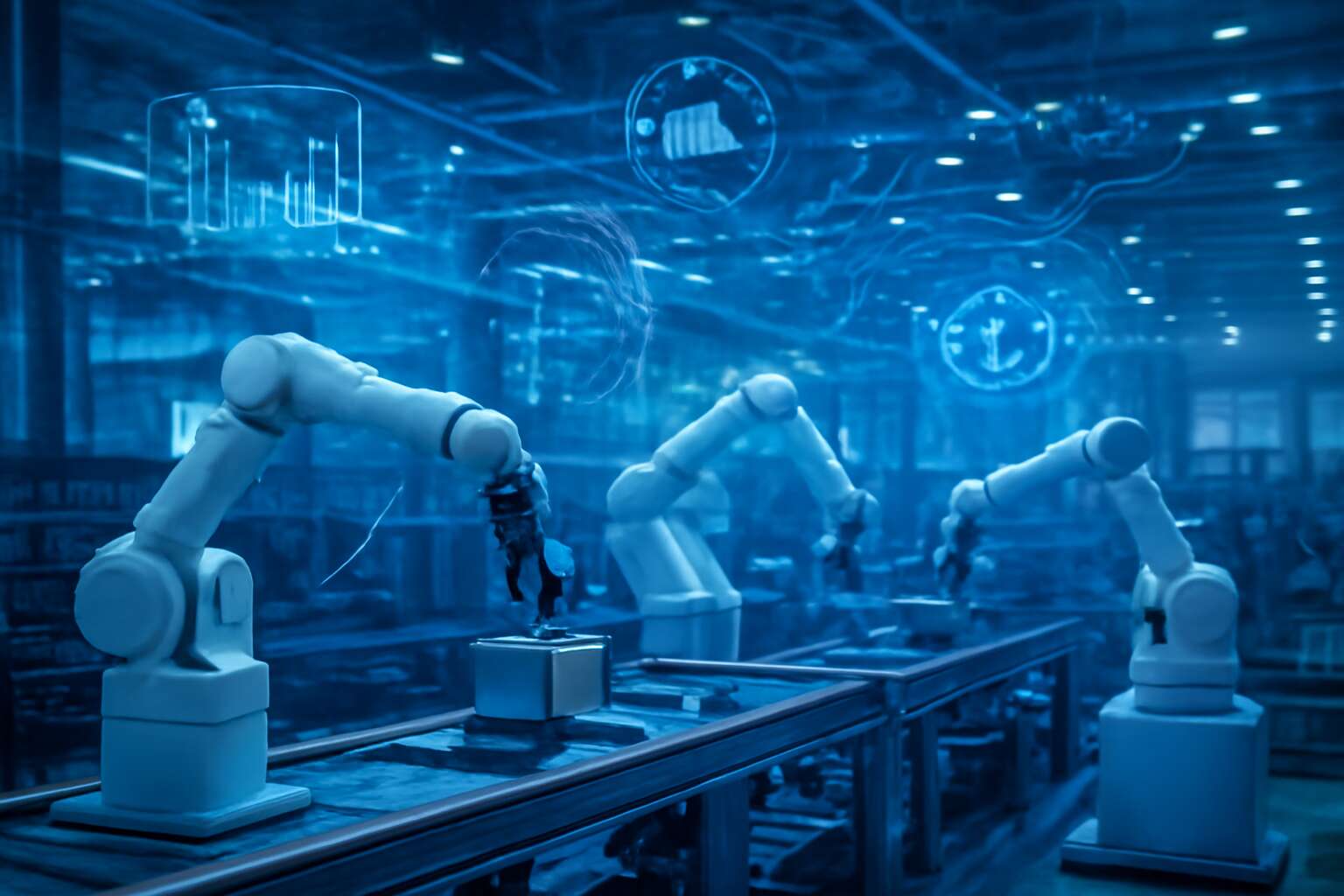
Impact of the Fourth Industrial Revolution on Business and Operations
Operational efficiencies and automation
South Africa’s business landscape hums with a new tempo, where data flows like wind over the Highveld. Early adopters report up to a 30% lift in throughput after threading connected systems through daily operations, a clear sign that the 4ir advantages are real, not marketing chaff. The future is already here—an uneven sunrise that brightens warehouses, offices, and boardrooms alike!
Operational efficiencies and automation are reshaping how work happens. IoT sensors monitor performance, robotic processes handle routine tasks, and cloud platforms knit disparate teams into a single, responsive organism. This isn’t sci-fi; it’s practical acceleration that reduces downtime and errors, freeing people to focus on creativity and strategy.
- Real-time visibility into operations
- Predictive maintenance and lower downtime
- Smarter, integrated supply chains
From Cape Town to Pietermaritzburg, South African businesses feel the pull of smarter operations. The shift brings resilience and data-informed choices to days that used to hinge on gut instinct. These are the 4ir advantages at work.
Data-driven decision making and analytics
The data-powered edge is rewriting the rules of business in SA. Real-time dashboards slash cycle times, and early adopters report up to a 40% lift in throughput when data flows from shop floor to strategy rooms. This is the wake of the 4ir advantages—clear, fast insights that cut noise and missteps.
Data-driven decision making and analytics turn every transaction into a learning loop. With connected sensors, anomalies become actionable signals, forecasts inform investment, and performance becomes trackable in real time. I’ve seen teams shift from guesswork to evidence-based planning, making operations feel more nimble and resilient.
- Real-time visibility into performance metrics
- Predictive insights that shape resource allocation
- Scenario analysis for risk and growth planning
These data streams translate into confident leadership decisions across teams, from finance to field operations.
Improved customer experiences and personalization
Across South Africa, customers respond to brands that seem to know them; personalized experiences deepen trust and boost engagement. In South Africa, brands that personalize experiences report engagement increases of up to 25%.
- Real-time, location-aware recommendations
- Cross-channel consistency across mobile, web, and in-store
- Offers aligned with past preferences
The Fourth Industrial Revolution makes this possible by turning scattered data into meaningful, humane interactions—without sacrificing privacy when done right. The result is not just faster service; it’s a tailored journey that respects context and pace. This is where the 4ir advantages translate into trust, loyalty, and measurable growth for businesses that dare to listen. Personalization becomes a shared experience rather than a transaction, and customers feel seen in every interaction.
Global supply chain resilience and agility
A single ripple can derail a distributor’s week; global disruptions now cascade in hours, not months. In South Africa, 4ir advantages are proving their worth, turning fragile networks into adaptive, resilient operations that hold steady under pressure.
Real-time visibility, digital twins, and AI-powered routing collapse distance between suppliers and shelves—I see agility in action: faster re-routing, smarter inventory, and resilient logistics that weather port delays or weather-induced chokepoints without faltering.
- End-to-end tracking across borders and modes
- Adaptive capacity planning that shifts resources instantly
- Predictive risk alerts that trigger proactive mitigations
These threads weave into brand trust and sustainability, a quiet revolution anchored in these changes.
Technology pillars powering the Fourth Industrial Revolution
AI and machine learning in operations
Across South Africa, AI isn’t a distant promise; it’s the steady pulse behind the small-town factory and the village workshop. Early adopters report up to 40% downtime reductions thanks to AI-driven operations. The technology pillars—AI and machine learning in operations—hold steady through real-time sensing, on-site processing, and human collaboration, guiding every move from the workshop to the supply desk. This is where 4ir advantages begin to feel tangible on the ground.
These pillars translate into concrete capabilities:
- Predictive maintenance that spots wear before a part fails and keeps lines moving.
- Quality assurance through computer vision that catches defects early.
- Adaptive production planning that aligns with shifting demand signals.
For communities built on shared effort, these technologies bring steadier jobs, safer workplaces, and more resilient livelihoods.
Industrial Internet of Things and connectivity
Across South Africa, the Fourth Industrial Revolution rides on a web of connections—the Industrial Internet of Things weaving sensors, gateways, and machines into one living mesh. When devices speak in real time, production hums with clarity and unpredictability gives way to informed action.
Connectivity is more than hardware; it’s governance for safety, compliance, and smarter decisions across sites, farms, and workshops.
- Real-time visibility across dispersed sites
- Edge-to-cloud interoperability enabling local decisions
- Open standards that unlock local supplier ecosystems
In South Africa’s communities, these pillars translate into steadier jobs, safer workplaces, and more resilient livelihoods. These 4ir advantages glow in the field, turning a grid of devices into a living nervous system for industry.
Cloud, edge computing, and data infrastructure
Across South Africa, data now leads the way. A telling snapshot shows 68% of local manufacturers report faster decisions as real-time streams flow through their operations. The magic lies in the technology pillars powering the Fourth Industrial Revolution—cloud, edge computing, and robust data infrastructure—the trio behind the 4ir advantages that transform silos into a living nervous system of productivity.
Cloud platforms knit dispersed plants into a single, scalable brain, while edge computing brings critical analytics to the factory floor, where it matters most. I’ve seen it in action across SA plants. A well‑engineered data infrastructure then defines governance, safety, and resilient operations across sites, farms, and workshops.
- Unified data fabric across sites
- Latency‑aware decisions at the edge
- Secure, compliant data storage and access
Together, these pillars make work safer, more predictable, and better aligned with communities’ needs in South Africa. The result is a field‑level enchantment: operations hum with clarity, and people build steadier livelihoods amid modern machines.
Robotics and automation in manufacturing
Robotics and automation in manufacturing stand as the hands and heartbeat of modern industry. In South Africa’s plants, agile robots retool lines in minutes, not days, turning customization into mass production. The 4ir advantages take on a tangible glow when cobots and smart grippers sync with human hands, weaving safety and speed into daily work.
Here are the quiet revolutions shaping the floor:
- Collaborative robots (cobots) that learn from humans and adapt on the fly
- Adaptive automation that scales up or down with demand
- On-site robotic integrators that keep quality at source
In this world of machines and minds, robotics and automation invite South African manufacturers to write a new chapter of resilience and pride.
Cybersecurity and risk management in digital ecosystems
Global digital crime costs are projected to reach $10.5 trillion by 2025, a grim metric that makes security a strategic pillar, not an afterthought. In the Fourth Industrial Revolution, cybersecurity and risk management sculpt the vaults that cradle data, control rooms, and the connected shop floor.
In South Africa’s evolving plants, the cyber frontier must be as resilient as the mechanical one. Digital ecosystems demand layered defenses: identity protection, ongoing threat intelligence, and rapid recovery from incidents. These guardrails help keep the 4ir advantages intact—speed without surrender to shadows.
- Zero-trust networks and strong identity controls
- Continuous monitoring and anomaly detection at the edge
- Secure data governance and encryption by default
- Incident response playbooks and recovery rehearsals
When these pillars align, the floor breathes with confident inevitability, amplifying the 4ir advantages.
Industry-specific advantages and use cases
Manufacturing and logistics optimization
Across South Africa, factories embracing 4ir advantages trim cycle times by up to 25%, and the plant floor begins to hum with a quiet, almost prophetic tempo. Instead of chasing demand, production mirrors it, tuned by data that seems to forecast the next ripple before it lands. The air feels charged with possibility, as if machines listen and respond with uncanny precision.
Within manufacturing and logistics optimization, the payoff is tangible: digital twins test line changes without stopping production; end-to-end visibility pinpoints delays; intelligent routing trims miles and minutes.
- Adaptive production scheduling aligned with real-time demand
- End-to-end traceability from factory floor to doorstep
- Dynamic warehousing and last-mile synchronization
South Africa’s logistics landscape—coastal ports, inland corridors, and a tech-savvy workforce—answers this new cadence with resilience. The result is more than efficiency; it’s a transformed narrative of reliability and growth, written in data and pace.
Healthcare and life sciences enhancements
Across SA, 87% of healthcare leaders say 4ir advantages will redefine patient care, a bold forecast that lands like sunrise over the Karoo. In hospitals and biolabs, data streams choreograph triage, diagnostics, and trials with a precision that feels almost prophetic.
The following use cases illuminate how the weave of sensors and software translates into tangible care:
- AI-assisted diagnostics and clinical decision support
- Remote patient monitoring and telehealth with real-time alerts
- Clinical trial digital twins and accelerated trial design
- Cold chain visibility and pharmacovigilance across the supply chain
In South Africa, these capabilities translate into broader access, faster responses, and patient journeys that feel less mechanical and more humane.
Retail and customer-centric services
In South Africa’s sunlit malls and cautious street markets, 68% of shoppers say they stay loyal to brands that anticipate their needs. Such expectations meet a constellation of 4ir advantages that turn stores into living ecosystems—data dances with desire, and service arrives before a call is made.
From real-time inventory to analytics-informed staffing, retailers can choreograph journeys that feel less engineered and more humane. Sensors map crowds, digital twins simulate peak hours, and AI nudges promotions with surgical precision.
Consider these use cases:
- Real-time inventory visibility and curbside pickup optimization
- Personalised promotions through mobile wallets and in-store sensors
- Loss prevention and fraud reduction via shopper-journey analytics
In SA, these capabilities translate into faster service, resilient supply chains, and experiences crafted for each shopper.
Energy, agriculture, and sustainability applications
South Africa’s sunlit grids meet digital ambition in a way that feels almost inevitable: 72% of energy and farming operators report faster decisions when data streams align with the field. These moments reveal a simple truth: 4ir advantages are not abstract ideas but practical tools—especially for energy, agriculture, and sustainability. Real-time sensing and secure connectivity turn light and soil into a living system.
Energy applications ride on interconnected sensors and microgrids. Real-time visibility supports peak shaving, outage resilience, and smarter solar harvesting.
- Microgrid optimization with local renewables
Agriculture benefits from soil moisture probes, drones, and AI-driven irrigation forecasts that conserve water while lifting yields. What a change to see fields bend to data and care! Autonomous scouting and livestock tracking reduce waste and disease exposure, turning fields into responsive ecosystems.
For sustainability, data-driven water stewardship, waste-to-energy projects, and circular economy analytics help communities weave resilience into every decision.
Public sector and smart city initiatives
South Africa’s public sector is turning city life into a real-time conversation. 4ir advantages aren’t distant promises; they’re on the streets—lighting, transit, and waste management tuned by data streams that learn from daily rhythms.
- Smart lighting and traffic optimization
- Real-time water and waste management
- Digital citizen services and governance
From transparent governance to citizen-centric services, these use cases boost accountability and resilience. It’s not sci-fi; it’s scalable, local, and ready to meet South Africa’s urban realities head-on—an enduring testament to smart, practical public-sector modernization.
Strategic and workforce benefits
Reskilling and talent development for the digital era
In South Africa, more than half of the jobs of the next decade will demand digital skills, and I see that truth in the faces of farmers, shopkeepers, and nurses in our rural towns. A tablet shared at a co-op can spark a child’s curiosity and rebuild a grandmother’s hopes.
Strategic and workforce benefits flourish when learning is built into planning. Reskilling becomes a bridge between today’s needs and tomorrow’s opportunities, a core component of 4ir advantages that keeps talent close, reduces risk, and fuels local enterprise as markets evolve.
- Tailored micro-credentials for local roles
- Strong ties with TVETs and rural colleges
- Clear career paths that boost retention
Reskilling and talent development for the digital era means practical, ongoing growth—apprenticeships, bite-sized online modules, and mentoring that acknowledge long commutes and connectivity gaps in rural areas. Together, we turn challenge into opportunity.
Cost reduction, ROI, and faster time-to-value
Strategic and workforce benefits anchor the 4ir advantages. When reskilling sits in planning, costs shrink and retention rises; projects move from idea to impact with less risk. In South Africa’s rural towns, a tablet in a co-op becomes a classroom, a bridge to opportunity, and a steadying force for families.
Cost reduction shows up in lean training budgets and shared platforms—proof that smarter learning compounds quickly.
- Shared digital training platforms
- On-demand micro-credentials aligned to local roles
- Reduced external hiring and onboarding costs
ROI grows as pilots become production, shortening cycles and amplifying local value. Faster time-to-value follows when learning is modular and aligned with real projects, turning ambition into tangible livelihoods across communities.
Fostering innovation, agility, and competitive advantage
Strategic and workforce benefits unlock a living culture of experimentation—innovation becomes a daily habit rather than a quarterly initiative; agile teams reconfigure priorities as markets shift. Competitive advantage stems from a workforce fluent in digital tools and cross-functional thinking. In the 4ir advantages landscape, talent is the differentiator—adaptive learning, project-based skill-building, and a bias toward rapid experimentation.
- Reskilling pathways mapped to real projects and local roles
- Cross-disciplinary squads that shorten time-to-value
- Continuous learning culture that boosts retention and curiosity
This is not mere tech trivia; it’s a strategy for sustainable growth—call it the polite revolt of adaptable minds, turning bold ideas into durable livelihoods for South Africa’s communities!
Regulatory compliance, governance, and ethical considerations
Governance isn’t a constraint; it’s the compass guiding rapid, profitable change in the age of 4ir advantages. In South Africa, regulatory compliance, clear governance, and ethical considerations turn bold experiments into durable capabilities that protect citizens while fueling growth within guardrails that balance ambition with responsibility.
With well-defined rules, talent flourishes where risk is managed and accountability is tangible. Reskilling aligns with real projects; cross-disciplinary squads collaborate transparently; and a culture of ethics fuels long-term retention. Consider these pillars:
- POPIA compliance and data privacy
- King IV governance and accountability
- AI ethics, transparency, and bias mitigation
When governance informs practice, decision cycles shorten and confidence rises—attracting investment and safeguarding livelihoods across South Africa’s communities. The result is a resilient landscape where innovation remains human-centered, compliant, and enduring.
Change management and organizational culture transformation
Across South Africa, organizations ride the crest of disruption, and the payoff hinges on culture as much as code. In SA, change done well shortens decision cycles and lifts engagement, proving that 4ir advantages rely on people as much as machines. Strategic workforce transformation isn’t a policy on a shelf; it’s a daily practice—recalibrating leadership, learning, and teamwork to meet real projects head on.
Three pillars anchor it all:
- Vision-led leadership turning strategy into action
- Cross-functional squads learning in real projects
- Transparent communication and psychological safety sustaining momentum
When these elements align, organisations cultivate resilience, attract top talent, and accelerate innovation—these benefits keep people at the center of progress.



0 Comments