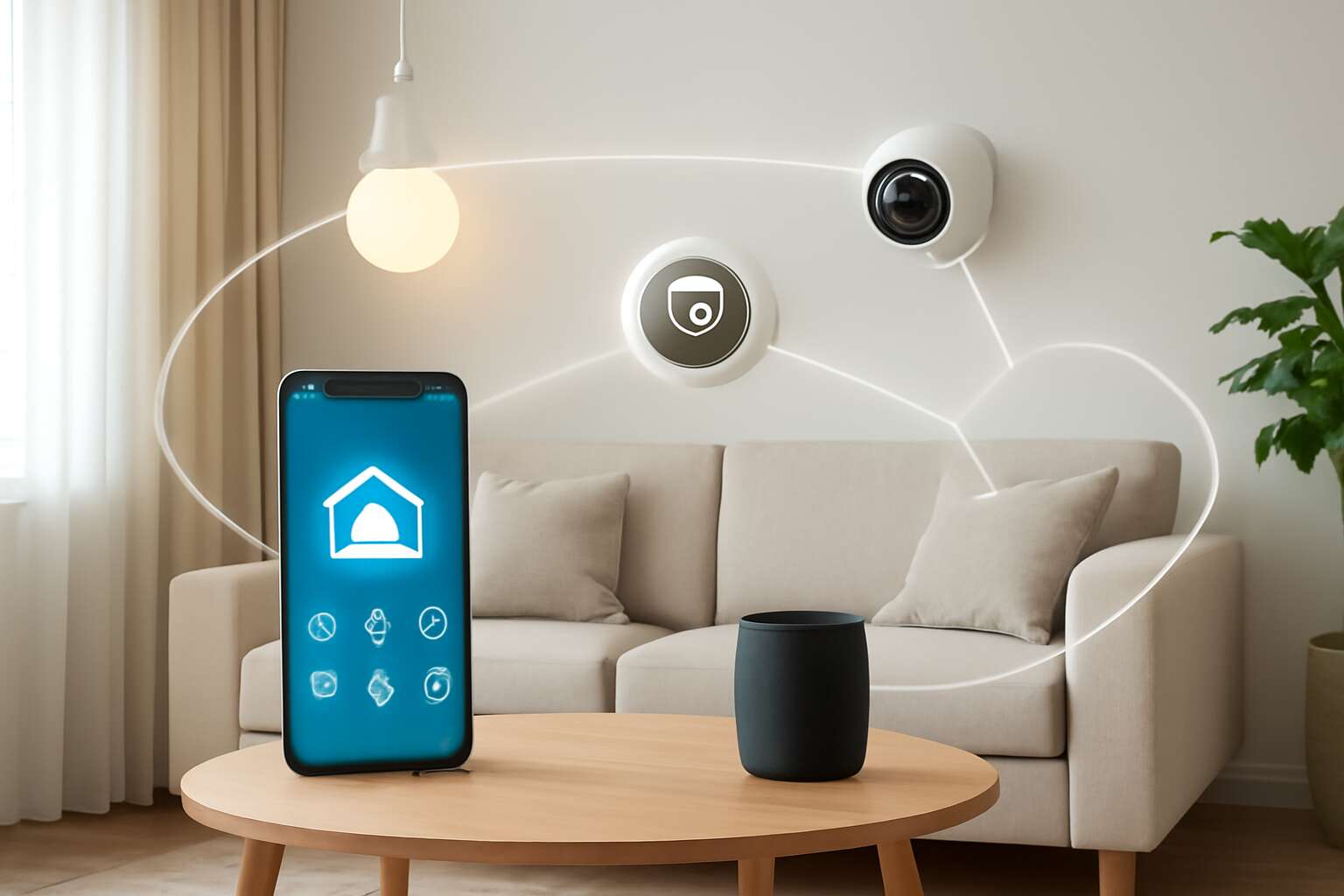
Understanding the IoT and Smart Device Landscape
Key definitions and scope
In a world where 27 billion devices are projected to connect by 2025, the internet of things and smart devices are no longer futuristic—they’re shaping everyday life in South Africa. These connected objects sense, share, and act, turning data into real-time responses and bringing farms, towns, and homes closer together!
- sensors and devices
- networks and platforms
- data analytics and security
At its core, the internet of things and smart devices covers more than gadgets. It includes definitions of devices, networks, data platforms, and the governance needed to keep things safe and interoperable. Edge computing reduces latency, while robust security keeps privacy intact as devices multiply across rural farms and urban neighborhoods alike.
In practice, this landscape spans consumer comfort to industrial resilience—from soil-moisture sensors on a veld to smart meters in townships—yet the rhythm remains consistent: curated data, trusted connections, and human oversight that honours community life.
How devices communicate in the ecosystem
By 2025, 27 billion devices will be online worldwide, turning every corner into a sensor and actuator. This scale isn’t just impressive—it demands clarity in how things connect. The internet of things and smart devices binds farms, towns, and homes with a shared language for data and action.
Devices talk through a simple, practical stack: sensors and actuators at the edge, gateways that translate signals, and platforms that store and analyze data. Edge computing keeps decisions local, reducing delays, while secure channels protect privacy as devices multiply across rural fields and urban blocks.
In practice, conversations happen in real time: soil meters report moisture, meters monitor power use, meters trigger automated responses. The result is curated data, trusted connections, and human oversight that respects community life across South Africa.
Smart devices in daily life and consumer products
By 2025, 27 billion devices will be online worldwide—enough to wrap the globe in a web of signals. The internet of things and smart devices are not a novelty; they’re a framework that shapes how we live, work, and shop.
Smart devices bring daily ease to homes and consumer products. In South Africa, connected appliances, wellness wearables, and adaptive lighting are common sights.
- Smart home hubs and voice assistants
- Connected kitchen appliances
- Wearables that track health
- Smart sensors for energy and water
Across households and farms, the landscape leans toward intuitive interfaces and reliable connections. Real-time updates turn data into value while privacy and security stay central in design.
It’s a growing fabric—the internet of things and smart devices—that binds cities, farms, and households into a single, responsive system.
Benefits, challenges, and opportunities
By 2030, the internet of things and smart devices economy could be worth trillions, turning every sensor into a decision-maker. In South Africa, these networks quietly reshape how we power, move, and protect communities.
Understanding the landscape reveals benefits and opportunities with a subtle, almost cinematic precision—I’ve seen these signals turn roadmaps into reality:
- Real-time insights for water and energy management
- Predictive maintenance that reduces downtime
- New, customer-centric services from asset tracking to smart logistics
Yet challenges loom: privacy, security, interoperability, and data governance. The opportunities lie in local adoption—agriculture, municipalities, and small enterprises can harness edge computing and affordable devices to build resilient, inclusive networks.
Current market trends and forecasts
Across Africa’s digital shift, the internet of things and smart devices are not hype but hardware in motion. By 2030, forecasts flirt with trillions, and South Africa quietly builds the rails where sensors speak and decision-makers listen. In cities and farms, I’ve watched dashboards translate pulses into decisive action!
Current market trends and forecasts for the internet of things and smart devices show edge computing taking center stage, affordable sensors proliferating, and interoperability finally maturing. The result: faster insights, lower costs, and new services in agriculture, utilities, and logistics.
- Edge-first architectures
- AI-enabled sensors
- Security-by-design frameworks
As adoption accelerates, South Africa’s networks will weave a more resilient, inclusive economy—one where data governance and privacy come with the elegance of a well-tailored suit. The journey is practical, not poetry, and the destination is steady progress.
IoT Architecture and Core Technologies
Perception and sensing layers
Every 11 seconds, another device joins the internet of things and smart devices ecosystem, turning ordinary objects into data points! In the architecture of this world, perception and sensing layers act as the eyes and ears. They gather signals—from light and temperature to humidity and motion—and translate them into usable information for higher processing.
- Sensors and transducers that convert physical events into electrical signals
- Signal conditioning and calibration to ensure accuracy
- Edge microprocessors that do initial filtering right at the source
- Communication hardware and protocols that move data to gateways or the cloud
From here, software layers interpret the data, but the perception and sensing layer remains the quiet workhorse behind reliable safety, energy efficiency, and responsive public services in South Africa’s growing smart city ambitions. This foundation underpins the internet of things and smart devices that power homes, factories, and municipal services.
Connectivity and network protocols
Pulse of the city: by 2030, 125 billion devices will be online, turning corners into data points. The architecture of the internet of things and smart devices unfolds in three acts—the perception layer that senses, the connectivity layer that binds, and the application layer that interprets. This fabric powers safer streets and smarter services.
Core technologies include edge microprocessors for initial filtering, signal conditioning to preserve accuracy, and lean networks. Lightweight, fault-tolerant protocol stacks ensure messages survive noisy environments and tight power budgets. Connectivity binds field data to the cloud.
- LoRaWAN for long-range, low-power links
- NB-IoT / LTE-M for cellular IoT
In practice, this architecture turns sensors into seamless collaborators, letting homes respond in real time. I’ve seen the data travel—quiet, secure, and purposeful—across devices and platforms in South Africa’s growing networked landscape.
Processing, analytics, and application layers
By 2030, 125 billion devices online will turn quiet corners of our cities into streams of data. The line between observation and action narrows as internet of things and smart devices become everyday life. Processing hugs the edge, analytics distill meaning, and the application layer binds insight to service.
At the core, three capabilities drive intelligent outcomes:
- Edge processing at the device border
- Signal conditioning preserves accuracy
- Lean, fault-tolerant protocol stacks
These layers cooperate to turn raw sensor chatter into timely actions—lights that respond, meters that report, and services that adapt. In Johannesburg and Cape Town, sensors whisper through robust networks, delivering dependable outcomes across homes and streets with quiet confidence!
Standards, interoperability, and APIs
125 billion devices online by 2030 will turn quiet corners into streams of data. Architecture becomes a whispering conductor, coordinating sensors, gateways, and cloud services into a single, reliable rhythm.
At the heart are standards and APIs that let disparate devices speak the same language. Interoperability means data can move, be understood, and trigger a safe action—whether a meter reports consumption or a streetlight adapts to traffic. The internet of things and smart devices rely on open protocols and well-defined APIs to bind edge, network, and application layers into a seamless service.
- MQTT
- CoAP
- RESTful APIs
- OPC UA
A note on South Africa: networks built with robust security, low latency, and local data governance bring confidence to municipalities and homes. APIs bridge services across utilities, transport, and consumer devices, enabling scalable, dependable outcomes across cities.
Edge vs cloud computing for IoT
125 billion devices online by 2030 will turn quiet corners into streams of data, and the architecture behind them must listen with a whisper. In the realm of the internet of things and smart devices, edge intelligence near the sensor partners with cloud power pulling insights across vast data tides. I picture an orchestra where latency fades and responses stay serene.
Edge computing keeps decisions close, slashing latency and easing bandwidth as devices react in real time. The counterweight, cloud computing, scales, stores, and learns from the whole chorus. The bridge between them—fog architectures and secure gateways—binds edge, network, and application layers into a seamless service.
- Edge devices and gateways that preprocess locally
- Fog computing coordinating sensors and cloud analytics
- Cloud platforms for storage, AI, and long-term trends
South Africa’s landscape rewards architectures with robust security and local data governance, turning municipal and home networks into confident, responsive ecosystems. The rhythm stays safe when encryption, authentication, and modular APIs guide the flow.
Applications Across Industries
Smart homes and consumer devices
Across South Africa, the internet of things and smart devices are changing how we live and work. A quiet chorus of sensors and gateways turns data into decisions, threading factories, farms, and living rooms into one awake network. It is not magic, but a meticulous craft that reveals patterns, prevents faults, and invites new possibilities into daily life.
- Predictive maintenance in manufacturing, reducing downtime and waste
- Remote monitoring in healthcare, extending care beyond four walls
- Precision agriculture and smart energy management for sustainable farming and happier grids
Smart homes and consumer devices translate this hidden network into daily rituals—lighting that breathes with the hour, climate that remembers your preferences, security that watches with unseen eyes. Practical magic! Where comfort meets resilience and efficiency smiles back at you with lower bills and brighter safety.
Industrial IoT in manufacturing and logistics
As factories wake to a quiet chorus of sensors, Industrial IoT in manufacturing and logistics redefines efficiency across South Africa. The internet of things and smart devices weave machines, conveyors, and trucks into a single, responsive network—turning raw data into actionable decisions. Operators watch energy use, machine health, and inventory flow with a clarity never before possible, a pragmatist’s dream realized through careful design rather than magic.
Applications span across manufacturing floors and logistics hubs, translating theory into tangible gains. In manufacturing, predictive maintenance, automated quality checks, and safer workplaces reduce downtime. In logistics, real-time asset tracking, route optimization, and cold-chain integrity become routine, supporting faster deliveries and leaner stock. The result is a more resilient economy, where energy use and asset utilization harmonize with demand.
- Real-time asset tracking
- Predictive maintenance
- End-to-end visibility
Healthcare and life sciences
“Every heartbeat counts,” a South African hospital CIO notes, and the internet of things and smart devices turn those signals into real-time care decisions across wards and laboratories.
In healthcare and life sciences, remote vital signs, automated medication safety, and efficient specimen handling reshape workflows.
- Remote patient monitoring
- Automated lab sample tracking
- Cold-chain integrity for vaccines
These capabilities translate into shorter stays, fewer unnecessary tests, and faster, safer clinical decisions that feel almost prescient, guiding teams through crowded corridors of care.
In South Africa, privacy, data governance, and resilient networks ensure that such progress protects patients and keeps essential services running, even as the ecosystem grows more interconnected.
Smart cities, utilities, and transportation
Cities are waking up to pulse and pattern. More than 40% of new city projects rely on real-time sensing and connectivity. The internet of things and smart devices turn data into action across streets and services.
- Smart lighting, energy grids, and demand management for utilities
- Transit optimization, freight tracking, and cleaner, safer roads
- Environmental sensing, waste management, and public safety dashboards
In South Africa, resilient networks and privacy-conscious governance keep these systems reliable, even as they scale. The result is more livable neighborhoods, smarter maintenance, and new economic opportunities powered by connected infrastructure.
Agriculture, energy management, and sustainability
Across farms, grids, and urban installations, data pours in at a staggering pace, and the internet of things and smart devices turn that chatter into decisive action. In agriculture, soil sensors gauge moisture, weather inputs refine irrigation, and drone imagery flags stress before it shows up in the crop.
- Smart irrigation scheduling and soil moisture management
- Drone-assisted crop monitoring and pest detection
- Water, energy, and waste metrics for sustainability dashboards
On the energy front, real-time telemetry, demand response, and microgrids reshape facility economics, while sustainability programs hinge on transparent data and accountable governance. These applications prove how these technologies translate raw signals into smarter operations—reducing waste, extending asset life, and unlocking new value in South Africa and beyond.
Security, Privacy, and Compliance in IoT
Common threats, risk assessment, and mitigation
Security isn’t an afterthought in a world where the hum of devices shapes daily life. By 2025, the world could host more than 27 billion internet of things and smart devices, weaving data into every decision!
Common threats wear many guises, from weak interfaces to creeping firmware neglect.
- insecure interfaces and weak authentication
- unpatched firmware and default credentials
- botnets exploiting device fleets to flood networks
- data in transit and at rest without robust encryption
Effective risk assessment begins with honest inventory and threat modeling, then moves to layered mitigation.
- enforce strong identity and access management across devices
- implement timely firmware updates and anomaly detection
- ensure end-to-end encryption and secure APIs
In South Africa, POPIA anchors privacy expectations as adoption accelerates.
Privacy and governance become the ballast that keeps progress humane.
Device authentication, secure communications, and updates
Security isn’t an afterthought in a world where the hum of devices shapes daily life. I hear the quiet hum and know security must be woven into every circuit. By 2025, the world could host more than 27 billion internet of things and smart devices, weaving data into every decision. In South Africa, trust in these networks is becoming as essential as water and electricity.
Device authentication opens the doorway to trust, while end-to-end encryption guards data in transit between devices, gateways, and the cloud. Updates should carry verifiable firmware signatures from trusted channels to fend off drift and compromise.
- Mutual device identity with expiring credentials.
- End-to-end encryption for data in transit.
- Verifiable firmware updates with signatures.
In South Africa, POPIA anchors privacy expectations as adoption accelerates. Privacy by design keeps progress humane, ensuring data governance respects individuals while networks scale.
Data privacy, user consent, and data governance
A future hums with 27 billion devices by 2025, a chorus of data that colors our decisions. The internet of things and smart devices are not mere gadgets; they are custodians of our routines, and privacy must be woven into every circuit.
In South Africa, POPIA anchors the right to be left in control. Privacy by design guides architecture, ensuring consent travels with data and governance remains humane even as networks scale.
- Data minimization and purpose limitation
- Clear, revocable user consent and data disclosures
- End-to-end governance with auditable logs
- Verifiable, secure update and patch management
These strands keep the journey dignified and resilient, aligning innovation with responsibility as devices weave deeper into South African life.
Regulatory standards and industry frameworks
“Security is a journey, not a product,” I hear on rural co-ops where every sensor matters. In the internet of things and smart devices, that journey makes trust tangible as daily routines stay safe and predictable.
South Africa’s POPIA anchors consent and humane governance as networks scale. Privacy by design guides architecture, so data flows with care—minimizing collection and keeping revocation mechanisms clear and auditable.
Industry standards converge to shape safe deployments. The following frameworks offer guardrails for the internet of things and smart devices:
- POPIA (privacy and data governance)
- ISO/IEC 27001 (information security management)
- IEC 62443 (OT security for industrial environments)
- NIST SP 800-53 (controls and risk management)
Used together, they support verifiable logs, secure updates, and end-to-end governance across South Africa.
Best practices for secure deployment and maintenance
Security is a journey, not a product. In the world of the internet of things and smart devices, resilience takes shape as governance that travels from devices to policies and practices, ensuring daily routines stay safe and predictable.
Best-practice deployment leans on strong identity, encrypted channels, and transparent updates. The following essentials keep systems trustworthy in South Africa:
- Device authentication and identity management
- End-to-end encryption and secure communications
- Signed over-the-air firmware updates
- Continuous monitoring with auditable logs
Privacy by design, data minimization, and clear consent flows anchor user trust. Governance should support revocation, auditing, and accountable data handling—principles aligned with POPIA and other security controls.



0 Comments